
 Ecology
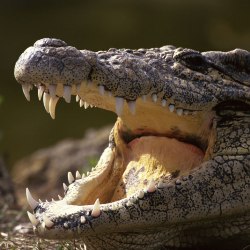
Tiny bumps on the jaws of alligators and crocodiles are much more sensitive than human fingertips, scientists have found.
Susceptible jaws help crocodiles carry their offspring in their mouths with extreme caution, and capture prey in a split second.
As soon as they feel that something is touching them, they grab it right away,” explained biologist Ken Katagna from Vanderbilt University in the United States.
Scientists decided to find out why crocodiles have tiny bumps on their faces. These microscopic structures help environmentalists distinguish endangered reptile skin, which is used to make bags, shoes and belts. But until recently, no one knew their purpose.
The world of crocodiles and their amazing sensitivity
The researchers used a scanning electron microscope to study the structure of the cones of American alligators and Nile crocodiles, and found they have sensitive nerve endings that they capture vibrations and pressure. When they looked for the source of the nerve endings, it ended up in the trigeminal nerve, which protrudes from the skull. Scientists decided to find out the function of these nerves.
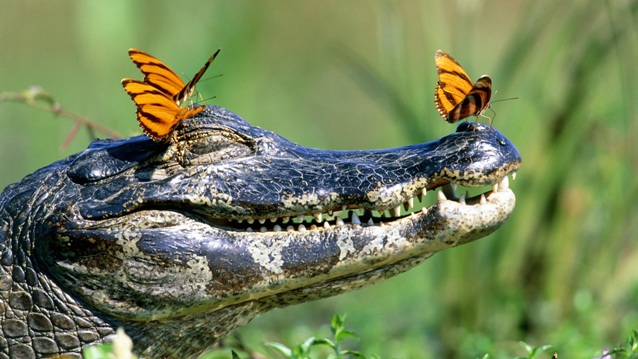
It was previously believed that these bumps help determine the level of salt in water. So the researchers put the Nile crocodiles in the water, but found nothing. When a sensitivity test was performed, touching one of the cones with a thin hair, it turned out that they are much more sensitive than a person's fingertips.
It is known that crocodiles and alligators can slam their jaws around their prey in 50 milliseconds, and it is now clear that this reaction was the result of their hypersensitive skin.
But these huge reptiles can also be quite gentle creatures, carrying their offspring in their mouths from place to place.
The biggest crocodile in the world
The largest crocodile in captivity is considered to be the Lolong combed crocodile caught in July 2012 with a length of 6 meters 17 centimeters. The crocodile weighed 1075 kg.
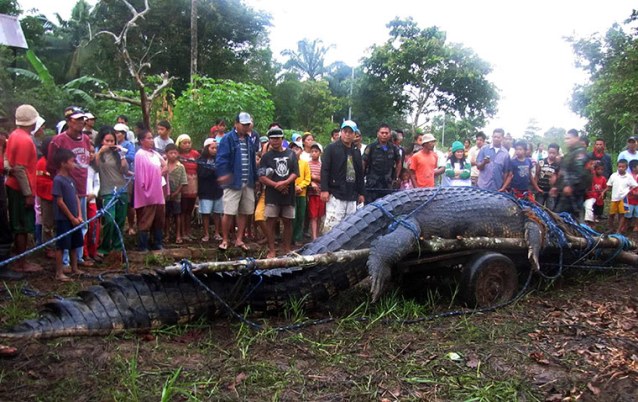
This crocodile is suspected of attacking several people and killing two victims. The crocodile is now in the Bunawan Ecopark in the Philippines.
The previous record was held by Australian crocodile Cassius, 5 meters and 48 cm long.