
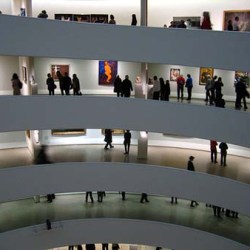
 Unbelievable facts
Everyone has a different idea of beauty, and many museums fit different definitions of beauty.
Good museums become part of their environment by using natural materials or surfaces with changing light.
Many beautiful museums themselves adorn the area where they are located, attracting tourists from all over the world
Here are some of the most beautiful museums in the world:
MAS Museum, Antwerp, Belgium
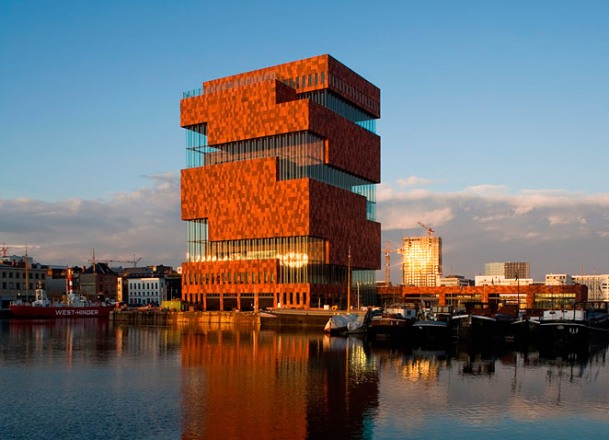
Architects Neutelings and Riedijk have given this riverside museum a distinctive modern look with red sandstone imported from India and window panes. The museum's design is reminiscent of the warehouses used in the old port of Antwerp. Also, if you take a closer look at the museum's 60-meter-high building, you'll see 3,185 silver hands, the symbol of Antwerp. The vertical “boulevard”, several elevators that run along the building's glass spiral, offer stunning views of the harbor and roof from all levels and lead to the roof, which is open until midnight.
Nelson-Atkins Museum of Art, Kansas City, USA
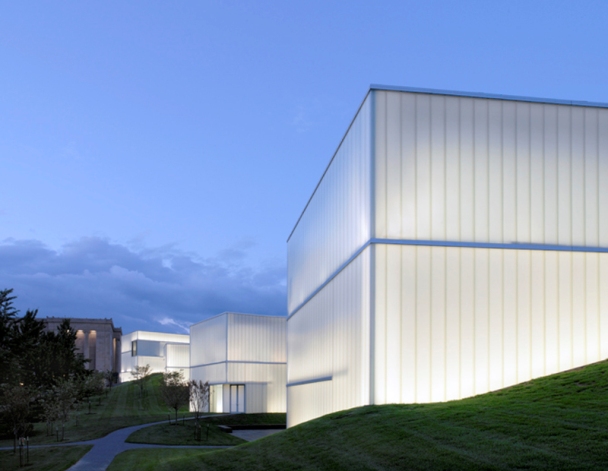
The original limestone building with a cumbersome neoclassical design dates back to the 1930s. In 2007, this museum was renovated and has a modern extension in the form of five cubes or “lenses” made of transparent glass. Designed by Steven Holl, these “lenses” form one with the surrounding landscape, following the curves of the lawn.
Islamic Art Museum, Doha, Qatar
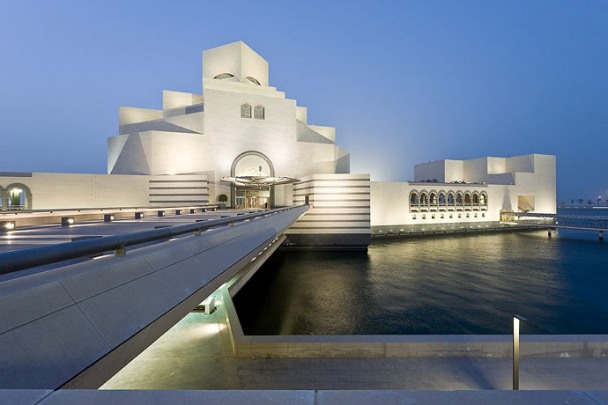
The Museum of Islamic Art is beautiful with its simple yet dynamic design that echoes traditional Islamic architecture. Pale sand-colored stone blocks form a five-story tower that casts long shadows as night falls. A number of palm trees and a waterfall lead to the museum's entrance, which was built in a harbour on a private artificial island.
National Art Museum, Osaka, Japan
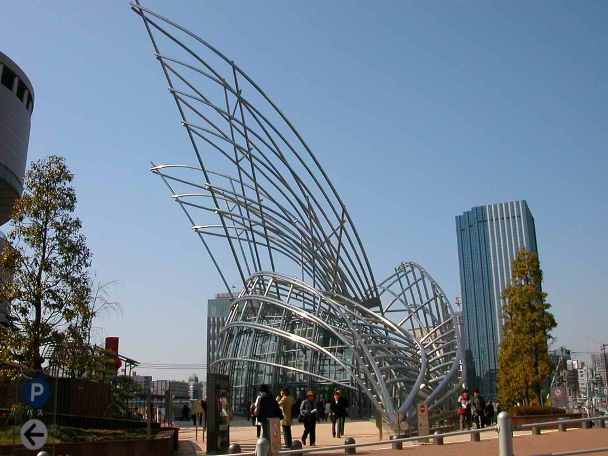
While most of this museum is underground, the visible glass and steel exterior makes an indelible impression, curving 50 m upwards. The acclaimed architect César Pelli wanted to depict bamboo reeds swaying in the wind, although his creation is still compared to wings. A play of light flows into the lobby, creating an ever-changing gallery space, insulated by a concrete wall about 3 meters thick.
Royal Ontario Museum, Toronto, Canada
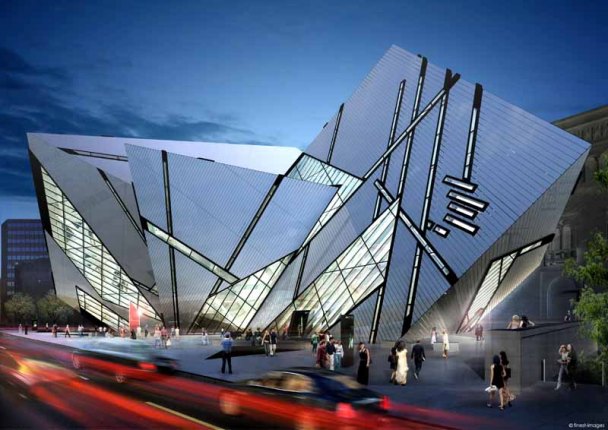
Local architects Darling and Pearson unveiled the original Italian neo-romantic museum in 1914. It has undergone several renovations and additions, but it only became controversial in 2007 with the debut of the new “The Crystal” design. The museum's gemstone collection inspired Daniel Libeskind's deconstructivist design of five interconnected prisms made from steel beams, aluminum and glass. Some were shocked by the innovation, while others welcomed the bold decision.
Geggenheim Museum in Bilbao, Spain
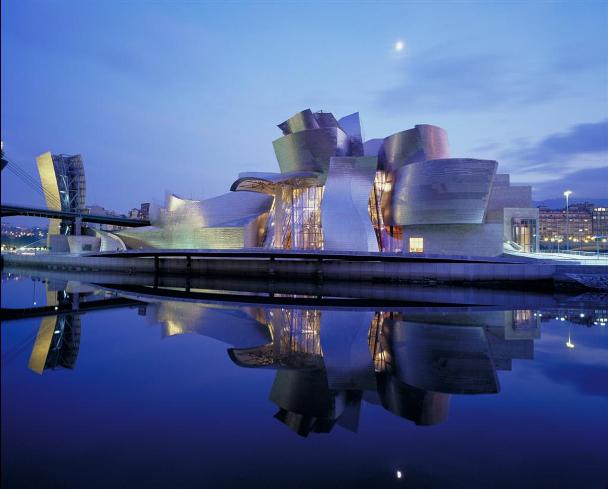
When the Frank Gehry museum, which draws attention with its curled and reflective walls, opened in 1997, it immediately became one of the most popular attractions in Spain. The building is made of glass, limestone and titanium panels that look like fish scales. Their organic curves have been designed to capture light, and their 15-meter-long atrium is partially illuminated by light coming from a “metal flower” located on the roof of the building.
Hedmark Museum, Hamar, Norway
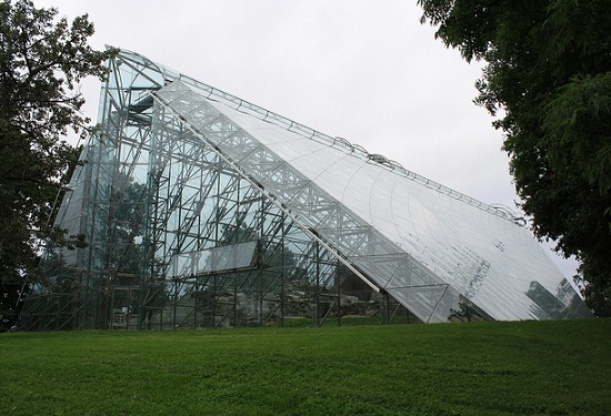
The Hedmark Museum is located 1.6 square kilometers near Lake Mjesa and is an open-air exhibition, restored 18th-century house and herb garden. But the real highlight of the museum are the ruins of the cathedral, built in 1150, which were partially destroyed in 1567. The four large arches that have survived to this day are located under a floating triangle of glass and steel. This place has become popular for weddings and other events, so you might have to wait a while before going inside.
Hermitage Museum, Saint Petersburg, Russia
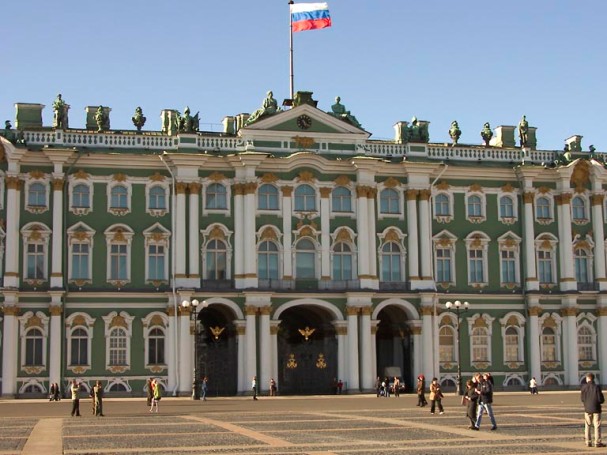
Founded by Catherine the Great in 1764, one of the oldest museums in the world is a complex of six buildings located between the Neva River and Palace Square. The Winter Palace appears in its grandeur, occupying a whole block, where, according to some estimates, there are about 1,945 windows. The former imperial residence is decorated with two tiers of columns, golden domes and luxurious Baroque and Rococo galleries.
Milwaukee Museum of Art, Milwaukee, USA
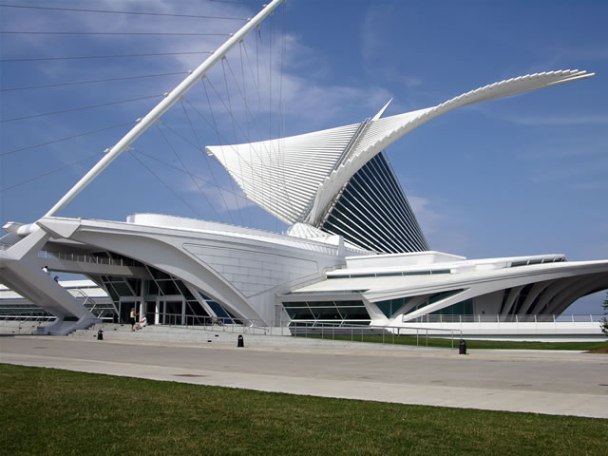
The abstract object The Modernist Wrestling Memorial Center, which later became the Milwaukee Museum of Art, was designed by renowned architect Eero Saarinen. It is made in the form of a cross made of concrete and steel, and it looks like it is floating on a pedestal. One of the museum's distinctive features is the Cuadracci Pavilion, a postmodern architectural creation with supports and a vaulted ceiling, which has a movable sun visor in the form of wings with a span of 66 meters. At certain times of the day, the wings open, and at night or in inclement weather they fold.
Oscar Niemeyer Museum, Curitiba, Brazil
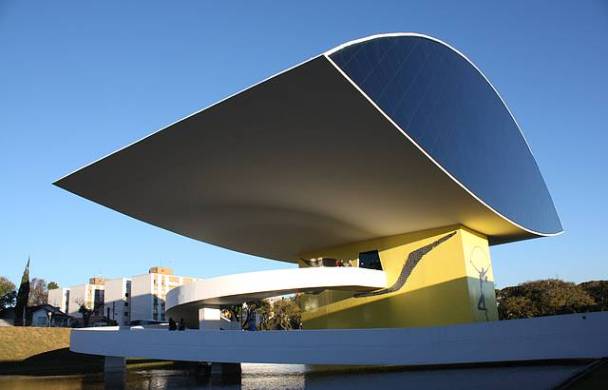
The museum's official name was given in honor of Brazilian architect Oscar Niemeyer, who is 95 years old but is most commonly known as the Eye Museum due to its shape. The Glaz glass extension, completed in 2002, rests on an 18-meter-high yellow pole, and the Eye itself can be reached via a long curved staircase. The constantly changing reflection of the sky on the outer surface of the glass and the reflected reservoir create an indescribable view. A curved tunnel under the pond connects the annex to the original Niemeyer building, built in 1967.
Orsay Museum, Paris
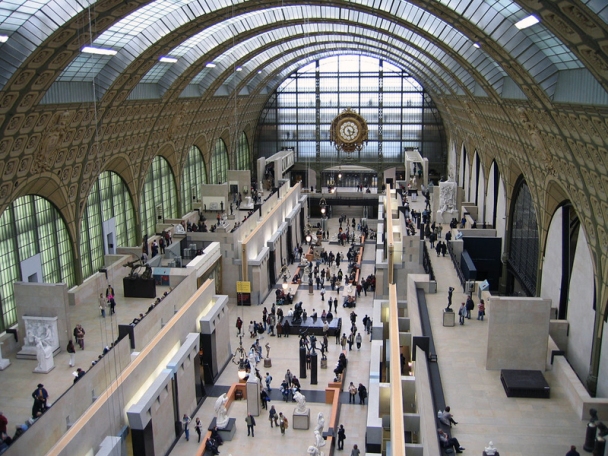
This elegant building on the left bank of the Seine, which was originally opened as a train station in 1900, officially became a museum only in 1986. Fortunately, the station's original architectural decoration and majestic Beaux Arts arches are still there. Inside, curved barrel-shaped glass ceilings allow natural light to fill the sculptures in the main hall. Here you can stop at a café to see the Seine through a huge metal clock, the railroad museum's legacy.
Fort Worth Contemporary Art Museum, USA
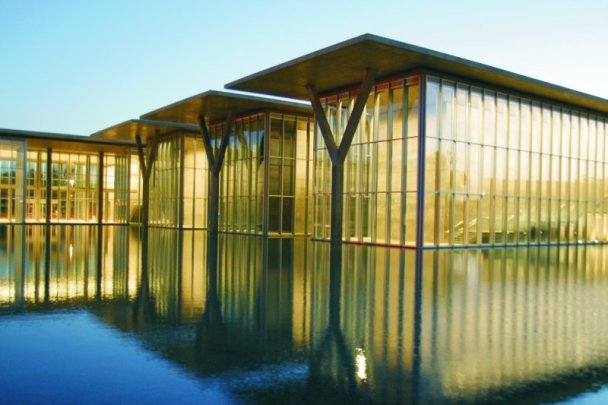
The five pavilions surrounding a quiet, reflective pond were designed by Japanese architect Tadao Ando. The building with a flat roof is made of glass panels that reach a height of 12 meters. They let in natural light for the exhibits and also offer great views of the city. If you choose to visit this museum during the day, you'll have the opportunity to view more than 2,600 works of modern art, but if you walk past the museum at night, for example by booking a table at In a nearby café, you can admire the pavilions, which are illuminated like huge floating lanterns.
National Museum of Australia, Canberra, Australia
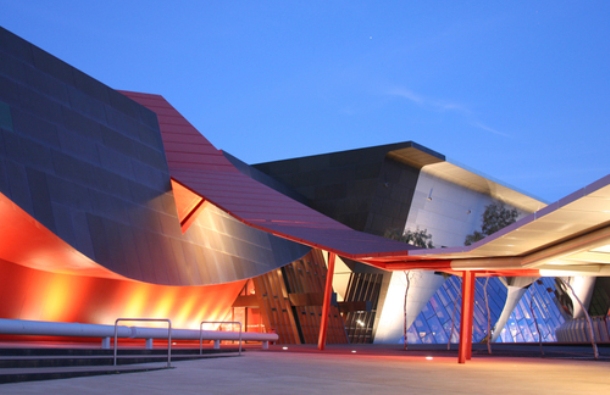
Designed by architect Howard Raggatt, this colourful museum resembles a knotted rope that symbolically connects several different nations and the country's history. The entrance to the museum is located at the center of the junction, and one of its rear ropes forms the Uluru Line, a 29-metre-long sculpture in the form of a loop. The semicircular exterior of the museum is covered with aluminum panels with words written in Braille.
Solomon Guggenheim Museum, New York, USA
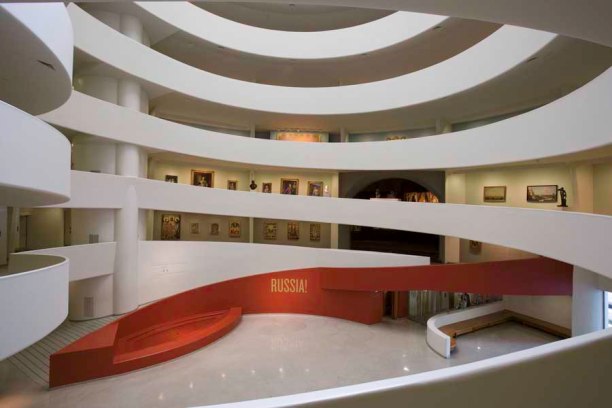
The museum in the form of reinforced concrete spirals, created by Frank Lloyd Wright, is a true triumph of modern architecture. However, in the 1950s, its design was so foreign that it was commissioned by a builder with experience in garage construction. Smooth spirals are platforms in the interior of the museum and lead visitors from one exhibition to another, allowing visitors to admire unique pieces of art. Although the building itself is considered a true work of art, being a kind of inverted ziggurat, some artists find this museum a difficult place to exhibit their works.