
 Events
The 2012 Summer Olympics are 116 years away from the very first revived Olympic Games. Much has changed since then. In addition to old photographs of the first modern Olympics, G.S. Robertson's essay entitled “An Englishman at the First Modern Olympic Games” has survived to this day.
The author paints a picture of revived games that lacked modern telecommunications or transportation, and yet the author managed to capture what subsequent generations began to describe how” Olympic spirit.” From this essay, we will learn a lot of interesting details about that first Olympics.
We offer you to learn about the most interesting differences between the first Olympic Games in 1896 and the modern Olympics in 2012.
Olympiad participants and spectators
Organized by Pierre de Coubertin, who is considered the father of the modern Olympic movement, the first modern Olympic Games were held in the spring of 1896 in Athens, Greece, and were designed to be athletes of various nationalities from different parts of the world took part. As Robertson notes in his essay, “the organizers forgot that some athletes were students, and some simply did not have the time or money to travel long distances to Greece.”
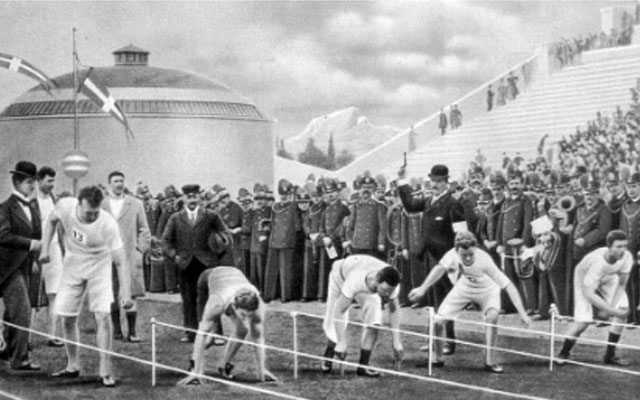
This meant that most of the athletes participating were from the host country, that is, Greece, from some European countries, and from the US. The United States and Hungary were the only countries to send all-around teams, according to Robertson. The first Olympic champion in modern history was American James Connolly, who performed the best triple jump.
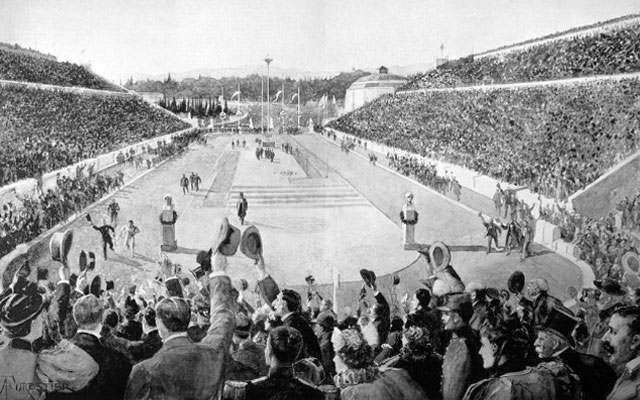
Although a huge number of foreigners were expected to arrive in Athens, spectators at the first Olympic Games were all Greeks. Newspapers reported that, according to some estimates, about 20,000 foreigners came to the country, but Robertson claims that there were no more than a thousand. Nevertheless, 80,000 spectators came to watch the competition in 1896.
English was not an official language at the 1896 Games
English and French are considered the official languages of the Olympics. But in 1896, the official rules book and program of the Summer Olympics were printed only in French. German versions were also published later.
According to Robertson, the English edition was released by a private firm shortly before the games began. This was due to the fact that English-speaking countries expressed their desire to participate in the Olympics too late. Very few athletes came from Great Britain.
The principles of the Olympic Charter, a document that describes the rules of the Olympic movement that all participants were required to follow, were not written until 1898. It took another 10 years before the Charter was published. It also said that English and French would be considered the official languages of the movement.
Women did not participate in the 1896 Olympics
For the first time in Olympic history, women from all participating countries participate in the 2012 Summer Olympics. Saudi Arabia, Qatar and Brunei were required to include at least one woman in their Olympic teams, although previously only men defended the honor of these countries.
In 1896, women were not allowed to participate in the Olympics at all. Although four years later women were able to compete for Olympic medals, there were only 22 of 997 participants, or only 2 per cent. Women competed in sports such as tennis, sailing, croquet, golf and equestrian sports.
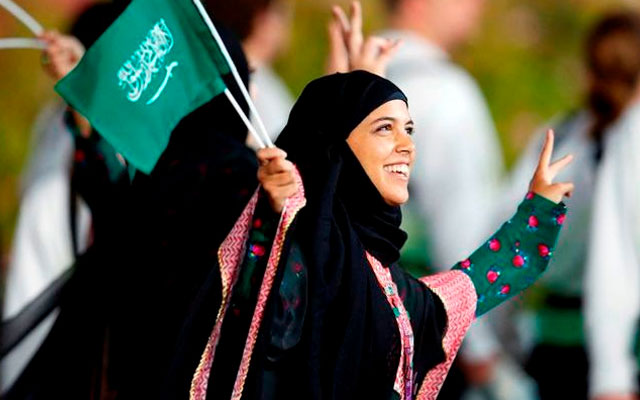
In 2008, 42 percent of women participated in the Beijing Summer Olympics, and in 2012, the US sent more female athletes than men to the Olympics for the first time.
Due to the high costs of the Olympics, which took place in a country facing economic difficulties, as well as doubts about the readiness for the Games, many skeptics believed that the Games would be a failed project. They were wrong.