
 Ecology
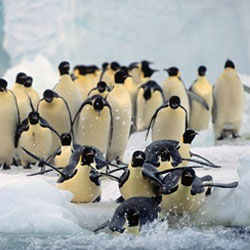
Motion sensors attached to emperor penguins have allowed scientists to find out that sea ice plays a critical role in the nutrition of these birds. Emperor penguins depend on ice for food and breeding. A change in the location of ice sheets due to climate change in Antarctica may change the behavior of birds, said study author Shinichi Watanabe, an animal ecologist and professor at Fukuyama University of Japan in Hiroshima.
The amount of Arctic ice this year has broken maximum records, but the distribution of the ice cover has changed, and penguins prefer to nest in the same places every year.
If penguins don't jump onto the ice while looking for food, they can't travel long distances underwater, scientists say.
Journey to the end of the world
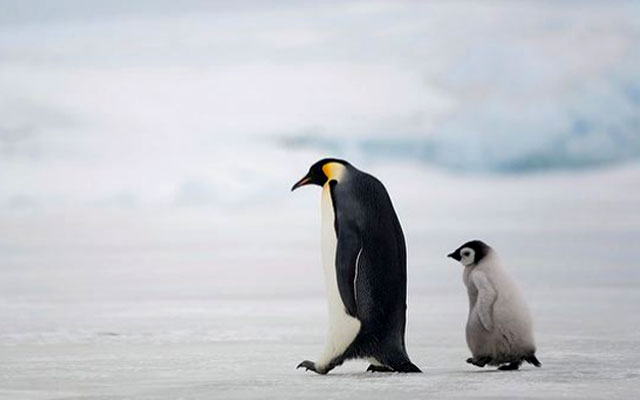
Thousands of amazing flightless birds from the southern continent have been immortalized in the famous documentary “Birds 2: Journey to the End of the World”. Female emperor penguins travel 50 to 120 kilometers each time during breeding season to feed their young offspring.
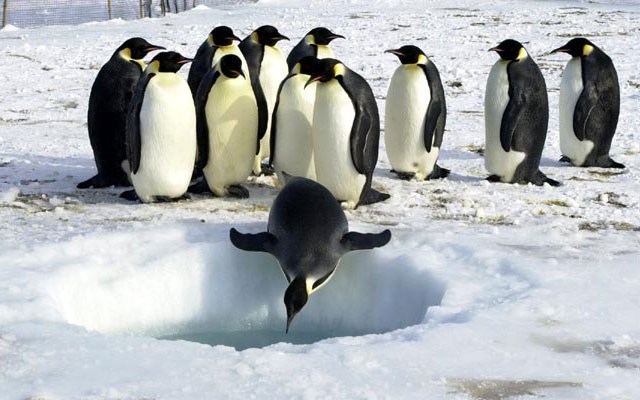
Emperor penguins have to spend more time looking for food than other penguin species, Watanabi said. “Emperor penguins are unique birds, they are the largest penguins, and they have the largest chicks that require a lot of food,” he said. “Also, the distance between nesting colonies and the food areas are very large.”
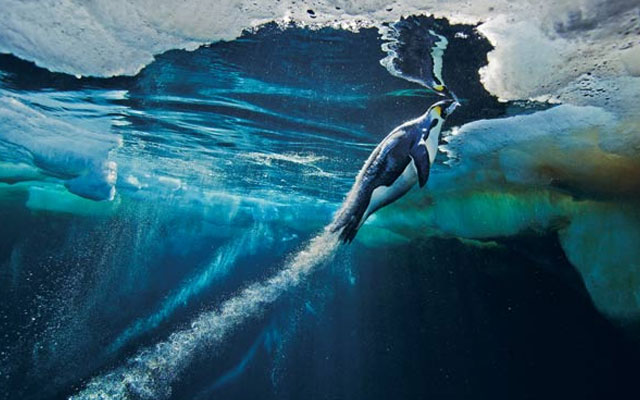
Ice floes are a resting place for penguins, a safe place to breathe in and relax between diving for fish. To find out, the researchers used a modern technique that was installed on the bodies of 10 birds in the penguin colony in the Ross Sea.
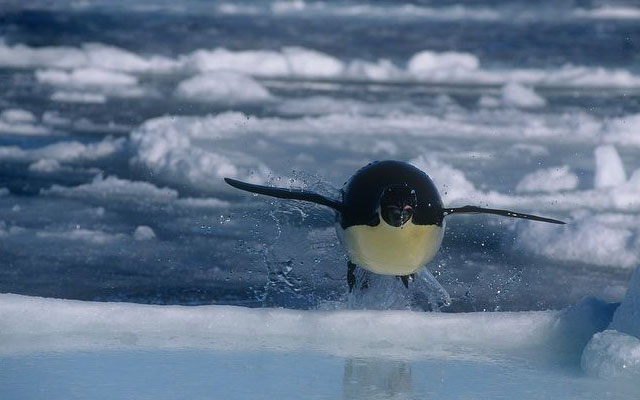
Previously, the relationship between sea ice and penguin hunting was not known, as it was difficult to observe these seabirds in polar frosts. To understand how penguins behave when they go out into the open ocean, scientists used special umbrellas that captured movements on land and under water.
Penguin Hunting Features
First of all, after a long journey, birds, of course, rest. After they leave the colony and head for the ice edge, they spend 3 to 38 hours waiting before going hunting.
Scientists believe that a long rest also allows birds to wait for a large group to gather. Antarctic penguins prefer to hunt in packs; they dive underwater in large groups. This helps them avoid the risk of being attacked by predators. Leopard seals, for example, wait patiently for a group of penguins to go under water and then attack, but being in a group makes it easier to escape persecution. However, scientists still believe that hunting in packs is the result of a herd feeling.
During the day and night, when the sun doesn't set over Antarctica this season, penguins eat to their fill for 2 weeks.