
 Science
The Earth's atmosphere is a source of amazing and amazing phenomena. In ancient times, atmospheric phenomena were considered a manifestation of God's will; today some people mistake them for alien aliens. Today, scientists have uncovered many of the secrets of nature, including optical phenomena.
In this article we will tell you about amazing natural phenomena, some of them are very beautiful, others are deadly, but they are all an integral part of our planet.
Atmospheric phenomena
1. Moon rainbow
© manfredxy
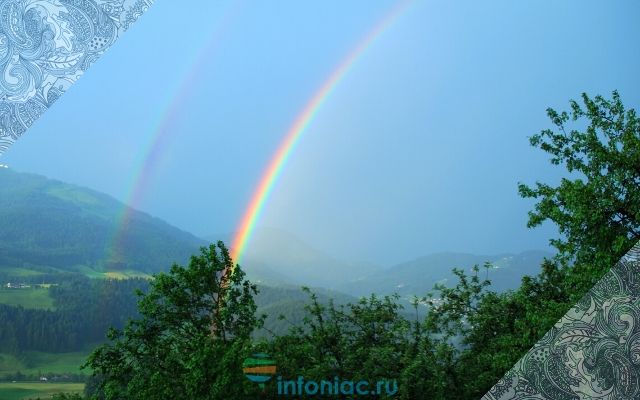
The lunar rainbow, also known as the night rainbow, is a phenomenon created by the Moon. It is always on the opposite side of the sky from the moon. For the lunar rainbow to appear, the sky must be dark and the rain must fall on the opposite side of the moon (except for the rainbows caused by the waterfall). This rainbow is best seen when the moon phase is close to the full moon. The lunar rainbow is paler and thinner than the usual solar rainbow. But this phenomenon is also more rare.
2. Bishop's ring

© Jyliana
Bishop's ring is a brownish-red circle around the Sun that appears during and after volcanic eruptions. Light is refracted on volcanic gases and dust. The sky inside the ring becomes light with a blue tint. This atmospheric phenomenon was discovered by Edward Bishop in 1883, after the famous eruption of the Krakatoa volcano.
3. Halo
© Aliaksei Skreidzeleu
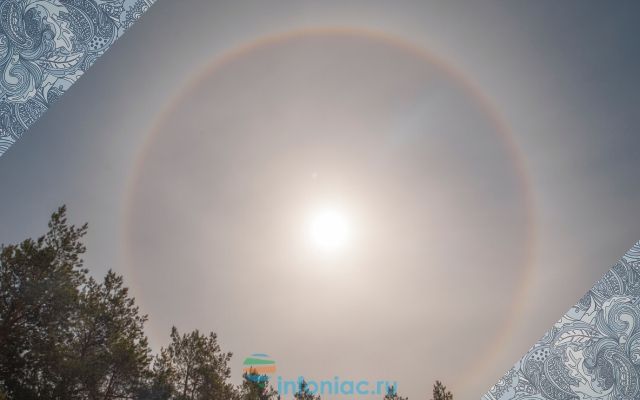
A halo is an optical phenomenon, a glowing ring around a light source, usually the Sun and Moon. There are many types of halos and they are mainly caused by ice crystals in cirrus clouds at an altitude of 5-10 km in the upper atmosphere. Sometimes the light through them is refracted so strangely that so-called false suns appear, which in ancient times were considered a bad omen.
4. Venus Belt

© Lunamarina
The Venus belt is an atmospheric optical phenomenon. It looks like a pink to orange band between the dark night sky below and the blue sky above. It appears before sunrise or after sunset and runs parallel to the horizon on the opposite side of the Sun.
Read also: 11 underground wonders of the world you should definitely visit
5. Silvery clouds
© Aleksandr Kichigin
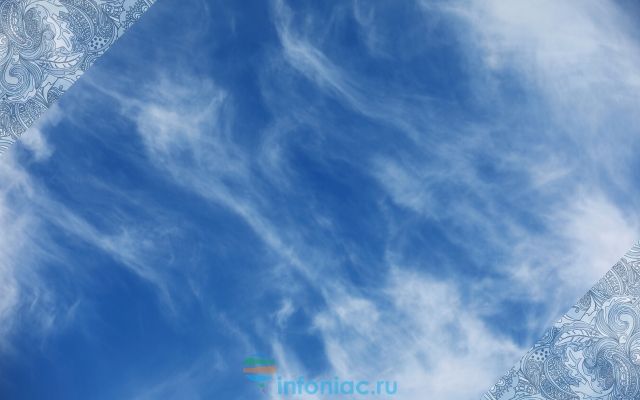
Noctilucent clouds are the tallest clouds in the atmosphere and are a rare natural phenomenon. They are formed at an altitude of 70-95 km. It is only possible to observe noctilucent clouds during the summer months. In the northern hemisphere in June and July, in the southern hemisphere in late December and early January. The time of appearance of such clouds is evening and evening twilight.
6. Northern lights
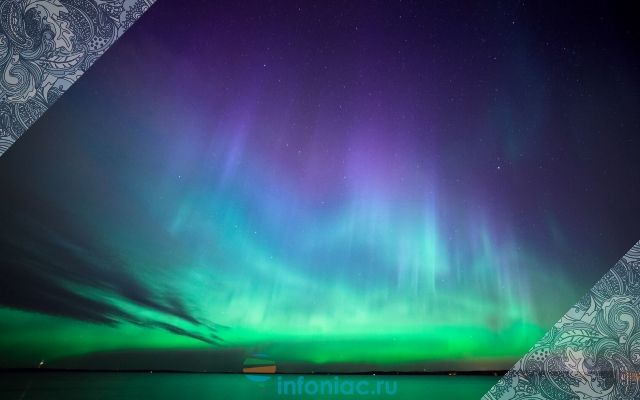
© Juhku/Getty Images Pro
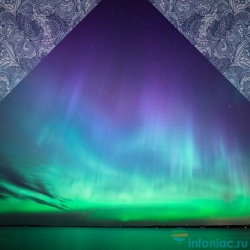
Aurora Borealis is the sudden appearance of colored lights in the night sky, usually green. It is caused by the interaction of charged particles coming from space and interacting with atoms and air molecules in the upper layers of the Earth's atmosphere. The aurora is observed mainly in the high latitudes of both hemispheres in the oval zones – the belts surrounding the Earth's magnetic belts.
7. Colored Moon
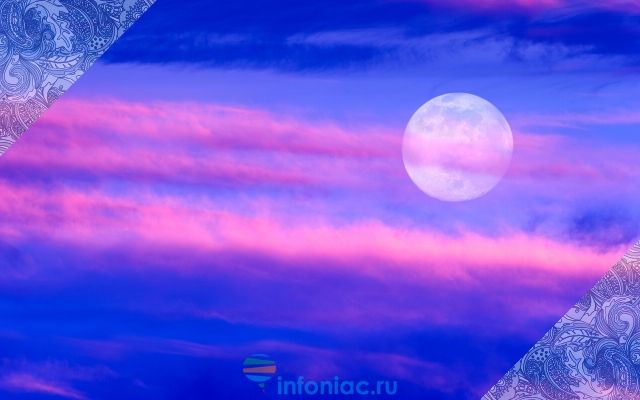
© David Baileys/Getty Images Pro
The moon itself does not emit light. What we see is only a reflection of the sun's rays from its surface. Due to changes in the composition of the atmosphere, the Moon changes its usual color to red, orange, green or blue. The moon's rarest color is blue. It is usually caused by ash in the atmosphere.
8. Mammatus clouds
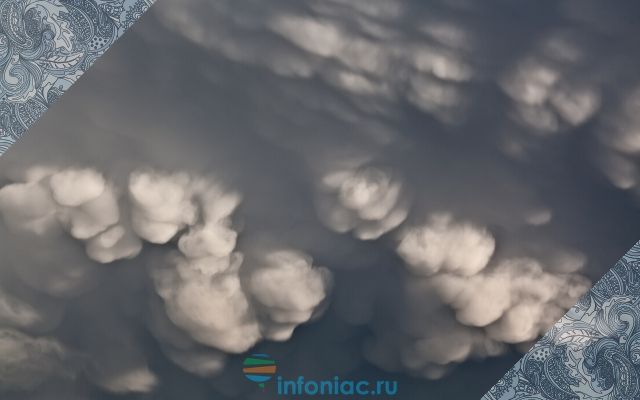
© Minerva Studio/Getty Images
Mammatus clouds are one of the types of cumulus clouds that have a cellular structure. They are rare, mainly in tropical latitudes, and are associated with the formation of tropical cyclones. Mammatuses are located under a major cluster of powerful cumulus clouds. Their color is usually gray-blue, but due to direct sunlight or the illumination of other clouds, they may appear golden or reddish.
9. Fiery rainbow
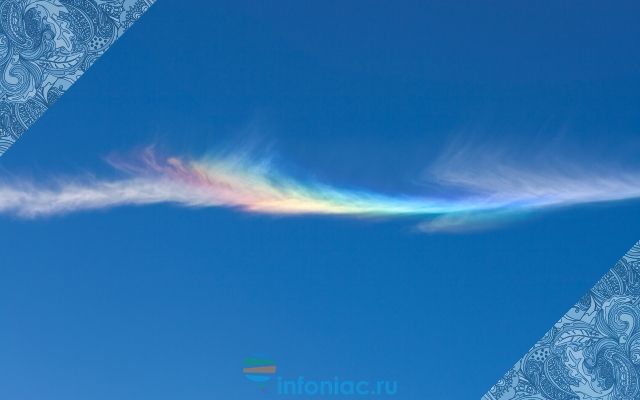
© acmanley/Getty Images Pro
A fiery rainbow is a type of halo, which is the appearance of a horizontal rainbow against the background of light, high clouds. This rare weather phenomenon occurs when light, passing through cirrus clouds, is refracted through flat ice crystals. The rays enter through the vertical side wall of the hexagonal crystal, emerging from the lower horizontal side. The rarity of the phenomenon is due to the fact that ice crystals in the cloud must be oriented horizontally to refract sunlight.
10. Diamond dust
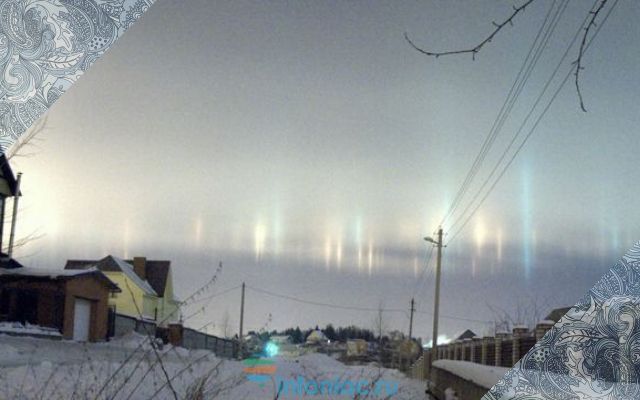
Diamond dust is solid precipitation in the form of tiny ice crystals floating in the air, formed during frosty weather. Diamond dust usually forms when the sky is clear or almost clear and resembles fog. However, unlike fog, it consists not of water droplets, but of ice crystals and in rare cases slightly reduces visibility. This phenomenon can be most often observed in the Arctic and Antarctic, but can occur anywhere at an air temperature of -10, -15.
11. Zodiac light
© Sergey Nivens
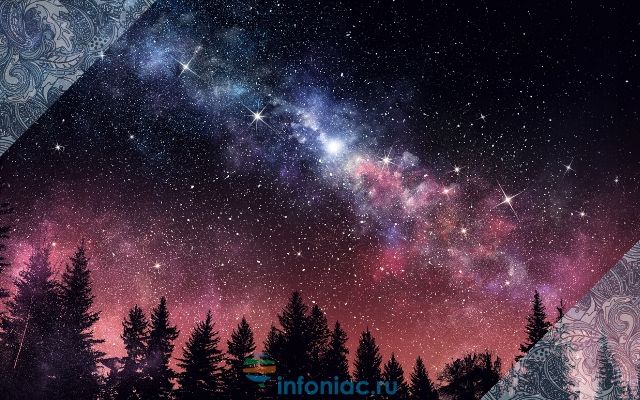
Zodiac light is the faint glow of the sky visible in the tropics at any time of the year, extending along the ecliptic, i.e. in the Zodiac region. This is the result of sunlight scattering into dust clusters in the area where the Earth rotates around the Sun. It can be observed either in the evening above the western part of the horizon, or in the morning over the eastern part. It looks like a cone that narrows away from the horizon, gradually loses its brightness and turns into the zodiac band.
12. Solar poles
© Pixabay/Pexels
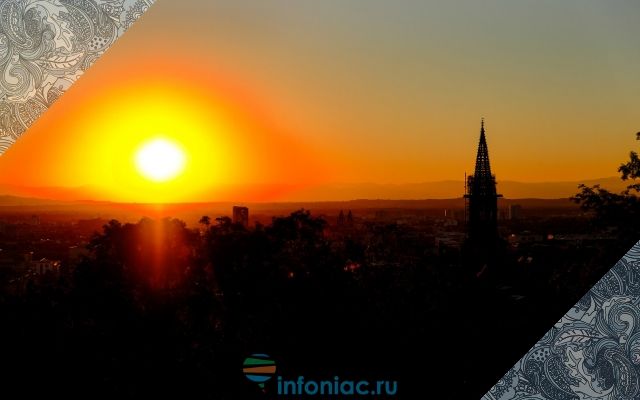
Sometimes, during sunset or sunrise, you can see a vertical band of light stretching from the sun. Solar columns are formed as a result of the reflection of sunlight from flat ice crystals in the Earth's atmosphere. Poles are usually formed by the sun, but the Moon and artificial light sources can be the source of light.
Natural hazards
13. Fiery tornado
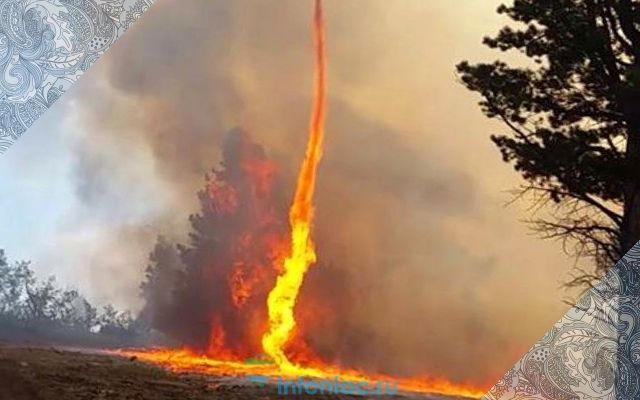
A firestorm or tornado is a rare natural phenomenon. It requires several large fires, as well as strong winds. Then, these several fires combine to form a huge fire. The speed of air rotation inside the tornado is over 400 km/h, and the temperature reaches 1000 degrees Celsius. The main danger of such a fire is that it won't stop until it burns everything in its path.
14. Mirage

© Ablestock.com/Getty Images
A mirage is a natural phenomenon that results in imaginary images of various objects. This is due to the refraction of light flows at the boundary between layers of air that are sharply different in density and temperature. Mirages are divided into upper ones – visible above the object, lower ones – visible under the object, and lateral ones.
A rare complex optical phenomenon consisting of several forms of mirages, in which distant objects are visible many times and with various distortions is called Fata Morgana. Travelers in the El-Rawi Desert are often victims of mirages. People in the vicinity see oases, which are actually 700 km away.
Read also: The most amazing optical illusions and mirages in nature
15. St. Elmo's Lights
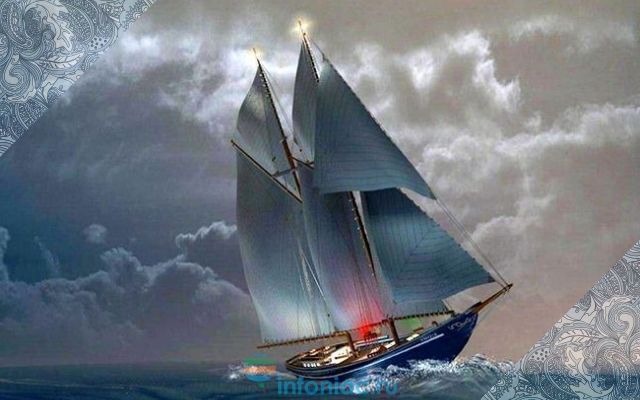
One of the most beautiful and amazing natural phenomena is the lights of St. Elm, which can be observed on the tops of pointed objects (towers, spires, lonely trees, etc.). They are formed when the electric field strength in the atmosphere at the tip reaches 500 V/m or higher. They most often occur during thunderstorms or when they approach, and in winter during snowstorms. They can look different: like dancing flames, an even flickering glow, or like fireworks.
Atmospheric phenomena are visible manifestations of complex physical and chemical processes occurring in the Earth's air shell – the atmosphere. Sometimes nature spoils us with completely unusual atmospheric phenomena, many of which surprise and frighten us, but still amaze us with their beauty and uniqueness.