
 Unbelievable facts
From time to time, people find really strange things at the bottom of the seas and oceans. Some of the artifacts found are staggering.
Our next story will be about ancient ruins, incredible animals and treasures.
Ancient computer
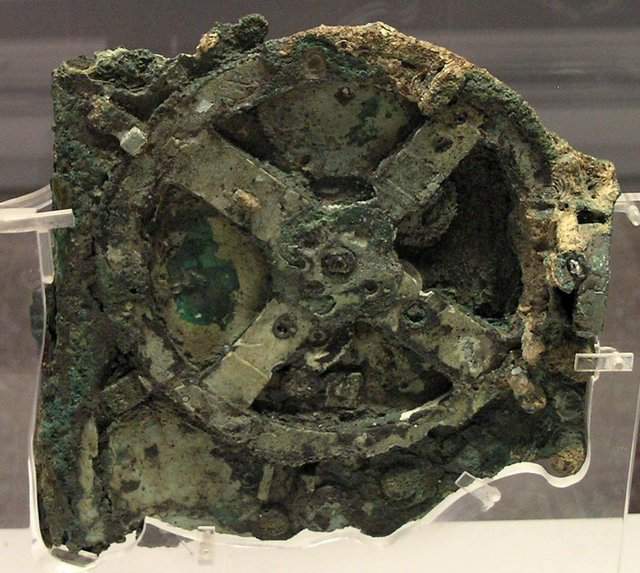
The Antikythera mechanism is one of the most amazing discoveries of the modern era, despite the fact that it has been lying in the ocean for thousands of years. This is the oldest known computing engine.
However, it is still not clear how the mechanism was used. There is a hunch that this is the first analogue of a computer due to its obvious complex design.
Presumably this computer was designed to predict lunar and solar eclipses based on the progressions of Babylonian arithmetic cycles, but the true function of an ancient computer remains a mystery.
Apollo engine
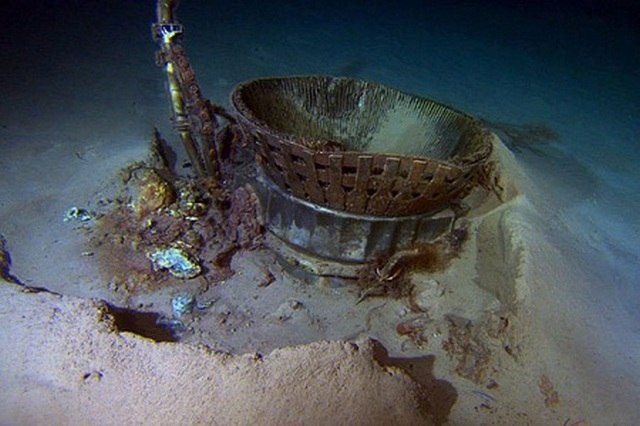
In March 2013, Jeff Bezos, CEO of Amazon, conceived a completely crazy but exciting venture, going in search of engines that were used when the Apollo 11 manned spacecraft takes off.
Read also: UFOs found on the ocean floor
They've been lying on the ocean floor since the rocket was launched in 1969. Two engines and some parts that were recovered have now been restored and are on display at the Kansas Cosmosphere and Space Center in Hutchinson, Kansas, USA.
Ancient city
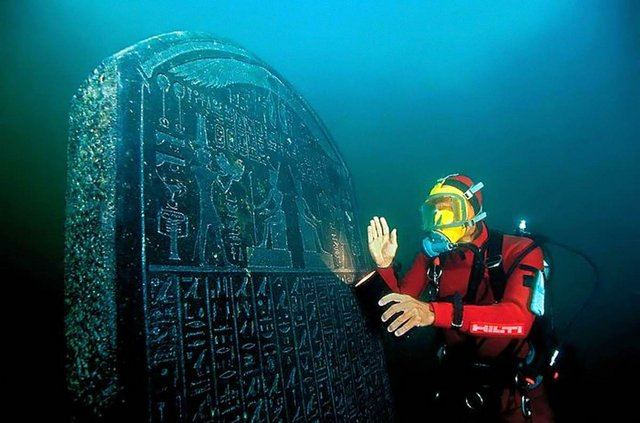
“How can an entire city sink?” — You may ask. Surprisingly, this happens more often than you think. Sea levels are constantly rising due to melting ice caps and other factors, flooding cities. And these are regrettable historical facts.
Fortunately, modern technology allows us to rediscover and explore these underwater ruins. One of the most famous examples off the coast of Egypt is the city of Thonis, better known as the city of Heracleon.
The found sculpture is a foundation that is more than a thousand years old.
Through the parts of the ancient city that have been discovered and the materials used, researchers look into the former significance of the submerged ancient city, which was supposedly the center Mediterranean trade. These ruins were discovered in 2000.
Emerald treasure
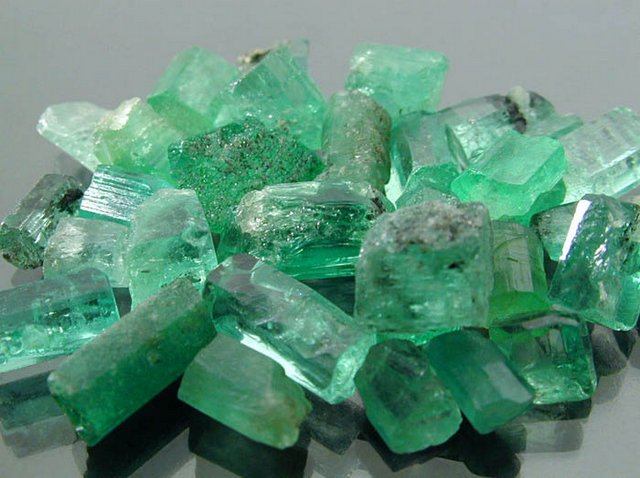
Jay Miscovish from Key West, Florida, USA bought a treasure map from a friend at a bar in 2010. Treasure hunter and diving enthusiast Miskovic went further to find out the state of the multi-million dollar emerald treasure he began to search for at the bottom off the coast of Florida.
The total weight of the found treasure, consisting of real emeralds, was more than 36 kg. The exact origin of these treasures is not yet known.
It is interesting that some time after the discovery of numerous gems, Jay Moskovich was awaiting legal battles with US federal agents. And in 2013, he was found shot dead in his home. The death was identified as suicide.
Coelacanth
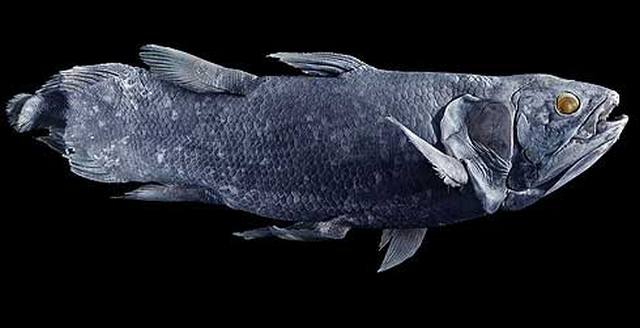
It was previously believed that they became extinct 65 million years ago. One species of coelacanth fish was discovered in 1938 by local fishermen off the coast of Africa. And the second species was discovered in Indonesia. The most interesting thing is that coelacanths have not succumbed to evolution at all over the many millions of years of their existence.
They are included in this list because they are very rare fish, about which, unfortunately, there is very little information in paleontological records. In terms of food, fish is of absolutely no value, since it is completely unsuitable for human consumption.
Pirate ships
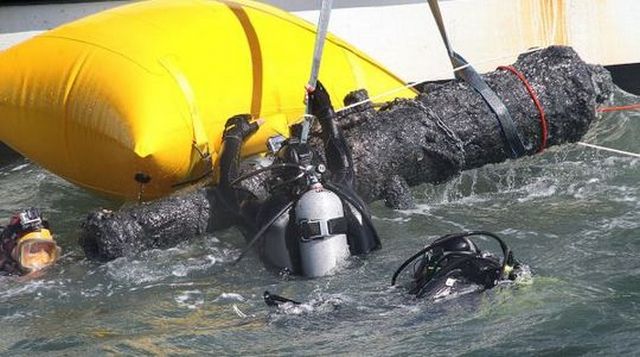
The wooden ships that have been lying on the bottom for centuries are breathtaking. For example, in 1718, the legendary pirate's ship known as Blackbeard sank to the bottom after running aground off the coast of the Beaufort Sea (Arctic Ocean).
And in 1966, what was left of this ship was discovered, including thousands of artifacts.
In 2013, the North Carolina Department of Cultural Resources took the lead in lifting heavy artillery from the ship. Several guns weighing more than 900 kg each were raised. And in 2014, a total of twenty different guns were raised from a pirate ship.
New sharks
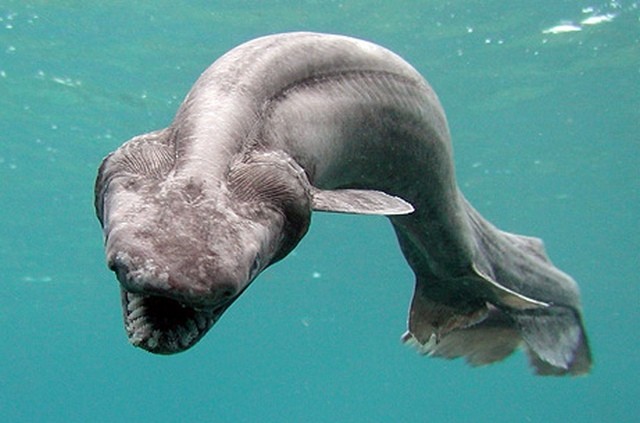
Hundreds of sharks were discovered deep in the Indian Ocean in 2012, and at least eight of them were new species. Paul Clerkin, a graduate student from Moss Landing Marine Laboratories in California, USA, led the expedition and was delighted with the results.
“They don't look like the classic great white sharks you see on TV,” he said in an interview with NBC News. They are similar to the usual sharks with a dentate spine and, perhaps, this is the only similarity.
Jurassic microbes

Something much older than coelacanth fish has been discovered deep in the ocean. In 2012, microbes from the Jurassic period were discovered at great depths.
They were barely alive. These tiny organisms did not feed for 86 million years, and barely had enough oxygen to support their metabolism.
Read also: James Cameron goes to the bottom of the ocean
It's hard to believe these microbes were still alive, but there's more than enough reason to consider these tiny creatures to be among the oldest living organisms on the planet.
British silver
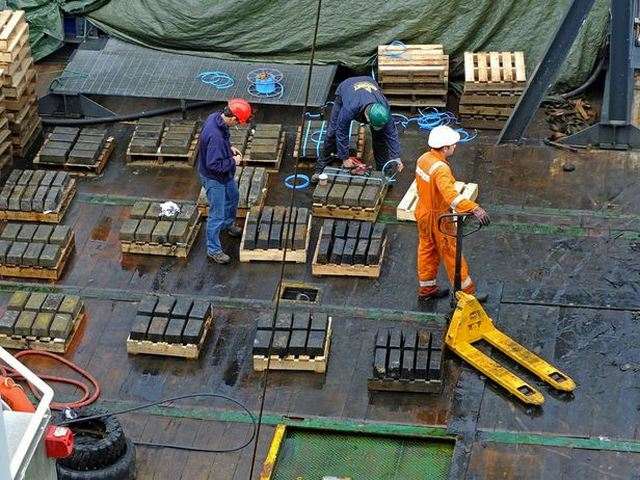
More than 61 tons of silver worth $36 million were extracted from the Atlantic Ocean. This is rightfully considered a world record for a treasure found in one place. The wealth was aboard the British ship SS Gairsoppa, which sank in 1941 as a result of a torpedo by the Nazis.
The ship sank 480 km off the coast of Ireland, and it was believed that it would never be found again.
As of summer 2012, Odyssey Marine Exploration (Tampa, Florida, USA) claimed that only about 20% of the total silver that should have been raised aboard. The total weight is expected to be about 240 tons.
Giant animals
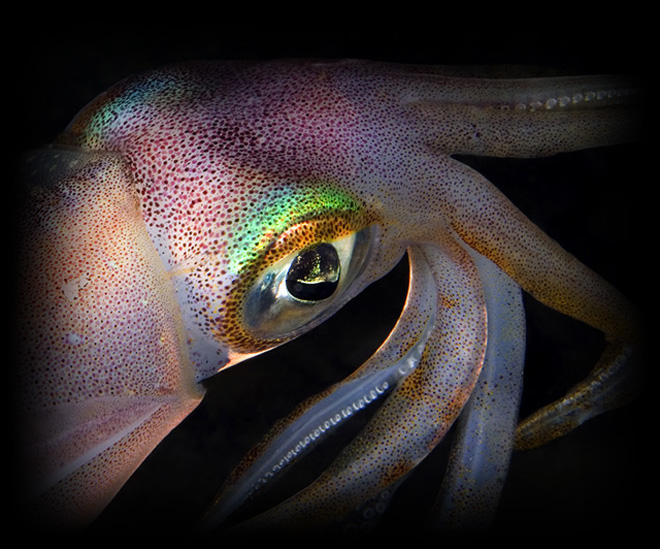
No list of weird underwater discoveries would be complete without some giant monster. It is known that there are several creatures that have been washed ashore over the centuries, some of them reaching more than 12 m in length.
For example, this is a giant squid that was filmed in its natural environment in 2001 by Japanese scientists.
Or this record-breaking crab, nicknamed Crab Kong. This arthropod has not even reached its maturity yet, but is already 3 m in diameter. A Japanese crab giant was fished near Tokyo.
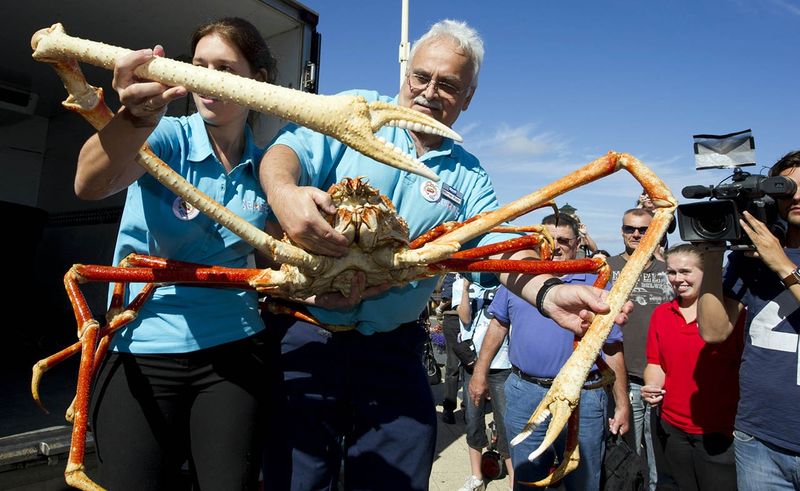
Initially, the fishermen who caught him wanted to cook soup from the sea “monster”, but then gave it to the biologist Robin James, who intervened in the case, who took care of him.