
 Science wheel
The invention of the wheel is considered to be the quintessence in the development of human civilization,
which distinguishes Homo sapiens from other species.
But as far as human history is concerned, the wheel appeared not so long ago. In Mesopotamia (modern) Iraq), the wheel appeared only 5,500 years ago, and representatives of other ancient cultures were able to achieve impressive technical achievements without a wheel at all.
Here are some important inventions that have been made to the wheel.
The history of inventions
1. Alcohol
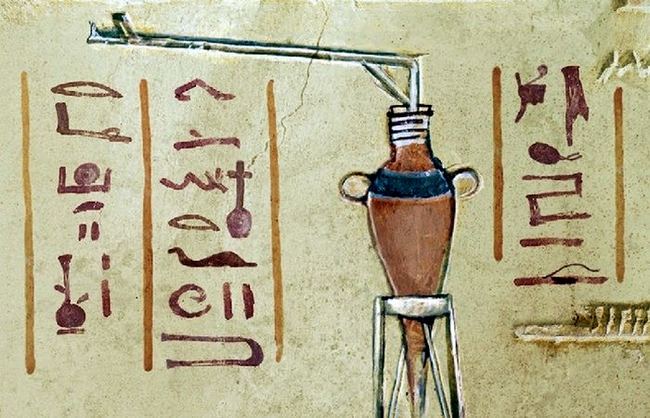
Some archaeologists believe that grain was originally grown to produce beer rather than bread. Although the scale of the influence of alcohol on human civilization is still being discussed, its ancient origin is no secret to anyone. The oldest evidence that humans have been drinking alcohol so far is 9,000 years old chemical traces of a fermented drink found on a drinking vessel in the Neolithic Jiahu settlement, China.
2. Clothes
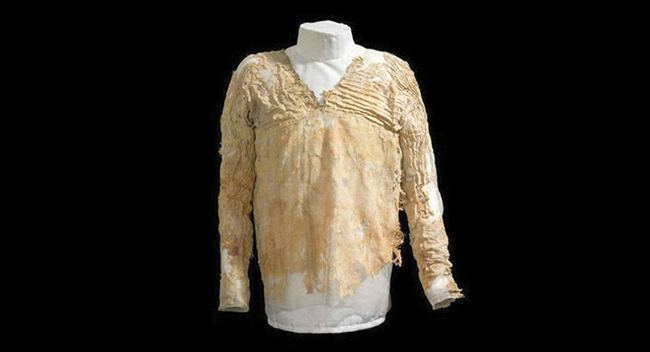
Because textiles, leather, and furs tend to decay over time, scientists have had to be creative in determining the origin of clothing. The dress (pictured) found in Egypt is at least 5,100 years old, which means it is relatively recent. Dating back to the First Dynasty of Ancient Egypt or the Ancient Kingdom, this dress is made of linen (and is the oldest piece of clothing made from textiles).
But in fact, mankind began to use clothes much earlier. A stone tool found during archaeological excavations in Germany has traces of tanned animal skin, which suggests that Neanderthals wore dressed skins 100,000 years ago. A 2011 study suggests that clothing can be traced back to the evolution of lingerie lice, which is about 170,000 years old.
3. Jewellery
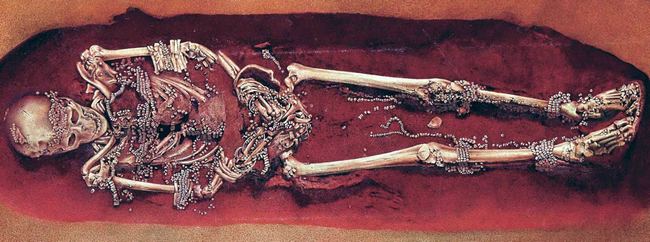
Clothing certainly helped people compensate for their hair lost with evolution and migrate to colder climates, but clothing may have also made cultural sense. According to archaeological sources, people have also decorated themselves with jewelry for a long time. The oldest surviving pieces of jewelry include 82,000-year-old pierced shells covered in red pigment from a cave in Morocco, as well as a 130,000-year-old eagle claw necklace, found in the Neanderthal cave in Croatia.
In Russia, at the place where the Sungir stream flows into the Klyazma River, in the Vladimir region, 30,000 years old remains of people, a 40-50 year old man and two children aged 10-14, were found. The costumes of the buried people bear a huge amount of jewelry, about 80,000 in total. It is safe to say that today, among all Eurasian burials of the Upper Paleolithic, the largest number of jewelry comes from Sungir (an ancient man's parking lot on the territory Vladimir Oblast).
4. Boats
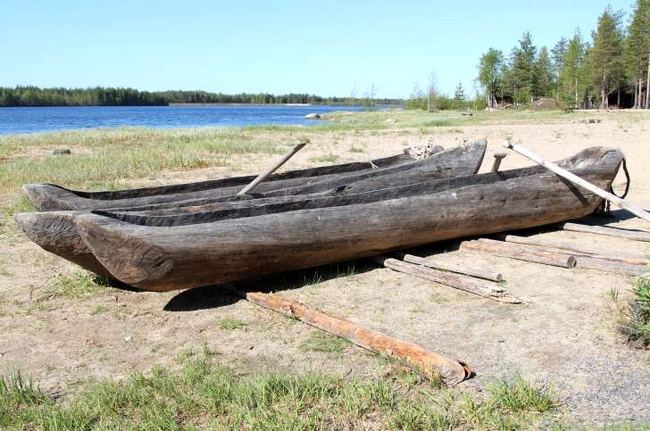
Before carts with harnessed animals became the main means of transportation, people had been using rafts and boats for a long time. It is believed that the Pesse canoe, which dates back to the radiocarbon method from around 8200-7600 BC, found in the Netherlands, is the oldest surviving boat in the world. But it is likely that in order to navigate the sea, for fishing or exploration, people learned to build boats even earlier. Eventually, settlers somehow crossed the oceans and made their way to Australia, Indonesia, and Pacific islands no less than 45,000 years ago.
Read also: 10+ of the most mysterious and unusual atmospheric phenomena
5. Calendar
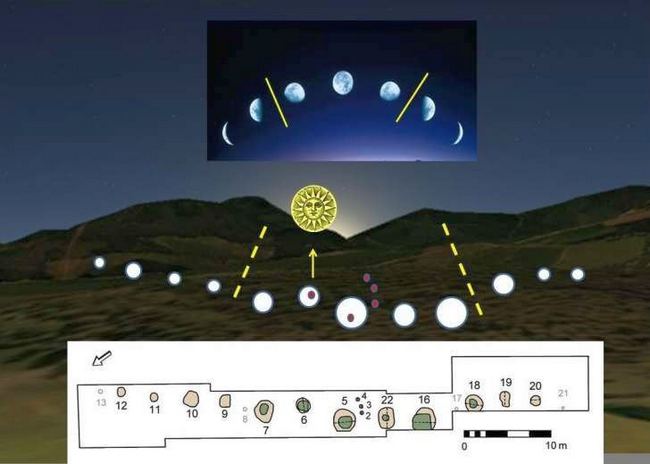
Long before watch gears were invented, people used sophisticated methods to determine time. One group of archaeologists claims that the first lunar calendar appeared 10,000 years ago. This is the Aberdeenshire ensemble, located in Scotland, which consists of 12 holes and forms an arcuate structure. It represents the months of the year. In Central Africa, Russia and Ukraine, it was no longer calendars in the form of holes that were found, but various drawings on stones, bones and vessels, also divided by 12.
6. Geographic maps
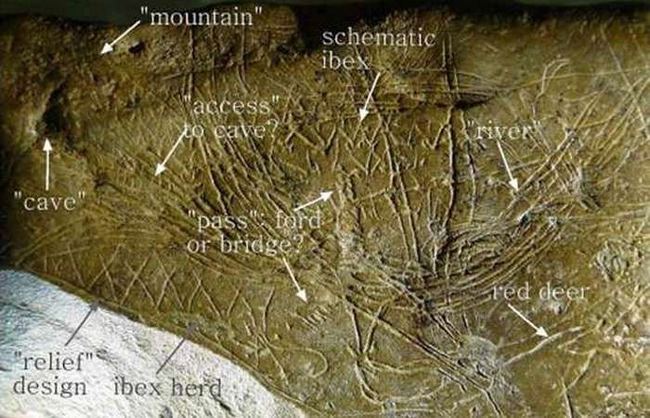
People had to invent not only ways to track lunar cycles, but also to understand how to navigate in space. Archaeologists are still discussing the significance of early rock art, but some of the oldest examples of possible prehistoric maps come from the Abaunz Cave in Spain. It is believed that 14,000-year-old stone tablets depict mountains, rivers and ponds, intersecting routes and hunting trails. Also, map-like images of mountains, rivers, valleys and routes found near Pavlov (Czech Republic) date back to about the 25th millennium BC.
Ancient inventions
7. cookery

When people learned how to make fire, they invented cooking. After all, if you cook meat and some types of plant foods on fire, you do not need to spend so much energy on chewing and digesting these foods. It was previously believed that humans started using fire for cooking 500,000 years ago, but paleontologists have found that humans began processing food on fire about 1.9 million years ago. Starting with Homo erectus, the structure of the teeth begins to change, which, according to scientists, is a sign of the habit of cooking.
8. Musical instruments
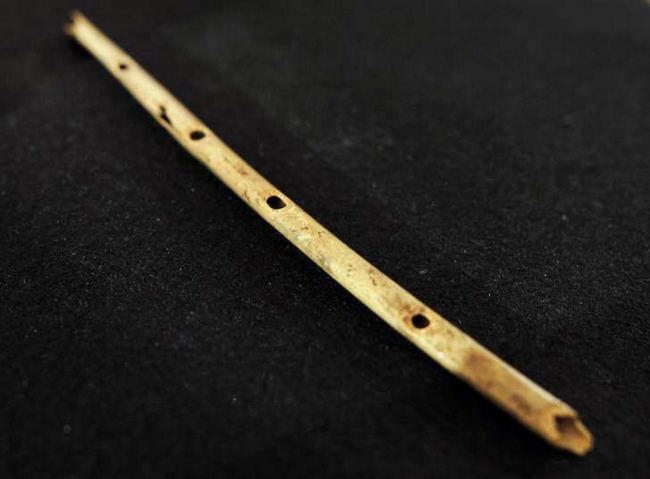
Modern scientists assume that music has been around for about 50,000 years. The oldest pieces of a musical instrument were found during excavations in Germany, in the Hole-Fels cave. They lay next to sculptures that date back to 35,000-40,000 BC. They were flutes made from vulture wings and mammoth tusks. Their thickness does not exceed 8 mm and the length is 21.8 cm. Five holes were pierced in the case, which were covered with fingers when playing.
9. Glue

Ordinary modern glue from the market has a long history. About 200,000 years ago, Neanderthals wandering across Europe used birch bark adhesive resin to attach their stone tool tips to their handles. Fingerprint fossils in resin along with the tool helped scientists make the discovery. To obtain such glue, birch was specially burned. During the firing process, resin was released and then all the elements were glued together with this resin.
Read also: Top 10 most disappointing sights in the world
10. Ceramics
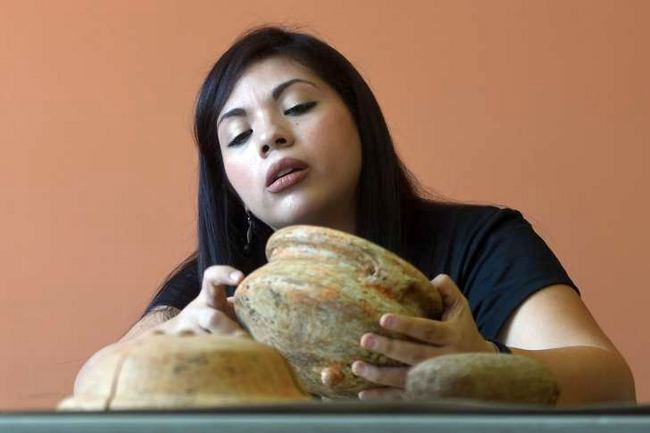
Thousands of years before the wheel was invented, humans made vessels for eating, drinking, and storing food by creating a mold out of clay and then burning it. Primitive man began to make his first dishes from wood and bark, and wove baskets from twigs. But all these dishes were uncomfortable, they could not be cooked in them, and liquids could not be stored in them.
The oldest ceramic vessels were found in China and are 20,000 years old. Clay was used to make bundles, stacked on top of each other in a spiral and squeezed. The dishes were covered with some combustible material and set on fire. Thus, it was possible to burn the dishes from all sides. Later, a potter's wheel came along, and some even argue that it's the first type of wheel ever made.
11. Bow and arrows

The remains of five bows, created 9,000 years ago, were found in the stone age village of Holmegards Mose in Denmark. But bows and arrows were invented much earlier. Recently, scientists reported the discovery of a bloody arrowhead at least 64,000 years old, not in Europe, but in South Africa's Sibudu Cave. These findings are very important because the invention of these tools requires complex forms of thinking. If we find out when the bow and arrow were invented, we'll establish when our ancestors began to think like modern humans.
Among modern people, the stereotype of an ancient man is common – a kind of shaggy savage in animal skin and with a baton. But in reality, our ancestors were much smarter and more creative than we used to think. This is evidenced by numerous archaeological finds. The more we discover archaeology, the more amazing the world of antiquity opens up to us.