
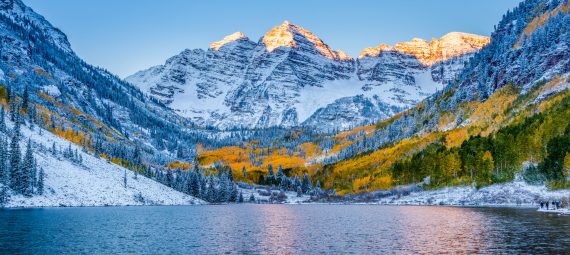
Aspen, Colorado
If you want to join a select circle of the rich and famous, then one of the most expensive American ski resorts Aspen is at your service. Located in Colorado, the city is known primarily for the slopes of four mountains that are not connected to each other in any way, allowing skiers with different levels of training to enjoy skiing and local natural beauty. Both beginners and professionals will be able to find a vacation to their liking here. The only negative (and for some it may be a plus) is an extremely high price for all types of services.
Cortina, Italy
Cortina is an Italian ski resort in the Dolomites, with a rich sporting history and an aristocratic spirit. It was here that the 1956 Winter Olympics, various championships and other competitions were held. Today, the Cortina ski slopes are an important stage in the World Cup and a worthy rival to other resorts. Like the Swiss Zermatt, the whole life of the city is centered around small but extremely pretty streets.
Mont Tremblant, Quebec
Combining the Canadian version of the French “art of living” with luxury is Tremblant, one of the most famous eastern Canadian resorts. A real paradise for skiers first declared itself in 1939 and became one of the first places designed for skiing throughout Canada and the second in North America. What makes the slopes of Mont-Tremblant especially attractive is its proximity to Montreal, the largest city in the province of Quebec and the second largest Canadian settlement. It’s only an hour away.
Stowe, Vermont, USA
This is one of the most famous and picturesque ski resorts on the map, combining the traditional charm of New England and a huge height difference. There are two ski areas — Mount Mansfield, the highest point in Vermont, and Spruce Peak. Stone is included in a limited number of American resorts connected to each other. A well-developed tourism industry in the form of at least 90 shops and 60 restaurants will not let you get bored in your free time from skiing.
Chamonix, France
Chamonix is the venue of the first Winter Olympic Games in 1924. Today, the popular ski resort claims to be one of the most famous ski areas in the world, and so far it is doing well. Chamonix is located at the foot of Mont Blanc, the highest mountain in the Alps, on the border of Italy and France, and the second largest in Europe.
Banff — Lake Louise, Alberta
Glacial Lake Louise is located in the heart of Banff National Park in Canada. Initially, it was named Izmrudnoye, because of the color of the water, but later it was renamed in honor of the daughter of Queen Victoria. It is the shores of Louise that has chosen one of the most picturesque ski resorts in North America, if not in the whole world. There are three ski areas — Mount Norkau, Sunshine Village and Lake Louise.
Vale, Colorado
The legendary Vale is perhaps the most popular American resort. It can rightfully be included in the list of the five best ski centers in the world. Vail has the largest ski area in the world, at least 5,300 acres, and a developed tourist infrastructure. What is not here: art galleries, museums, ice rinks, special balloons for lifting up and much more.
Zermatt, Switzerland
Zermatt is an excellent ski resort in Switzerland. This village is located in a quiet and peaceful corner of the canton of Valais, in close proximity to one of the greatest natural attractions of the Matterhorn Mountain. You will not find cars on the territory of Zermatt. The world’s second—largest elevation drop and prolonged snowfalls are characteristic features.
Kitzbuhel, Austria
The ancient Austrian ski resort Kitzbuhel is rightfully considered an “Alpine pearl”. A fashionable place to relax with a 700-year history is the venue for numerous winter competitions. Skiing began here in the 19th century. Local trails are the best place for downhill.
Whistler — Blackcomb, British Columbia
Whistler — Blackcomb is the owner of two ski areas, the names of which form the name of this privileged place for recreation. In 2010, the Winter Olympic Games were held here, so well—prepared trails and descents are the minimum that remained from the Olympics. A large height difference, a developed tourism industry and gastronomy for every taste are distinctive features.