
Christmas is one of the most important and favorite holidays in the world. It is associated with comfort, a decorated Christmas tree, festive garlands and a delicious dinner with the family. Each country has its own traditions of preparing and meeting this holiday. Someone is already preparing a dessert a month before Christmas Eve so that it is infused, someone is starting to choose the perfect fish and turkey, and someone is planning a trip to a fast food restaurant. Despite all the differences in its conduct, Christmas gives people positive emotions and the belief that the coming year will bring only joy and happiness. And delicious food and a special atmosphere allow you to tune in to a positive mood.
Christmas Pudding (UK)
Christmas pudding or plum pudding is the main dessert at a festive dinner in the UK. Despite the name, it is not made from plums (plum — plum). This word was called raisins in the Middle Ages. The composition of the pudding includes: raisins, bread crumbs, sugar, butter, spices (cloves, cinnamon, nutmeg). Before serving, the dessert is poured with brandy, rum or other strong alcoholic beverage and set on fire. Another feature of plum pudding is that it is prepared a few weeks before serving, giving it time to “ripen”.
Kucyukai (Lithuania)
Kucyukai is a small Lithuanian cookie with poppy seeds. It is usually served with poppy or cow’s milk to make the structure softer and the taste richer. They are served during the Christmas dinner, which in Lithuania is called Kuchios (Kūčios). On this evening, it is customary to serve 12 dishes, which mainly consist of fruits, vegetables, mushrooms and fish. Meat, at the same time, is not present on the table.
Latkes (Israel)
Latkes are an important part of the festive table for Hanukkah in Israel. These are pancakes made from grated potatoes, fried until golden brown in a large amount of oil. They are usually eaten with sour cream or apple sauce. It is prepared as a reminder of the miracle when the oil burned in the temple lamps for 8 days, instead of one. The first versions of latkes, though made of cheese, were prepared in the Middle Ages.
Christmas carp (Czech Republic)
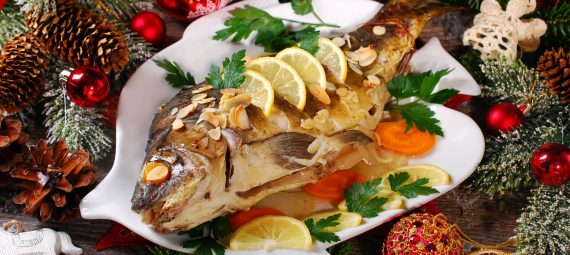
Christmas carp is a mandatory dish that should be on the festive table on Christmas Eve in the Czech Republic. The roots of this tradition stretch back to the Middle Ages, when carp scales were considered a symbol of wealth. Now it is customary to carry them in a purse for good luck, and it is also placed under each plate at a gala dinner. Cooking this fish for Christmas began in the XIX century. Usually carp is served in the form of fried pieces, whole baked or stuffed. As in Lithuania, meat cannot be found on the Czech festive table. Increasingly, Czechs are buying two carp: one to cook, and the second is launched into the bathroom, and then released into the wild, which is not too useful for fish.
Stolle (Germany)
Stollen is a pastry with candied fruits and raisins, which in shape and color resembles the baby Jesus wrapped in diapers. There are also varieties with nuts, marzipan and poppy seeds. It is made from a special yeast dough with a lot of flour and butter. After baking, it is smeared with melted butter and sprinkled with powdered sugar. Stollen in Germany is usually baked in advance and stored from a month to three. The first mention of this dessert dates back to the XIV century.
Flashtag (Denmark)
The flashtag is a traditional Danish Christmas dish. This is baked pork with a crispy crust, which is usually served with red cabbage stewed in duck fat with sugar, apples, onions, vinegar, red wine and spices. The traditional Christmas meal ends with sweet rice porridge, which is served at midnight. One almond is added to the dish — if an unmarried girl gets it, then in the coming year, according to beliefs, she will get married. For everyone else, a sweet find promises happiness. The one who got the almonds should hide it until the whole porridge is eaten.
Fried bananas (Cuba)
In Cuba, Christmas Eve, as in many Latin American countries, is an occasion to gather the whole family for a festive dinner. This evening, rice, black beans, rice pudding, rum pie are usually on the table. The brightest side dish is fried bananas, which perfectly complement the fried pig and rice. They are cooked on melted lard and traditionally eaten with sea salt — sometimes pepper is added for piquancy.
Panettone (Italy)
The Christmas table is different in different regions of Italy. Somewhere they cook seven different fish dishes, somewhere they serve dried cod and squid, and somewhere they eat roast lamb or poultry. The only dish that unites the whole country is the festive panettone cupcake. It is made from sweet yeast dough with the addition of candied fruits, chocolate chips, raisins and nuts. Each hostess has her own recipe for this dessert.
Fried chicken (Japan)
Japan is a specific country with unique traditions, so it is not surprising that it is here that the most unusual celebration of Christmas in the world exists. Since the 1970s, Japanese have been massively going to the Kentucky Fried Chicken (KFC) fast food restaurant, which is famous for its fried chicken in a special breading with a secret recipe. Also on the festive table is served osechi-riori — a set of seafood, which includes fish, shrimp, oysters, caviar, lobsters and seaweed. The composition may vary. It is served in special lacquered boxes. Each element of the osechi-riori has its own symbolic meaning.
Sorrell (Jamaica)
The only drink that got into this list of Christmas dishes is sorrel. Its basis is hibiscus flowers, from which the karkade drink is brewed. Ginger, orange peel, cinnamon, sugar are added to them. And, of course, in Jamaica it is impossible to do without rum, which completes the taste composition of sorrel. A drink with ice is served.