
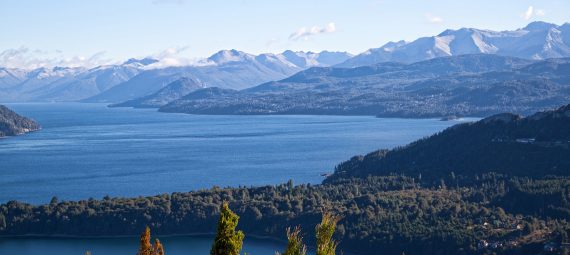
Nahuel Huapi National Park was one of the first to appear in Argentina. In 1903, the famous explorer Francisco Moreno transferred 75 sq. km of land to the state, but only in 1934 the government decided to establish protected national parks here and in Iguazu. The reserve got its name from Lake Nahuel-Huapi (“jaguar’s nest”) — the main attraction and pride. Located in several diverse natural areas at once, the park demonstrates the richness of the natural and plant world of the country. On the territory of Nahuel-Uapi, rare species of cedar and southern beech have been preserved, some of their representatives have reached a very respectable age — 500 years, and the diameter of the trunk of some beeches exceeds as much as 2 m. In the forests of the reserve, you can find outlandish Patagonian larches, entwined with vines. Once you get used to exotic trees, you no longer react enthusiastically to overgrown ferns and bamboo.
Located in several diverse natural areas at once, Nahuel-Huapi Park demonstrates the richness of the natural and plant world of the country.
The wildlife of the reserve is also unique. It is home to deer-like guanacos, Andean deer, fallow deer, representatives of rodents: viscach and nutria, armadillos and mouse possums. Among the exotic feathered inhabitants of the reserve are nandu, wedge—tailed parrot, Magellanic woodpecker, Chilean hummingbird.
Natural attractions
The “loud-voiced” volcano Tronador is visible from everywhere, this is how its name sounds in Spanish. He got the name not for his explosive character, since he had long since died out, but for the roar of periodically breaking off and falling blocks of ice. This mountain, located on the border of Argentina and Chile, is now famous for its glaciers sliding down the slopes due to global warming. Melting snow masses give rise to many mountain rivers and lakes, the largest and most beautiful of them is the alpine Lake Frias.
The priceless decoration of the reserve is the Nahuel Huapi Lake, located 767 m above sea level. It is in this lake, according to rumors, that the formidable monster Nauelito lives, a symbol of the local places, bringing considerable income to residents. Tourist trinkets with the symbols of the monster are flying like hot cakes.
Fans of mysteries and legends come here from afar to catch a descendant of dinosaurs in the camera lens, but only a few manage to do it.
Tourism in the park
Both in winter and in summer, there is something for the soul in the park. The largest number of visitors falls, of course, in the Argentine summer (December — January), when the weather is fine, which opens up the widest opportunities for tourism. Adherents of active recreation go to explore the area in all available ways: by bicycle, canoe and even horseback riding. Kayaking trips have a special charm in order to see the mythological creatures about which there are legends. Diving, rock climbing and trekking are also among the available activities.
Naturalists are also attracted to excursions in the park, for whom the most desirable event is a meeting with a tiny pudu deer. The growth of this beast reaches only 30 cm. Or you can just wander around the park to feel unity with nature and feel the spirit of freedom that reigns in these places.
Do you want to be on board the ship on which the legendary revolutionary Che Guevara once sailed? Welcome to an exciting cruise on the lake on the Modesta Victoria pleasure boat!
With the onset of the South American winter, hundreds of ski enthusiasts rush to Nahuel Huapi Park to conquer the slopes of Cerro Catedral.
How to get
The park is conveniently accessible from the cities of San Carlos de Bariloche and Villa la Angostura. You can book a group sightseeing tour or come by yourself by car or public bus. It is worth considering that in summer regular buses run less often, so as not to interfere with tourist groups.