
 Events
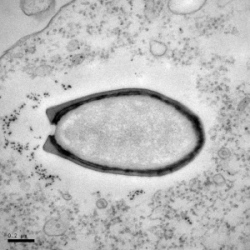
Scientists have discovered the largest viruses previously unknown to science, called pandoraviruses, which could become the 4th domain of life forms.
The new genus Pandoravirus is one micron in length, that is, a thousandth of a millimeter or one millionth of a meter. That's about one-hundredth the width of a human hair.
By comparison, other viruses will appear tiny, reaching 50 to 100 nanometers in size (1 nanometer = one billionth of a meter). The genus is in a taxonomic hierarchy between family and species.
In addition to the fact that these viruses are huge, their DNA contains far more genes, namely 2,500, compared to 10 genes in most viruses.
The biggest virus
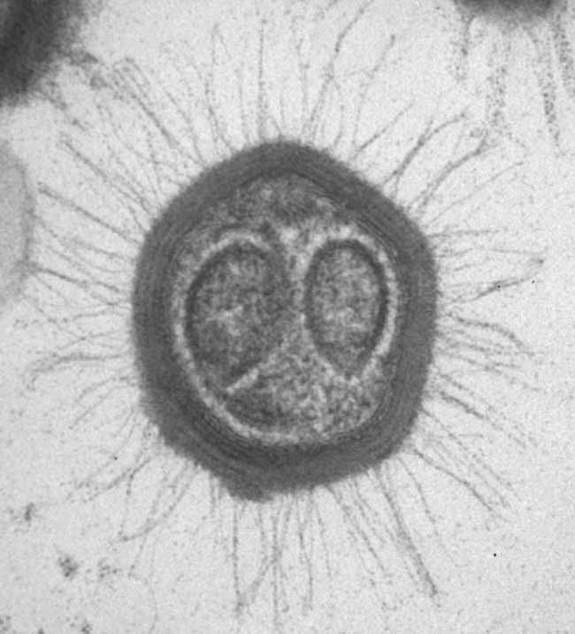
Mimivirus
About 10 years ago, Mimivirus was discovered, the first large virus measuring about 0.7 microns.
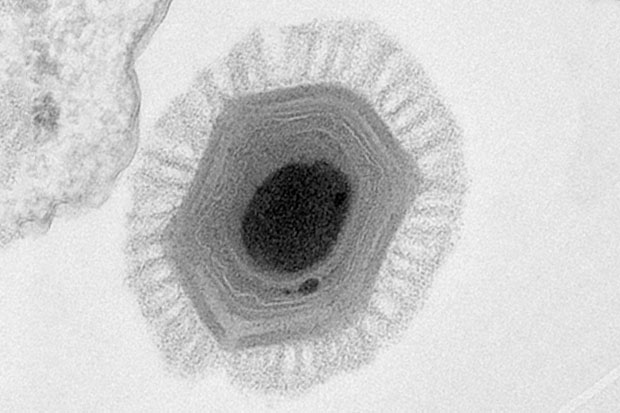
Chilean megavirus (Megavirus chilensis)
Later, another giant was discovered, the Chilean megavirus (Megavirus chilensis), which was 10-20 times larger than other viruses and contained the largest genome.
The world's largest virus has been found
The shape of the newly discovered viruses, similar to Greek jugs, reminded scientists of the myth of Pandora's box, after which pandoraviruses were named. They can be seen through an ordinary optical microscope.
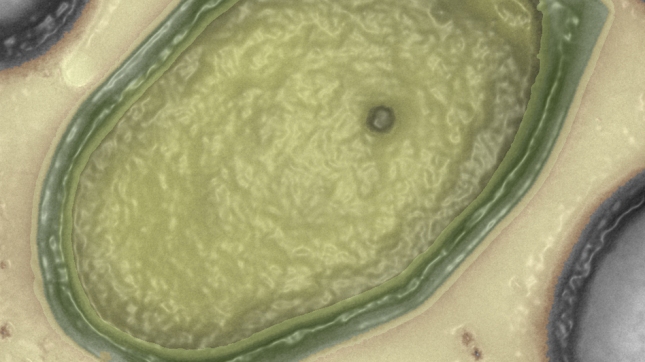
Pandoravirus
Jean-Michel Claverie, a microbiologist at Aix-Marseille University in France, and colleagues have discovered the giant Pandoravirus salinus virus at the mouth of the Tuncuen River in Chile and Pandoravirus dulcis in a freshwater pond near Melbourne in Australia. They are both parasites of amoebas.
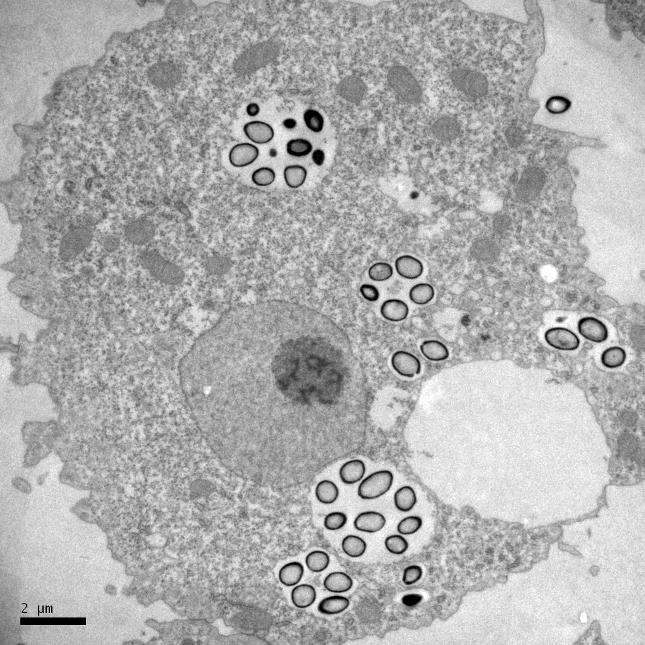
Pandoraviruses inside an amoeba
Scientists have found that 93 percent of pandoravirus genes are unlike anything else. In other words, they don't belong to any known virus family. This may indicate the existence of a fourth domain of life forms. At the moment, all life forms are divided into three domains: bacteria, archaea and eukaryotes, which include humans.
Human viruses
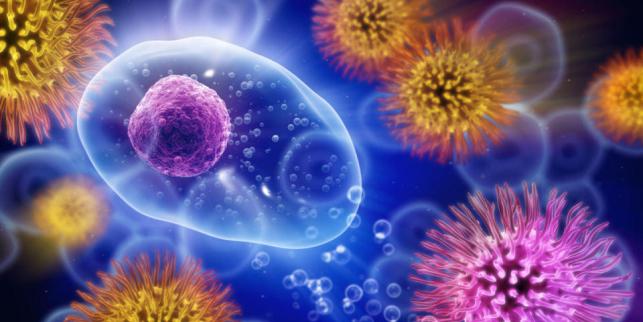
Viruses are tiny agents that cause infection in the body. Viruses differ from bacteria in that they are not cells and do not contain cellular parts.
Viruses are made up of their genetic material, known as DNA or RNA, which they use to reproduce. In order for the virus to survive, it needs to capture and attach to a living cell. There it will begin to multiply and produce even more viral particles.
By attaching to a host cell, viruses can kill or change cell function. This is how they cause illness. Most viruses are a thousand times smaller than bacteria and can only be seen with an electron microscope.
Some viruses are transmitted from person to person by air, while others are transmitted by the exchange of body fluids.
Types of human viruses
There are a lot of viruses that can cause diseases in humans. Some of the most common viruses include hepatitis viruses, HIV, influenza viruses, herpes viruses, rotaviruses, rhinoviruses, human papillomavirus, etc.
What do human viruses look like? British artist Luke Jerram creates glass sculptures of deadly human viruses.

H1N1 swine flu virus

SARS virus

HIV

Variola virus

Human papilloma virus