
 Science
Not only are scientists unsure how the universe will end, they're not even sure if it's going to end at all.
Assumptions have been made more than once about the fate of our universe. As a rule, the names of the end were frightening, such as the Big Freeze, the Great Destruction, etc. After all, it was claimed that the universe could collapse, destroying everything stars and galaxies, or it could expand into an endless void.
“The only truth is that the doomsday scenario is still open, and no one knows for sure what might happen,” says Steve Allen, an astrophysicist at Stanford University. “However, it will take a very long time for events that may end to take place, and if people still exist then, they will have a very difficult time.”
The role of dark energy
The fate of our universe largely depends on a mysterious substance called dark energy. This is the name of unexplained forces that counteract gravity that can “stretch the universe at the seams”. Dark energy was originally discovered when scientists began to study how much the expansion of the universe is slowing down due to the force of gravity that “pulls it inward”. They found that, in fact, the expansion rate of the universe is only increasing. For this shocking discovery, three astrophysicists won the Nobel Prize in 2011.
If dark energy continues to have the same effect on the universe in the future, space will continue to expand and the distance between galaxies will be wider and wider. After all, we won't be able to see anything beyond the Milky Way because everything would be too far away.
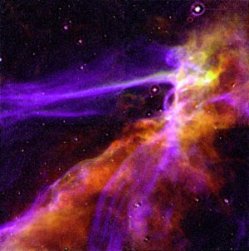 “Today we look up at the sky and we see fantastic things: galaxies, their collisions and much more,” says Allen. “But if the expansion continues at this rate, these galaxies will go too far away for humans to be able to see them at all. Space is becoming less beautiful, and the universe is becoming more and more secluded.”
This scenario is often referred to as the Big Freeze because the universe will eventually become a cold, dark, and empty place.
This vision is most likely the future of our universe, scientists say, because observations suggest that the power of dark energy is very stable and will remain so for a very long time to come. for a long period of time. It's possible that dark energy is exactly what Einstein called the cosmic constant (a term he used in his general theory of relativity).
However, the Big Freeze is not inevitable. If dark energy isn't constant, but instead increases over time, we're going to face a different development. The actual strength of dark energy is currently considered too low even to overcome gravity on a local scale. However, if it grows stronger, it will be able to counteract not only the space between galaxies, but also the space within them.
“At some point, galaxies might tear themselves apart,” says Penn State University physicist Martin Bojowald. “The Milky Way could be torn apart, the question is whether it will affect the solar system.”
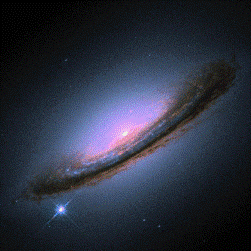 Another scenario suggests that the power of dark energy will decrease over time. In this case, the expansion of the universe will slow down, and eventually stop altogether. If dark energy becomes weak enough, gravity may eventually prevail and the universe will “absorb itself”, meaning the Big Crunch will occur.
“At the beginning, the collapse will be very harmless, and the density of the universe will increase, but at a very slow pace. However, after a while, the collapse will cause the density of the universe to be the same at the time of the Big Bang, “says Boewald.
According to general relativity, at the time of the Big Bang, the universe was only one point in size and “infinitely dense”. However, most physicists believe that this theory is incomplete because it cannot fully describe what happened to quantum and gravitational forces back then.
Thus, if the universe begins to absorb itself, it is not yet clear whether it will stop at its original form, or whether some unknown force will start the cycle of life anew.
Revealing a mystery
“Our most important question is what dark energy is. The answers obtained depend on understanding the physical nature of dark energy.”
Researchers still hope to find an answer to this question, as the search continues, and they are getting more and more accurate data on the rate of expansion of the universe over time. Over the next decade, scientists plan to provide accurate information about what happened to dark energy 14 billion after the Big Bang.