
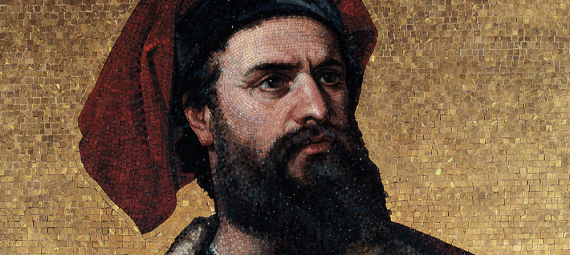
Throughout history, certain travelers have captured the imagination of the world with their daring journeys, detailed accounts, and remarkable discoveries. These explorers ventured into the unknown, often facing great dangers and challenges, and their travels have inspired generations. Here’s a look at the top 5 most famous travelers in history, whose adventures left an indelible mark on our understanding of the world.
1. Marco Polo (1254–1324)
Marco Polo, a Venetian merchant, is one of the most well-known travelers in history. His journey to Asia began in 1271, when he traveled with his father and uncle along the Silk Road to the court of Kublai Khan in China. Polo’s travels spanned over two decades, and he documented his experiences in “The Travels of Marco Polo,” which provided Europeans with one of the first comprehensive looks at the cultures, geography, and economy of the East. His detailed accounts sparked a fascination with Asia and inspired future explorers, including Christopher Columbus.
2. Christopher Columbus (1451–1506)
Christopher Columbus, an Italian explorer, is famously credited with discovering the Americas, although indigenous people had lived there for thousands of years before his arrival. In 1492, Columbus set sail under the Spanish flag, hoping to find a new route to Asia. Instead, he landed in the Bahamas, marking the beginning of European exploration and colonization of the Americas. His voyages opened up the New World to Europe and led to significant cultural exchanges, albeit with profound and often devastating impacts on indigenous populations.
3. Ibn Battuta (1304–1369)
Ibn Battuta, a Moroccan scholar and traveler, embarked on one of the longest and most extensive journeys in pre-modern history. Over nearly 30 years, he traveled more than 75,000 miles, covering much of the Islamic world, as well as parts of Africa, Europe, and Asia. His travels took him to places like North Africa, the Middle East, Central Asia, India, China, and even parts of Southeast Europe. Ibn Battuta documented his experiences in the “Rihla” (The Journey), providing valuable insights into the cultures, societies, and politics of the medieval world.
4. Ferdinand Magellan (1480–1521)
Ferdinand Magellan, a Portuguese explorer, is best known for his expedition that led to the first circumnavigation of the Earth. In 1519, Magellan set out with a fleet under the Spanish flag to find a westward route to the Spice Islands (now part of Indonesia). Although Magellan was killed in the Philippines, his expedition continued under the command of Juan Sebastián Elcano, and in 1522, they successfully completed the first circumnavigation of the globe. Magellan’s voyage proved that the Earth is round and much larger than previously thought, revolutionizing navigation and global trade.
5. Zheng He (1371–1433)
Zheng He was a Chinese admiral and explorer who led seven great maritime expeditions during the early 15th century under the Ming Dynasty. His fleet of enormous ships, known as the “Treasure Fleet,” sailed to Southeast Asia, South Asia, the Middle East, and the east coast of Africa. Zheng He’s voyages were marked by diplomatic exchanges, trade, and the collection of tribute, showcasing China’s naval power and influence. His expeditions established trade routes, cultural exchanges, and even brought back exotic animals like giraffes to the Chinese court.
Conclusion
These famous travelers not only explored new lands but also played pivotal roles in shaping the world’s history, culture, and understanding of geography. Their journeys paved the way for future explorers, expanded trade routes, and facilitated cultural exchanges that continue to influence global societies today. The spirit of adventure and curiosity that drove these explorers remains an inspiration for travelers and explorers of all kinds.