
 Ecology
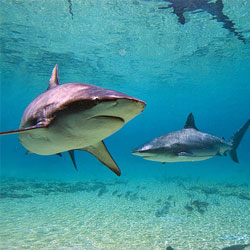
There are more than 400 species of sharks in the world, and only a few live in fresh waters. This may scare those who like to swim in rivers, lakes and ponds in the summer heat, but you should not be afraid of freshwater sharks, almost all of them are quite safe for humans, but there are quite dangerous sharks, who love swimming in rivers from the oceans.
When scientists talk about freshwater sharks, they mean 5 species of the genus Glyphis (freshwater gray sharks), although scientists believe that there are other freshwater sharks that are not yet known science.
These freshwater predators live in India, Southeast Asia, and parts of Australia. They are rarely observed, so these sharks are very poorly studied. Some are known only from the only representative caught. All five species of these sharks are on the verge of extinction due to human activities, environmental pollution and the fishing industry.
Freshwater sharks have short, broad faces and tiny eyes. It is believed that they can reach a length of 3 meters, although only a few adults of this size have been caught. They have broad fins and look more like typical fish than their relatives from the salty seas and oceans.
Common grey shark
Very little is known about the common grey shark (Glyphis glyphis), as only a few members of this species have been found. They live in mangrove rivers in northern Australia and New Guinea. These sharks swim very fast and have a very large dorsal fin. The shark's lower jaw teeth are narrow and spear-shaped.
It is known that common gray sharks catch underwater currents in order to save energy. They feed on fish and crustaceans and take advantage of poor visibility in rivers. Like many sharks, these sharks are viviparous and don't spawn.
These fish are an endangered species. The International Union for Conservation of Nature estimates that only 2,500 individuals remain, and their numbers are falling due to habitat loss and the fact that they are caught fishing in nets.
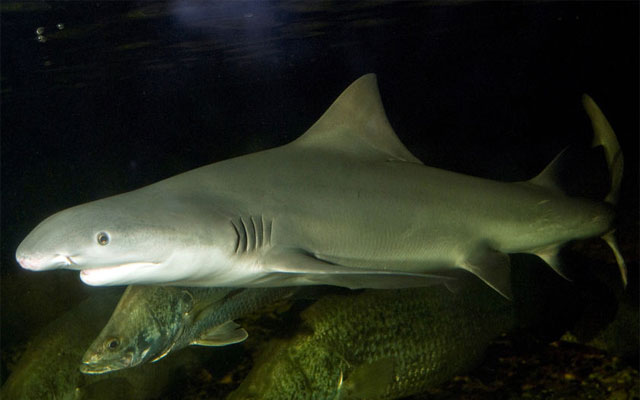
The closest relative of the common grey shark is the New Guinea grey shark (Glyphis garricki) and the gray shark of the Ayeyarwaddy River (Glyphis siamensis). These species are in great danger and may soon disappear. The last shark species is the least known; there is only one specimen that was caught in Myanmar's Ayeyarwaddy River and preserved in a collection of rare species as early as the 19th century.
“Mystical” shark
The Borneo shark (Glyphis fowlerae) is often referred to as “mystical”; a couple of this species were caught in the 19th century. So far, little is known about the distribution of these sharks, and even less about their biology. They appear like ghosts in different places. If you can find one such shark, it is considered a great success.
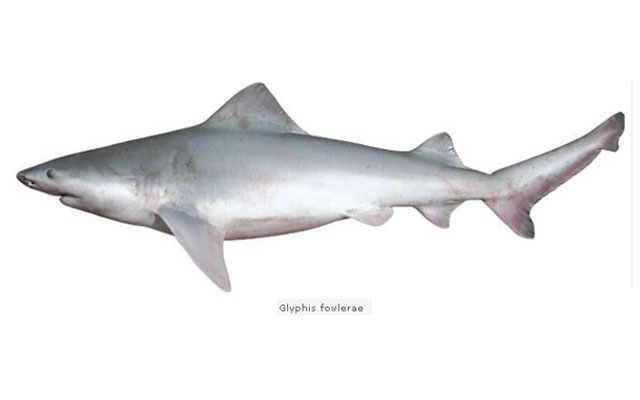
Another very rare gray shark is the Indian shark (Glyphis gangeticus), which lives in fresh waters in eastern and northeastern India.
Bull shark
Indian sharks are often confused with another type of shark, bullsharks (Carcharhinus leucas), which are not freshwater sharks, but sometimes swim in rivers. These sharks aren't actually close relatives of Indian sharks.
Bull sharks, or dumb sharks, as they are also called, love the warm shallow waters around the coast and the river. They can often swim in brackish or completely fresh waters. These sharks are known for their aggressiveness and good adaptability. Stupid sharks were seen in the Ohio River far from the ocean coast in Indiana, and even cases of their attacks on humans were recorded.
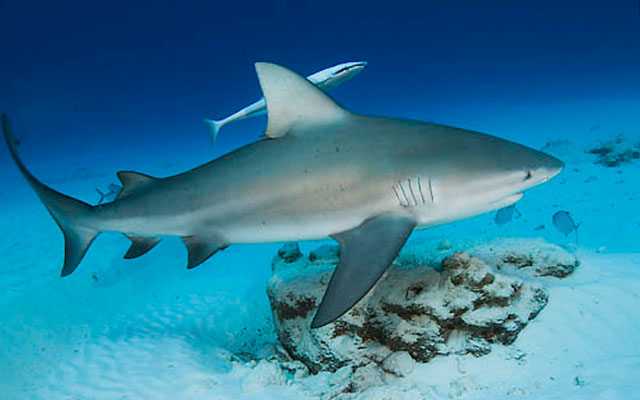
Bull sharks have developed a tolerance to fresh water and have developed the ability to limit the release of salts from the blood by using the rectal gland. Gills and kidneys also help control the amount of salt in the body.
Dumb sharks mostly hunt alone, but can sometimes act in pairs, allowing them to catch a wide variety of animals. They try to stay in one territory, so they grab everything that falls into their zone.