
 Science
Scientists have created the first semi-synthetic living organism with a genetic code that is different from other living organisms on Earth.
This will be the first step towards creating a new microbial life form.
An additional artificially created part of DNA with an expanded genetic alphabet was introduced into a semi-synthetic microbe, a genetically modified bacterium of E. coli.
Instead of the usual 4 letters of the alphabet, its DNA molecule contains 6 letters.
Other life forms
The natural genetic code of all living organisms is based on a sequence of 4 bases: A (adenine), G (guanine), C (cytosine), T (thymine). They form two sets of pairs that connect two strands of the DNA double helix.
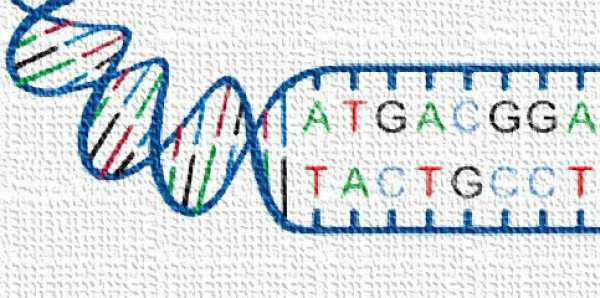
The DNA of the new semi-synthetic microbe has an additional pair, labeled X and Y, embedded in the genetic code.
Semisynthetic E. coli reproduces in the usual way and can transmit new genetic information to subsequent generations, but cannot produce new proteins.
Scientists at the Scripps Research Institute in the United States have for the first time managed to create a genetically modified microbe that can function and reproduce with a different genetic code than that has existed since the beginning of life on Earth more than 3.5 billion years ago.
Read also: DNA molecules may have existed long before life
This achievement will be widely used in various fields, ranging from drug development to new nanomaterials. Scientists will be able to create new types of proteins by expanding the existing range from 20 to more than 200 amino acids.
Researchers claim that new life forms are not dangerous outside the laboratory, as they cannot reproduce synthetic DNA strands unless they are fed with artificial bases, that don't exist in nature. In addition, bacteria will need a special protein to transport new bases.
Human DNA: interesting facts
DNA stands for deoxyribonucleic acid. DNA is found in all living organisms on Earth.
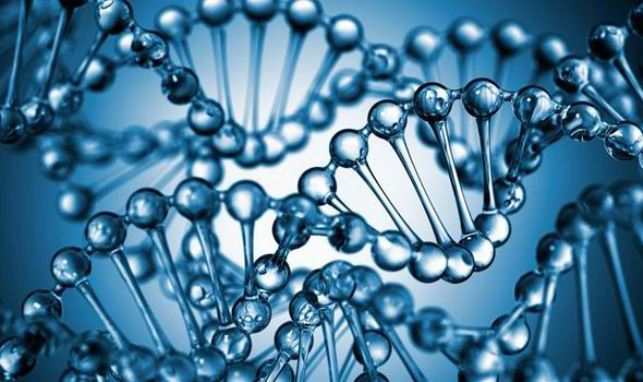
· Despite the fact that it encodes all the body's information, it is built from only 4 components. DNA has a double helix structure like a twisted staircase. The steps of the ladder are 4 bases: adenine, guanine, cytosine, and thymine. The sides of the DNA ladder are made up of sugars and phosphate atoms.
· Every person on Earth shares 99.9 percent of their DNA with others. Only 0.1 percent differentiates us from each other.
· If you put all the DNA molecules in your body together end to end, the DNA will reach from Earth to the Sun more than 600 times.
· 98 percent of human DNA is similar to chimpanzee DNA.
· If you were to type 60 words per minute for 8 hours a day, it would take you 50 years to print the human genome.
· DNA is a fragile molecule. Something happens to her about 1000 times a day that causes errors. These can be rewriting errors, damage from ultraviolet light, or other types of activity. There are many regeneration mechanisms, but some damage remains in the form of mutations. Some of these mutations can cause diseases, such as cancer.
· About 2 grams of DNA can hold all the world's digital information.
· DNA was discovered by Swiss scientist Friedrich Miescher in 1869. He found a microscopic substance in the pus of a used surgical bandage, which he called “nuclein”.