
 Ecology
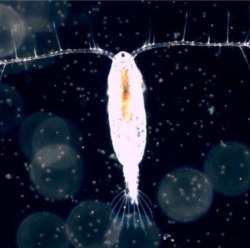
The tiny marine plankton of copepods offers us clues to why warming causes animals to shrink in size.
“It is well known that cold-blooded species get smaller as global temperatures increase,” says Andrew Hirst, a specialist at the University of London. Experiments show that with each increase in temperature by 1 degree Celsius, the body weight of an adult animal decreases by 2.5 percent. It was a mystery why this was happening.
To find out, Hirst collected data on 15 species of copepods that swim in the open sea, focusing on how they grow at different temperatures. As a result, he found that as the temperature rises, copepods begin to grow faster. Hirst believes this is a physiological acceleration response to higher temperatures that causes them to ripen more quickly.
They also mature more quickly for “adult life”, so their rapid growth causes their lives to “end when they are young”.
It is not yet clear why temperature has such a strong effect on the rate of maturation of these organisms, but Hirst suspects that evolution “selects” those who are more adapted to mature more quickly. In a competitive environment, this increases the likelihood that individuals will be able to leave offspring before they are killed.
The idea that growth and maturation react differently to temperature has long existed in scientific circles, but until now no one has tried to test this hypothesis within a single species. It is also emphasized that changes in size within a single species can show what effect this has on the food they consume, as well as on the predators that feed on them. “If you start changing copepod species, this can lead to very unpredictable side effects in the ecosystem.”