
 Events
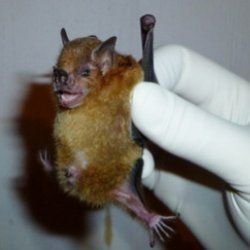
Scientists have discovered a new influenza virus that infects bats, saying that the risk of the hitherto unknown virus for humans is still unknown.
The surprising discovery of genetic fragments of the influenza virus is the first documented evidence in winged mammals. Scientists have not yet been able to grow it and therefore it is unclear how fast it is spreading.
The flu virus is common in humans, birds, pigs, and there have even been cases in dogs, horses, seals and whales. Five years ago, Russian virologists announced the detection of influenza in bats, but then it was not possible to provide evidence.
Scientists suspect that some bats caught the flu several centuries ago and the virus mutated into a new species. Although scientists have not been able to grow the new influenza virus in chicken eggs or human cell culture, as they did with other strains of influenza, it can still pose a risk to people. For example, if it mixes with more common forms of influenza, it can exchange genes and mutate into a more dangerous species.
New virus: what is the enemy?
The new virus belongs to a family of influenza viruses called influenza A virus. Birds are natural carriers of this virus, but it is also found in other animals and humans. Influenza viruses that cause pandemics tend to come from infected animal populations.
Although bats have not yet contributed to the development of influenza in humans, they are known to carry a number of diseases that affect humans and pets, including SARS, rabies and Marburg haemorrhagic virus.
The global distribution of bats, their large numbers and their ability to fly long distances make them ideal candidates for acquiring and spreading viruses.
Influenza A viruses are named using the letters H and N, such as H1N1, each letter of which represents a protein on the surface of the virus: hemagglutinin and neuraminidase, respectively. The H protein of the bat virus is quite unique and has been given the new designation H17, and the N protein is more ancient than all type A and type B viruses that only infect humans.
The researchers were unable to grow the virus in the lab, but they found that components of the bat virus can be mixed and combined with the human influenza virus. This means that the virus is capable of recombination, in which different influenza viruses that have infected the same part of the cell create a new virus with new properties. This process led to strains that caused the H1N1 virus or swine flu pandemic.
It is not yet clear whether this will happen in nature, as this requires a bat virus and a human virus to infect the same animal at the same time, and scientists cannot predict the probability of this event.