
 Science
Young children reason and learn about their surroundings, just like scientists do. They form hypotheses, test them, analyze conclusions and learn from their actions and those of others, all in child's play.
All this once again proves the importance of early development, but according to scientists from the University of California at Berkeley, the academic nature of preschool education can only be harmful.
Children learn by using probabilistic models, embracing the world through patterns, and using them to make predictions.
For example, in a number of experiments, children were given the task of playing with an electronic installation that turned on the lights and started playing music if some parts of it were arranged in a certain way. Children began to try different combinations and arrangements, learning what worked and what didn't, and changing their approach based on data.
“We found that, like scientists, they tested hypotheses related to the device and determined which one was most likely,” explained Alison Gopnik, who conducted research.
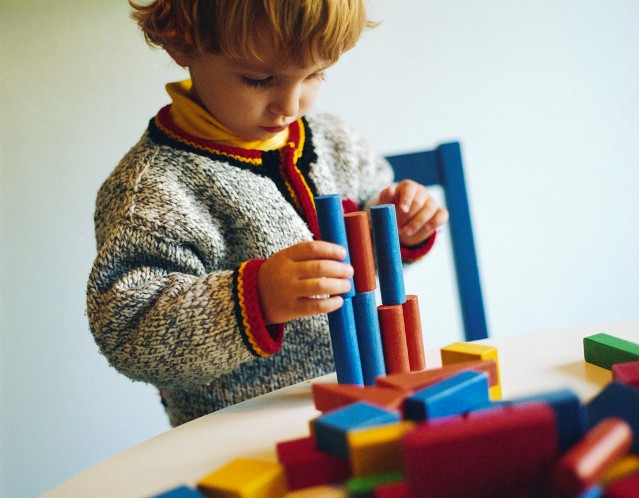
However, before rushing to teach children physics and mathematics from an early age, scientists recommend encouraging children to play more often. Instead of direct instructions and rigorous lessons, children should be given the opportunity to learn cause and effect by playing with different things and watching them work to develop their scientific thinking.