
 Ecology
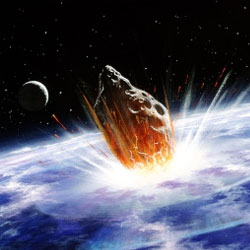
Even before Earth was hit by a huge asteroid, some dinosaur populations had already disappeared in the last 12 million years of the Cretaceous, researchers said.
The asteroid, which fell to Earth about 65.5 million years ago, was just one of many factors that led to the death of flightless dinosaurs. “I think our study underscores the fact that we still have a lot of work to do to fully understand why dinosaurs went extinct,” said Stephen Brusatte from Columbia University, author of the research.
“There are a few things we know for sure,” he added. “65.5 million years ago, a huge asteroid or comet fell to Earth, just when dinosaurs stopped being found in fossils.”
Scientists are also aware of serious volcanic activity and changes in sea levels at the time. However, it has now become known that some groups of dinosaurs went through a period of very severe population decline and became extinct. This happened during the last 12 million years of the Cretaceous period, at least in North America.
These studies have shown for the first time that the extinction of dinosaurs was based on a morphological discrepancy, that is, the diversity of body structure in certain groups of dinosaurs. The greater the diversity among members of one species, the healthier its population is considered.
Previous studies have always been based on estimates of changes in dinosaur numbers over a period of time, but these data may have been influenced by the uneven number of specimens found .
For example, some geological formations can preserve dinosaur remains much better than others.
Brusatt and colleagues looked at changes in body size in seven major dinosaur species using databases that included different characteristics of the complex skeletal structures of about 150 different species.
Scientists have discovered that very large herbivorous dinosaurs died out long before the natural catastrophe that occurred 65.5 million years ago. These animals included hadrosaurs and ceratopsids.
On the other hand, small herbivorous dinosaurs (ankylosaurs and pachycephalosaurs), carnivorous dinosaurs (tyrannosaurs and coelurosaurs), and giant herbivorous dinosaurs that do not have the ability chew food (sauropods), remained quite stable during this period.
The disappearance of large species is still a mystery. Brusatt reported that something happened to large herbivorous dinosaurs during the last phase of the Cretaceous period. Perhaps the environment has undergone major changes due to strong changes in sea levels and the emergence of new mountains.
Herbivorous dinosaurs could be the first to fall under the influence of these factors, as they were at the very edge of the food chain. “After a few million years, other dinosaur species that were slightly higher in the food chain began to die out,” Brusatt said.
Some other researchers disagree with Brusatt and believe that dinosaurs died out mainly due to the fall of an asteroid.
“First, only a few groups of dinosaurs have seen a discrepancy in the last 13 million years of the Cretaceous period, while other groups felt fine. This study actually offers evidence that the extinction was very drastic,” said paleontologist Paul Upchurch from University College London. “We need to understand a mechanism that would explain why smaller dinosaurs and larger sauropods suddenly became extinct at the end of the Cretaceous.”
Secondly, he added, it is necessary to look at the entire history of the development of dinosaurs, perhaps their population declined several times in the past during the entire period of existence of dinosaurs – 165 million years old.
“The discrepancy in the past 12 million years may have been just an evolutionary stage that dinosaurs may have encountered in the past, but it had nothing to do with extinction,” Upchurch said .
Brusatt agrees that the results of his research are still very controversial, although, according to him, “we cannot ignore the fact that the last stage of the Cretaceous period was not stable and life was drastically disrupted a fallen asteroid.” It is obvious that the dinosaurs living at that time faced changes that came before the catastrophe.