
 Useful tips
Contents:
General recommendations for all ages, starting from 40
How to start exercising after age 40
How to start exercising after age 50
How to start exercising after age 60 and beyond
If you're over 40 (50, 60, or more) and haven't exercised for a long period of time (or never in your life!) , does this mean that you have been ordered to go to the gym?
By no means, scientists and doctors say! If you want to start an active lifestyle for the first time after 40 or even much later, we offer you some universal tips to help you do it as efficiently as possible and painless.
General recommendations for all ages, starting from the age of 40

Rido
It's clear that going to the gym for the first time in your life is at the age of 70 (or even 40!) to immediately pull a heavy barbell or work on machines for wear and tear, this is not the most reasonable solution. And sports training at a later age will benefit health only if the right approach has been chosen, which, in fact, allows you to join sports for the first time at this age.
We'll talk about different approaches for each age below, and now we offer you a simple but universal advice for all ages, be it 40, 50, 60 or even more:
for anyone who started exercising for the first time or after a long break (say, several years or even decades), it is extremely important to start sports training from the most light loads, gradually increasing their intensity and duration step by step.
As our bodies age, it becomes increasingly important to properly combine cardio exercises with strength training. Cardio exercises (also known as aerobic exercises) affect the heart muscle, training it and keeping it toned, while strength training (so-called resistance or resistance training) ) help strengthen bone tissue.
What is cardio exercise
Cardio exercises are intensive loads that are aimed at strengthening the cardiovascular system. The specificity of aerobic exercises lies in the fact that at the time of their implementation, a high intensity of muscle loads is achieved in combination with loads on the respiratory and cardiovascular systems. At the same time, strength loads (working with weights or on exercise equipment, for example) are minimal.
An example of cardio exercise is all outdoor sports activities, including running and even walking. Strength exercises can also be done in cardio mode, but for an untrained person (especially for elderly people who have almost always been far from sports), strength training in cardio mode is contraindicated.
Have there been any studies that confirm the possibility of safe participation in sports in old age?
Just in August 2019, the popular academic publication Frontiers in Physiology published the results of an official study on whether it's too late to start studying sports in old age (link to the study at the end of the article). If you get a little ahead, you can calm everyone down right away – the results of the study suggest that it's not too late to start exercising at any age.
Read also: Sports games make middle-aged people smarter
Despite the fact that the study itself was not large-scale, it covered an age audience well over 70 years old. And the results clearly confirm the fact that even at such an advanced age, exercise (even if it has never been properly practiced before) can bring tangible health benefits.
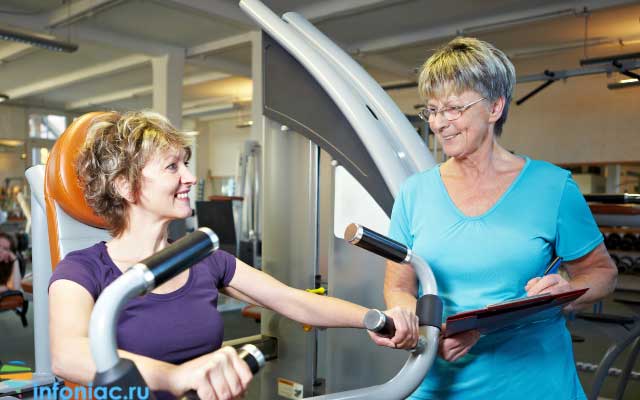
Robert Kneschke
Based on all of the above, we offer you a number of tips that will help people in their 40s, 50s, 60s (and even more) painlessly introduce themselves to an active lifestyle combined with regular physical activity.
How to start exercising after 40
Do you know what the bad news is?
If you are over 40, you can be sure that the process of muscle loss (so-called age-related muscle loss) has already begun. This age period is characterized not only by loss of muscle mass, but also by a decrease in physical strength, which is a result of the natural course of events (that is, the result of aging).
To stop this process, it is necessary to develop an individual weight training program (that is, strength training using dumbbells, barbells and other sports inventory). If such training does not take place, you can safely expect that your body will now lose three to five percent of muscle mass every decade.
But there's some good news!
Even if you haven't been exercising in all previous years, with the right individual training regime that you started after age 40, there is every chance not only to stop the loss process muscle mass, but also reverse it fairly quickly.
An important condition!
For this to happen, your physical health must be conducive to strength training. You should also not have had serious injuries in the past that could prevent you from working this way. You should first undergo a medical examination!
Even if you start exercising diligently and regularly right now, no one says you'll immediately feel like you're back in your younger years and are now ready for a marathon race. Don't try to catch up if you haven't been exercising regularly for a long period of time.
The most appropriate training regime for people in their 40s is two to three sessions a week. These activities may include one-on-one work with a gym trainer, group classes for your age group, or working independently on a program designed for you training sessions. The need for a gradual increase in loads should be determined individually!
Sad news for women
It is most difficult for women to start playing sports for the first time after the age of 40. Forty years of age for women are usually the period of so-called perimenopause. That is, at this age, irreversible changes occur in the female body that precede a natural irreversible state called menopause (with infertility and others inevitable) consequences).

Rido
Characteristic signs that indicate the onset of perimenopause include sudden weight gain, the appearance (or increase) of a noticeable fat layer at the waist; often women face a paroxysmal sensation of heat that cannot be controlled. However, regular sports training can help to cope with these symptoms (nullify or help you survive them as painlessly as possible).
What is the best way to start exercising at this age?
At this age, moderate intensity activity is indicated, which may include:
frequent walking in fast mode (use cars and public transport less often; take advantage of any moments to walk);
leisurely swims in the pool (do not strain too much, as you can harm your body out of habit).
Start with this simple activity — it will help you prepare for more serious workouts, which, of course, should include aerobic and strength training.
By the way, a little more about aerobic exercises, which are extremely important to do correctly after 40 years in order to maximize the benefits of the cardiovascular system. There are special methods for calculating heart rate depending on gender, age, body weight, etc., that you can work on with a trainer if you want.
However, here's a simple tip that tells you the right way to do the exercise in cardio mode:
If you can say a relatively long sentence after doing an aerobic exercise without losing your breath, this means that the exercise is heart-healthy not enough, that is, it was not executed correctly. If the exercise was done in the right mode, then your breath will be enough for you to have time to say 5-6 words before your breath fails.
Be sure to include weight exercises (lifting barbells, dumbbells, etc.) in your training regimen. Start with the lightest weights to avoid injuries and sprains. The coach will help you choose the optimal load based on your own weight. Before increasing the load, learn how to work properly with the previous weight.
What does this mean? This means that if the sets are too short, the training results will be minimal. Also, if you do 3 sets of 10 repetitions with a certain weight without straining, you're not making your body work. You should add the load so that you can work with it comfortably and safely, but that the last two repetitions are difficult for you.
How to start exercising after 50
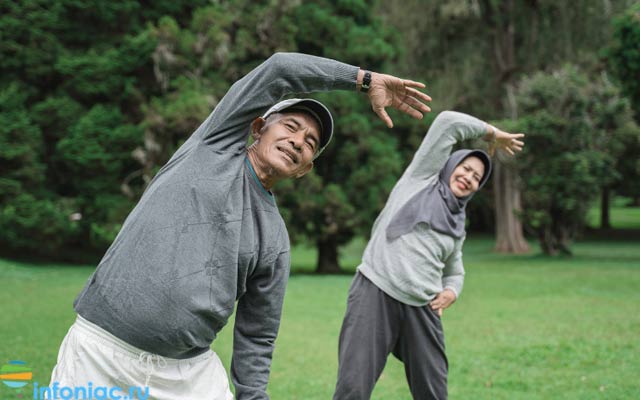
Odua Images
The ruthless natural course of events is that after age 50, age-related muscle loss begins to occur even faster than after age 40. In addition, muscle strength and endurance also continue to decline. As a result of this process, the metabolic rate in our body after 50 years decreases by 10-15 percent.
But that's not all…
In addition, the bone strength factor decreases. This happens both in men and in women. As a result of this process, the risk of bone injuries (fractures, cracks) increases significantly. Our ligaments, which by this age become less elastic, are not getting younger either; the amount of so-called synovial fluid (a kind of lubricant for joint ligaments) decreases.
All this together may result in injuries to our body rather than, say, ten years ago (that is, at the age of 40). That is why it is recommended not to neglect
advice for those who plan to start exercising for the first time at this age.
What is the best way to start exercising after age 50?
At the age of 50, it is very important to start exercising with a personal trainer. The presence of a specialist who will monitor you is necessary at least to assess your body's ability to increase stress and intensity before you start a full training regime.
A qualified coach will definitely prescribe you several exercises (let's call them diagnostic or testing) that will allow him to assess your flexibility and endurance in combination (speech it's about muscles, joints, spine, heart, and so on). It is during this period of time that it is necessary to develop an individual training program, including exercises that correspond to your level of physical fitness and state of health (taking into account, of course, , your existing injuries and contraindications).
It's very important!
Before you start working even with a coach, you need to undergo a medical examination that will rule out the presence of any pathological conditions or hidden diseases, that can interfere with your sports activities.
Based on the recommendations and conclusions of your trainer and doctors, you will be offered a cardio training program that may include working on an exercise bike, swimming, or you may be restricted to start intensive walking. Only after that it will be possible to think about a gradual increase in loads.
If you work out intensively enough, but you have enough short rest breaks between sets, this means that you can gradually increase your cardio intensity. This approach strengthens your cardiovascular system while increasing the benefits of aerobic exercise.
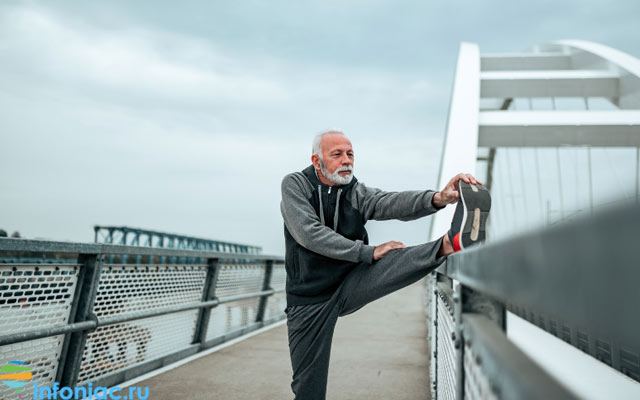
NortonRSX/Getty Images Pro
You can't do without power loads at this age. Weight exercises help strengthen your body, increase your strength; it is very important to work on the muscles of the lower extremities and body, as such training helps improve balance, and in the future, they will help you stay on your feet, which is very important in old age to avoid falls and injuries.
The training regime after age 50, as well as after 40, can include two to three sessions per week. It is very useful to regularly include in the training complex such important exercises for this age period as:
push-up from the floor while lying down;
squats;
simple abdominal exercises (such as, for example, a bar for the transverse abdominal muscles).
Thanks to these simple exercises performed regularly, the functional strength of our body (that is, its ability to act and withstand physical activity during sports and in in other situations) increases gradually, but significantly. In addition, the risks of injury when doing such exercises are minimal.
How to start exercising after age 60 and beyond
The age of 60 (not to mention later in life) is an extremely difficult period for any person to enter into any active lifestyle, if this was not the case earlier. However, nothing is impossible, as many people's research, practice and examples confirm.
Your main goal at this age, if you decide to play sports, is to remain conservative and strive to return to your previous results, rather than conquer the heights.
In other words, if you are as patient and persistent as possible, you will surely see the fruits of your labor. It is clear that at this age you can't do without a personal trainer: it doesn't matter how good your health is — a coach is needed at
least at the initial stages of training. A qualified specialist will develop an individual training program just for you, which you will have to strictly follow.
Warning!
After 60 years, any unexpected loads should be justified and agreed not only with your coach, but also with medical specialists. If you decide to exercise, go through a full medical examination first.
What are the best ways to start exercising after age 60 and beyond?
Since joint diseases (and there may be a whole bunch of them) have almost certainly begun to undermine your body from within (although you may not notice it in the meantime), it is imperative practice warm-up exercises before every sports training session. Of course, a good warm-up does not hurt at any age, but after 60 years it should last at least 10 minutes, being, in fact, part of the workout itself.

ND3000/Getty Images Pro
In old age, it is useful to go to the gym with a training partner. This is especially important for unemployed people who have already retired. When you study as a couple (or ideally in a group), you don't feel isolated from society. The feeling of unity with colleagues is inspiring, making every sports training session much easier, turning it into a kind of entertainment and good for health.
At the age of 60, aerobic exercises are also indispensable, but their specifics, duration and intensity should be determined by a qualified trainer. When working out in the gym, pay attention to exercises on the treadmill. This is the so-called interval training, when the intensity of the exercise alternates depending on the approaches.
Read also: Slim waist – 13 effective exercises you can do at home
Such treadmill exercises, performed regularly, bring invaluable benefits to the health of the cardiovascular system, the development and strengthening of the muscle and joint tissue of the lower extremities, increasing the vital capacity of the lungs. Interval exercises on the treadmill are especially effective if the machine has a function that allows you to change the angle of the treadmill.
Choose trainers that are equipped with special handrails!
Even after regular physical activity, which will be limited to interval exercises on the treadmill, you can safely count on:
reducing the risk of heart attack;
reducing the risk of obesity;
reducing stress levels;
preventing cardiovascular diseases;
lowering cholesterol levels;
reducing the risk of developing osteoporosis;
strengthening the body's immune system;
maintaining or increasing muscle mass levels; a
more active, happy and healthy life in general.
It remains to make a logical conclusion: it is not so important what age you are at. No matter how old you are, your age is good for sports activities. Of course, the intensity and nature of your training can vary greatly depending on your state of health, training and age. And by the way, you don't have to strive to get to the gym!
For almost anyone in old age, an exercise such as brisk walking is available. Start with this one! After a while, you will understand for yourself what exercises you can diversify your energetic walking so as to make your walk more enjoyable and healthy. Listen to your body and never give up, staying active at any age and in all seasons.