
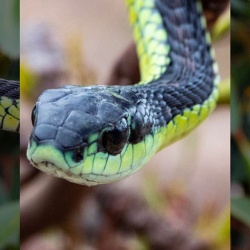
 Unbelievable facts
This is one of the most venomous snakes in Africa and whose venom can make you bleed.
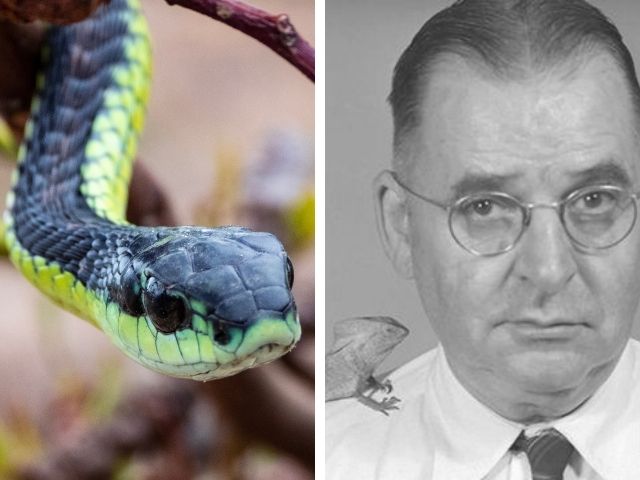
World-renowned herpetologist Carl P. Schmidt died from being bitten by a boomslang snake while recording his symptoms for the last 15 hours of his life.
Also read: 7 shocking facts about snakes
Where does this dangerous snake live, and what happens if it bites you?
Where does the poisonous boomslang snake live
1.
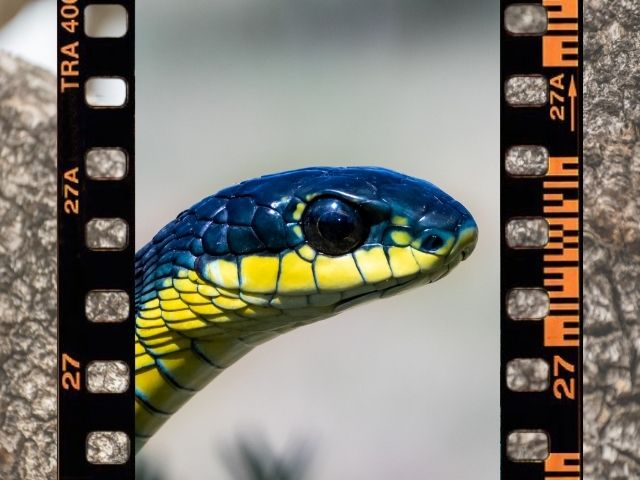
Boomslang (Dispholidus typus) refers to terrestrial snakes, and its name is literally translated from African as “tree snake”.
2.
This snake species is found in sub-Saharan Africa in countries such as Botswana, Mozambique, Namibia, Zimbabwe, Nigeria, Chad and Guinea.
3.
Boomslang is an arboreal species, as it mainly lives in trees and bushes, where she likes to hide. Occasionally, she goes down to earth in search of food. She is an excellent climber and has excellent camouflage skills.
The appearance of a boomslang
4.
Boomslang can reach 1 to 1.5 meters in length and weigh between 180 and 500 grams.
5.
These snakes are sexually dimorphic, meaning males and females have distinct morphological differences. Females are usually brown in color, while males can come in a wide variety of bright colors, from green and yellow to pink-red.
6.
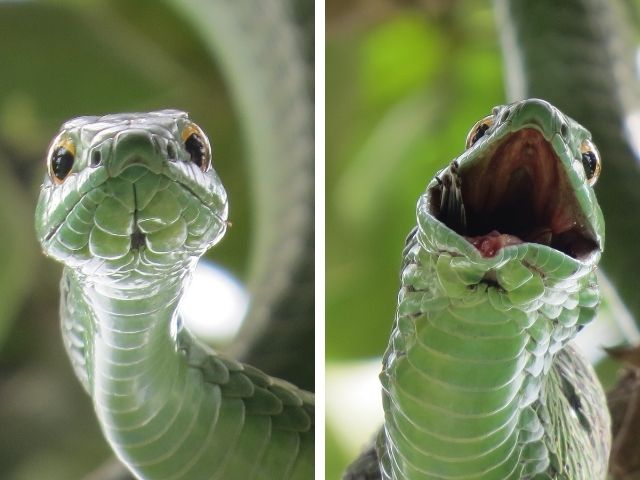
A characteristic feature of these snakes is their strikingly large yellow eyes with round pupils that occupy most of the head. Young individuals are especially beautiful: their eyes are iridescent green in color.
7.
Boomslang has excellent eyesight and is able to detect even a motionless chameleon. Their sense of smell is not as well developed, but they can sense the vibrations of the earth.
8.
The boomslang has a small, ovoid head and a slender, flattened body covered with large scales. The skin between the scales in the neck area is colored black.
9.
Boomslang is a diurnal animal and is active during the day.
10.
Boomslang is a carnivore (meat eater). It feeds mainly on birds, lizards, frogs, rodents and other snakes.
Boomslang breeding
11.
The boomslang mating season lasts from July to October. Males fight each other aggressively to establish a dominant position and to be able to mate.
12.
The female lays 10 to 25 eggs in tree hollows, logs or under rotting vegetation. The incubation period lasts from 65 to 100 days.
13.
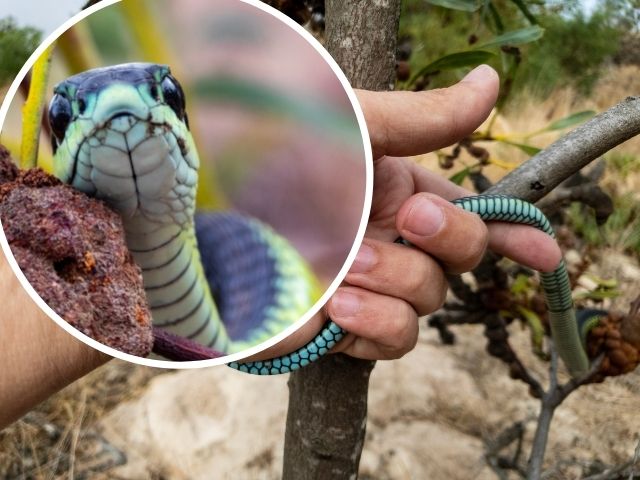
At birth, cubs reach about 30 cm in length, are gray or brown in color and are covered with dark and light bluish dots on the back. The yellowish or pinkish abdomen is covered with brown spots.
Young boomslangs show a vertebral band that disappears before they reach adulthood. Boomslangs reach sexual maturity between 2 and 3 years of age.
14.
In the wild, boomslangs can live for about 8 years.
Boomslang bite and venom
For many years, it was believed that this species was harmless, but world-famous herpetologist Carl P. Schmidt has learned from his own experience that this snake is actually very dangerous.
15.
In 1957, while examining a snake, Schmidt was bitten on the thumb by a young boomslang. Since no one knew that these snakes were deadly, Schmidt did not pay attention to this and continued to live as usual. A day later, he died from respiratory arrest and a brain hemorrhage. This case quickly prompted researchers to study the snake's venom, which turned out to be incredibly toxic.
16.
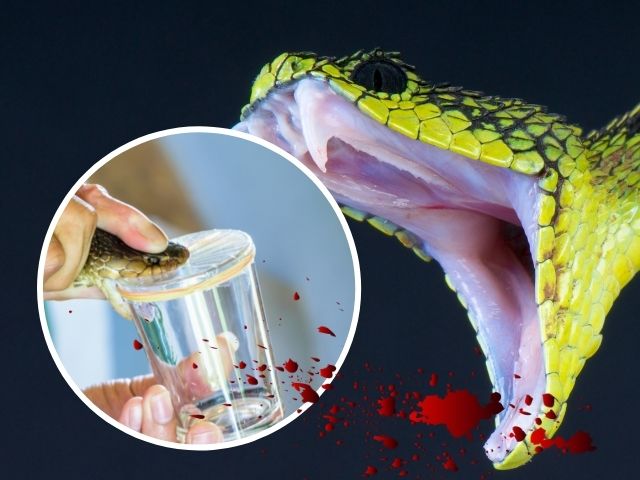
Unlike other snakes of this type, boomslang has large fangs that are located on the back of their jaws. Therefore, to inject venom into their prey, snakes open their mouths very wide, about 170 degrees.
Before the attack, the boomslang swells the neck and reveals black skin, and the body takes an S-shape.
17.
The boomslang venom acts slowly, with symptoms appearing only after a few hours or one day, giving the victim a sense of false hope and confidence. When the poison takes effect, the first symptoms include nausea, headache, drowsiness, tiredness, confusion, and irritability.
18.
Boomslang venom is hemotoxic, meaning it destroys red blood cells, disrupting blood clotting and causing tissue and organ degeneration.
If a person does not receive an antidote, extensive bleeding begins, causing the victim to bleed from the gums, nose, and other holes. Sometimes the victim's body turns blue due to internal bleeding. It should be added that this process can be extremely slow: it sometimes takes up to 5 days before the victim dies from internal bleeding.
19.
Fortunately, there's an antidote, so if you're bitten by one of these snakes, hurry up.
20.
Despite all this, boomslang is considered a non-aggressive snake, as it rarely attacks people just like that. If she is cornered, she most often tries to crawl away rather than bite her.