
 Ecology
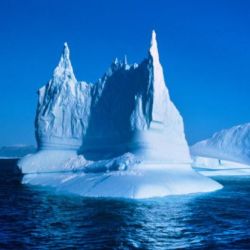
Huge icebergs that form from glaciers are extremely sensitive to changes in temperature. The main glacier in the Antarctic Peninsula, one of the most sensitive to climate change, has melted by 85 percent over the past 17 years. This was announced by the European Space Agency.
According to an analysis of a photograph taken by a European satellite, the glacier known as Larsen B in 1995 was 11512 square kilometers (the size of Qatar), but today its area is only only 1,670 square kilometers.
Larsen B is one of three giant parts that split the vast glacier that stretches along the coast of the Antarctic Peninsula into the Weddell Sea. Between 1996 and 2002, several large ice floes split Larsen B into several parts, the first being Larsen A in January 1995. In 2002, half of Larsen B broke off as a result of contact with a huge block of ice.
Larsen C (third segment) is currently still tied to the peninsula, but satellite images show a decrease in its thickness and an increase in water volumes, especially in summer. Huge icebergs that form from glacier water form a floating carpet connected to the shore.
According to scientists, these icebergs are very sensitive to changes in temperature, and their thickness depends on the effects of warm currents. North of the Antarctic Peninsula, temperatures have increased by 2.5 degrees Celsius over the past 50 years, which is many times higher than the global average. Scientists also note that the giant icebergs formed from the waters of the melting Larsen Glacier should not be confused with the thick ice cap that covers the South Pole.
If this Antarctic ice sheet began to melt at least partially, sea levels would immediately rise and threaten to flood island states and coastal cities. The researchers found that this cover remains stable today.