
 Events
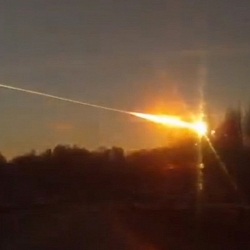
The meteorite that fell in Chelyabinsk in February 2013, which affected more than 1,000 people, may be one of a whole “family of asteroids” that pose a threat to our planet.
Scientists from the University of Madrid believe that the meteor comes from a family of many small asteroids and two relatively large asteroids, named the Chelyabinsk Cluster. The Chelyabinsk meteor's parent was probably the asteroid EO40, about 200 meters wide.
Researchers Carlos and Raul de la Fuente Marcos (Carlos, Raúl de la Fuente Marcos) analyzed and concluded that the meteor body that fell in Chelyabinsk appeared after relatively a member from a previously unknown young asteroid “family” has recently broken up.
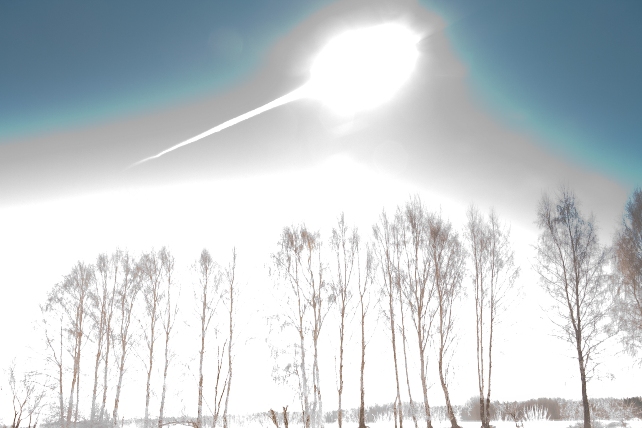
Scientists used computer simulations of billions of possible orbits to find out what caused the collision. The most suitable orbits were found in NASA's asteroid catalog and 20 of them were identified.
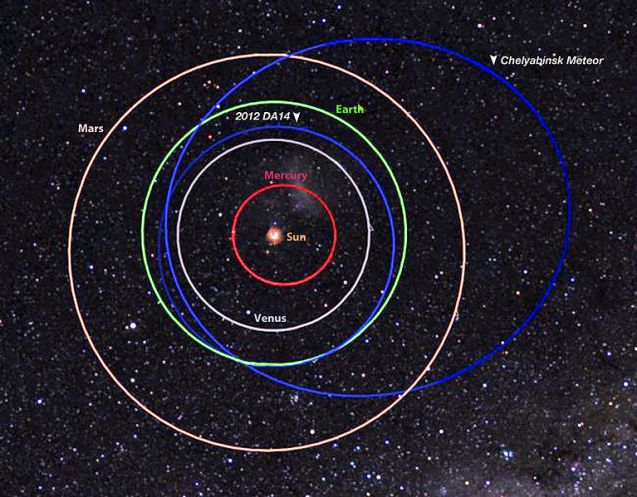
The results showed that the Chelyabinsk meteor was a piece of asteroid that split from a larger rock about 40,000 years ago.
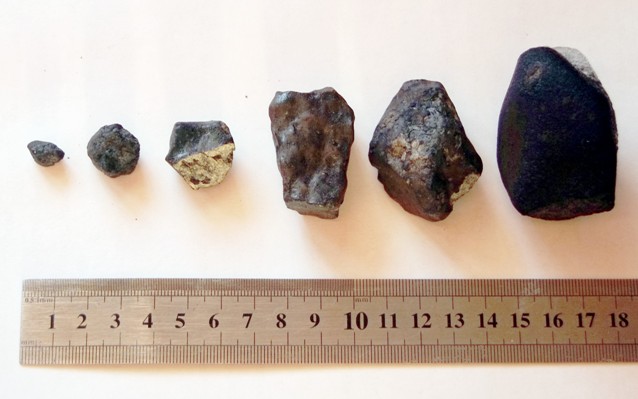
In the future, other objects with the same orbit may fall on our planet.
However, scientists also stressed that the force of attraction of other planets could change the trajectory of the asteroid, and it would bypass Earth.
Chelyabinsk meteorite (video)
A meteorite fell in the Chelyabinsk region
The meteor that fell in Chelyabinsk is a supercar. This is the largest natural site that has entered the Earth's atmosphere since 1908, when the Tunguska phenomenon led to the collapse of a forest on an area of 2,000 square kilometers in Siberia.
Chelyabinsk meteorite shot down a UFO?
After the fall of the Chelyabinsk meteorite, a lot of amateur filming appeared on the Internet. One of them shows how an object approaches the meteorite before the first one explodes.
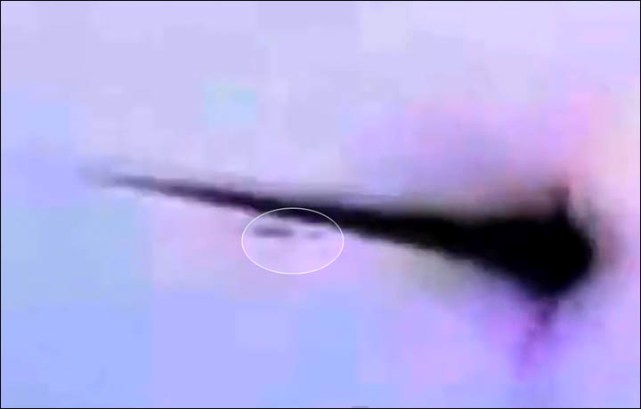
At first, the media reported that the mysterious target was a missile launched by the Russian military, but this information was not confirmed.
As a result, there was a version that the meteorite was shot down by a UFO, which saved the Earth from a stronger impact.
Ural ufologist Alexander Komanev also said that shortly before the fall of the meteorite, the region received many statements about sightings of UFOs. However, after the event, UFO activity ceased.