
 Incredible facts
Scientists are creating new technologies to make life easier for people, but this is not always the case. History knows many scientific experiments that could even end the human race.
Here are 10 scientific experiments that could potentially destroy the world.
Kola well

In 1970, a Soviet scientific experiment involved drilling a well deep into the subsoil (the part of the earth's crust that is located below the soil layer). The well on the Kola Peninsula reached 12 km in depth, and the width varied from 30 to 50 km in width underground.
The aim of the experiment was to identify and study underground layers that no one had yet been able to reach.
Soviet scientists did not make any fundamental discoveries, while the experiment itself could lead to serious problems, namely, cause seismic instability and an uncontrolled eruption lava.
However, that was not all the world feared. When the drilling rig reached a depth of 12 km, and the temperature at this depth, as it turned out, reaches 220 degrees. Celsius, the scientists lowered the microphone into the well. Instead of any sounds reminiscent of geological processes, human voices screaming in pain were recorded on tape.
After recording these sounds, the rig workers heard a powerful roar and then an explosion. After this incident, all scientific work at the tower was stopped. The Kola well was closed after several years.
“Seal” project
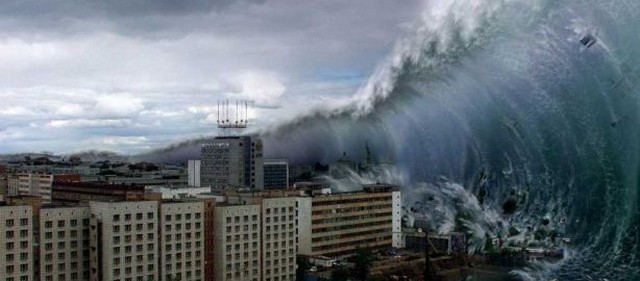
Military and scientists conducted experiments in 1944-1945, using bombs to create an artificial tsunami.
It was believed that a project called Seal was able to transmit a blast wave to water, resulting in powerful tidal waves and tsunamis. After thousands of explosions, the tests were finally stopped, because the desired result was not achieved.
Read also: The flip side of the most high-profile scientific discoveries
Meanwhile, if the experiment with the creation of an artificial tsunami were successful, humanity could cause enormous destruction (not to mention many deaths).
Scientific experiment
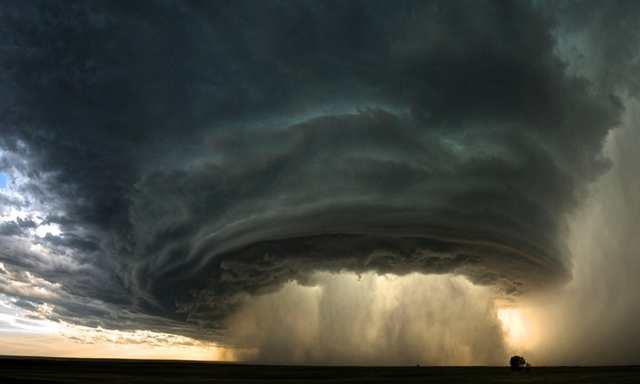
In the late 1940s, the United States conducted a scientific experiment to change the direction of the hurricane using dry ice. 81 kg of dry ice were placed in the epicenter of one of the hurricanes moving east into the Atlantic Ocean, after which the disaster unpredictably changed its direction towards Savannah, Georgia.
At that time, this storm killed one person and caused $200 million in damage.
In the end, the UN Council was convened on this occasion, which prohibited experimenting with nature, especially for the purpose of finding means of warfare.
Weapons of mass destruction
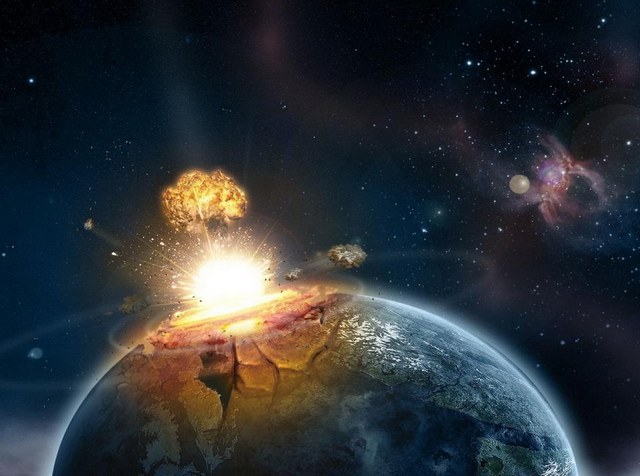
From 1987 to 1992, the Russian military detonated nuclear weapons underground in order to move tectonic plates and electromagnetic fields. With the help of such explosions, as part of the Mercury and Volcano projects, they wanted to create heavy-duty weapons of mass destruction.
Four such attempts were made, but fortunately the experiment failed. But such experiments could disrupt the natural movements of tectonic plates and destabilize electromagnetic fields, which in turn could lead to catastrophic and irreversible consequences for the entire planet Earth.
Dangerous bacteria

In the mid-1970s, General Electric R&D scientist Ananda M. Chakrabarty patented a strain of the dangerous bacterium Pseudomonas, into which he introduced genetic elements called plasmids. As it turned out, these bacteria are able to digest hydrocarbons. The scientist hoped to save the world from oil spills that appear during an oil spill.
However, there are reasonable concerns that these engineered bacteria will be able to “absorb” everything in their path, including bacteria and organisms found all over the Earth. That is why the project of an improved dangerous bacterium Pseudomonas did not take place.
Collider hazard
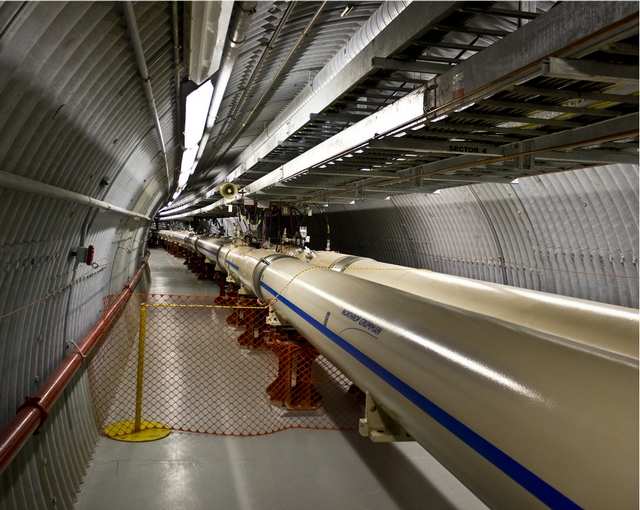
Before the launch of the Relativistic Heavy Ion Collider in New York (RHIC), USA, many experts believed that it was dangerous because during operation this device would lead to the creation of uncontrollable black hole.
In 1999, all American newspapers made headlines about the danger of a collider that could destroy the entire earth.
After all, researchers discovered in 2000 that RHIC does not have enough energy to create the full gravity of a black hole, but this theoretical possibility still remains.
The RHIC Relativistic Heavy Ion Collider has now given way to the advanced Large Hadron Collider (LHC).
Biological weapons

The extinction of wheat and rice is causing enormous damage to global cereal culture. The Magnaporthe grisea fungus damages plants and at the same time releases thousands of spores, affecting a large area of vegetation. The fungus is common in more than 80 countries, including the United States, where it appeared in 1996.
During the Cold War, the US experimented with this mushroom as a biological weapon that was distributed using a spray or bomb.
It is not known whether it was the United States that spread the Magnaporthe grisea mushroom so massively, but if this “infection” began to spread uncontrollably, rice and wheat might disappear all over the world, in which would result in famine.
Nuclear weapons testing
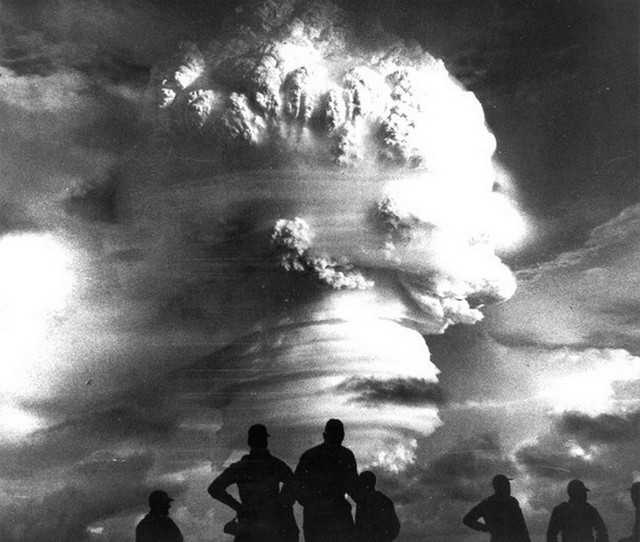
Testing nuclear weapons outside the Earth's magnetic field is not a very smart idea. However, the US decided to go further and detonated as many as six nuclear bombs at high altitude in 1962 as part of Operation Fishbowl. But this could significantly affect the Earth's magnetic field.
Read also: Stephen Hawking: “A particle of God” can destroy the universe
Fortunately, due to nuclear weapons tests, the Earth's magnetic field was not affected at that time. But the potential danger was that if the magnetic field changed, we would lose our protection from solar radiation. A change in the magnetic field would also lead to natural disasters, such as earthquakes and the movement of continents.
Plague as a weapon
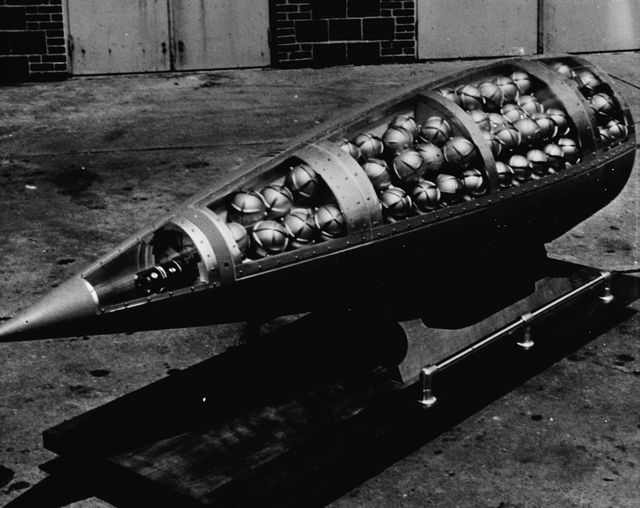
The plague was responsible for the death of 60% of Europe's population in the 14th century. And in the 80s of the last century, the Soviet All-Union Institute created a plague bomb in order to use this virus as a weapon in the future.
After the fall of the Berlin Wall, Vladimir Pasechnik, director of the bomb program, publicized these studies. The bomb was filled with a powdery plague, which was placed in a polymer capsule. As far as the world community knows, this bomb was never used anywhere.
The first atomic bomb
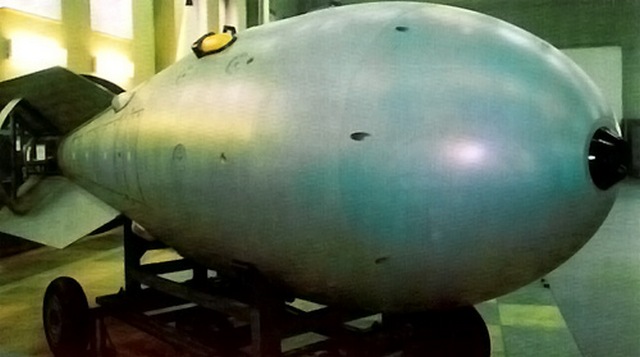
Before the first atomic bomb exploded, several scientists as part of the Manhattan Project talked about what would happen after it detonated.
Italian physicist Enrico Fermi has suggested that detonating a bomb could create a chain reaction that would hit a huge part of Earth's atmosphere and kill almost all life on the planet. Thank God Fermi's assumptions were wrong.