
 Ecology
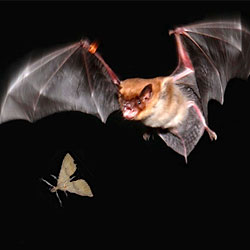
Although bats and toothy whales evolved quite separately from each other in completely different dark corners of the world, they have very similar abilities to navigate in space, track down and capture prey using echolocation, the biological equivalent of sonar.
Thanks to a new technology that can record the sounds that whales and mice hear, as well as the sounds they make while traveling, researchers from Aarhus University and Southern Universities in Denmark were able to discover many similar features of the acoustic tactics of both animals.
When looking for prey, bats increase the number of sounds they make per second. Whales were thought to keep the same number of sounds or clicks regardless of how close they came to prey, scientists said.
However, new research has shown that wild whales also increase sounds when hunting and that this behavior is very similar to that of bats, which make about 500 sounds or clicks per second.
“If you take into account the physical characteristics of these animals, you will most likely think that they should use different echolocation systems and make sounds at different frequencies,” they said researchers. “However, in fact, these echolocation features are very similar.”
The similarity supports the idea that the acoustic behavior of bats and whales is determined by certain limitations in the processing of acoustic information by mammalian brains.
Bats and toothy whales (including dolphins and porpoises) have had numerous opportunities to develop echolocation techniques that differ from each other, as their closest common the ancestor did not use echolocation at all.
However, as scientists have long known, bats and toothy whales use the same ultrasonic frequencies between 15 and 0 kilohertz for hunting. (For comparison, a person can hear in the range of 20 hertz to 20 kilohertz).
Such similar frequencies are very surprising, as sounds travel 5 times faster in the water than in the air, which allows whales to make faster choices about potential prey.