
 Events
The astronomical community is discussing news about the recent discovery of a new comet. Scientists suggest that this cosmic body can make a spectacular flight past the Sun, allowing viewers from Earth to watch an incredibly vivid sight. The comet could become so bright that it could even outshine the Moon!
However, on the other hand, this event may not happen. Here's why.
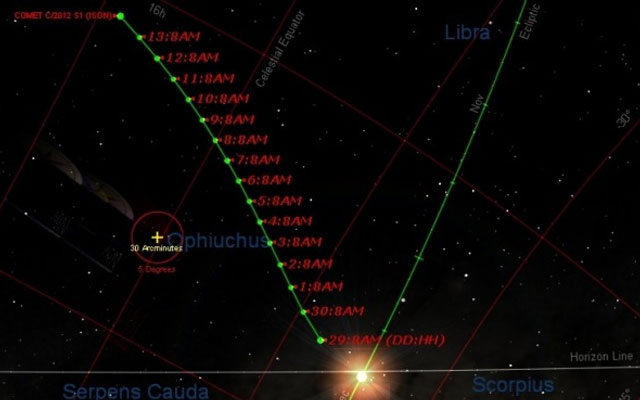
The “large” comet body was discovered outside Jupiter's orbit, and its orbital trajectory is quite close to the Sun — just 1.8 million kilometers from the star's surface. The comet is due to approach our star in November 2013.
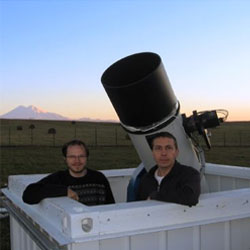
The discovery of the comet was made during observations using the Santel mirror telescope of the International Scientific Optical Network (ISON) in Russia. After the discovery, scientists returned to images taken earlier, and thus calculated the comet's orbit. The comet was given the number C/2012 S1, but was immediately referred to as Comet ISON, which is not surprising.
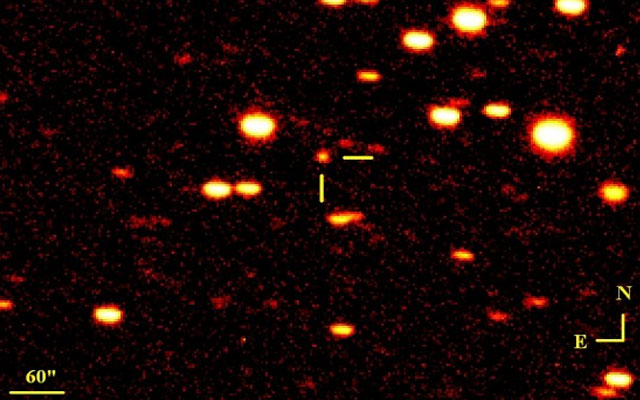
“At best, this comet is big and bright, and it will approach the Sun next November. When this happens, it will be very bright and will be visible to the naked eye in the Northern Hemisphere within a few months, “said Karl Battams, a NASA officer who is engaged in a project to study comets.
However, Battams admits that this may not happen. “Sometimes comets just run out of breath! Comet Elenin is an example, but there are other more well-known examples where astronomers took comets very seriously, but they destroyed much earlier,” he said.
Other astronomers agree that since the planet's orbit is too curved, it's not yet clear how bright it might become. “… estimating a comet's brightness over a year is like wondering who will win at “next year's baseball championship,” wrote one of the astronomers Bill Gray. “It can be incredibly bright, but it can also go out. One astronomer said that comets are like cats: they also have tails and do whatever they want.”
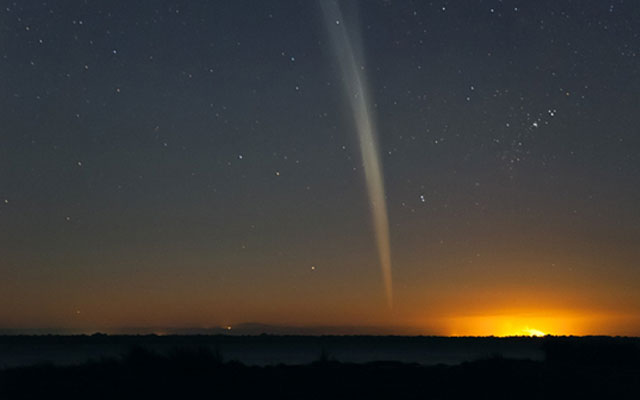
But why are there so many uncertainties about Comet ISON?
Comets form somewhere outside the solar system and are made up of frozen volatiles like water, carbon monoxide, carbon dioxide, methane and ammonia plus dust, rocks, and other debris. All this is attracted to form a ball, while a star system is formed from a protoplanetary disk. In the case of comet ISON, it appears to have originated from a possible cloud of frozen comets that surrounded the solar system.
“It is very likely that this new comet came to us from the Oort cloud, so this will be its first approach to the Sun,” Battams said. “If so, then all its frozen volatile substances remain untouched, and they've never been disturbed (by high temperatures or gravitational forces), so it could be torn apart a few weeks before it gets close to the Sun.”
When approaching the Sun, an increase in solar energy causes frozen volatile substances to evaporate, that is, turn from a solid state into vapor without going through the liquid phase. This evaporation causes an explosion of gas, which is carried away by the solar wind to form a tail. The comet's solid nucleus continues its journey, approaches the Sun and, depending on its constituents, creates a very impressive tail that is scattered by sunlight, creating a bright glow.
However, it all depends on the materials the comet contains and how it was formed in deep space. A comet may explode prematurely, split into pieces before approaching the Sun, or remain solid long after it passes near our star, releasing very little material.
Uncertainty about comet ISON's brightness? That doesn't mean astronomers have doubts about its orbit. Although pessimists often fear the discovery of new comets, we should not think that Comet ISON may collide with Earth; it will pass far enough from our planet. According to comet hunters at Italy's Remanzacco Observatory, Comet ISON will pass at the closest distance (60 million kilometers) from Earth in January 2014.
“I give 30 percent that the show will be spectacular, but for the most part I could be wrong. So far, no one can say anything definite, “Gray said in conclusion.