
 Events
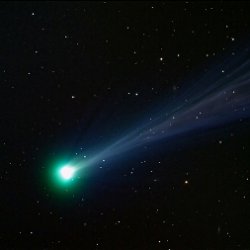
Comet ISON is coming to the finish line of its long-awaited loop around the Sun.
On November 28, 2013, the comet will be very close to the Sun at a distance of only 1.2 million kilometers, leaving scientists and amateur astronomers wondering if it will survive such an approach.
Until November 13, the comet's brightness increased very slowly, but then a significant breakthrough occurred, and from November 13 to November 21, its brightness increased by 3.5 magnitudes (a scale that determines the brightness of objects in space), that is 25 times. In addition to increasing brightness, dust and gas began to be actively released from its core.
Professional astronomers and amateurs from around the world are watching Comet ISON through telescopes and spacecraft from space. And the comet has every chance of becoming the brightest comet of this century.
Comet ISON's latest news
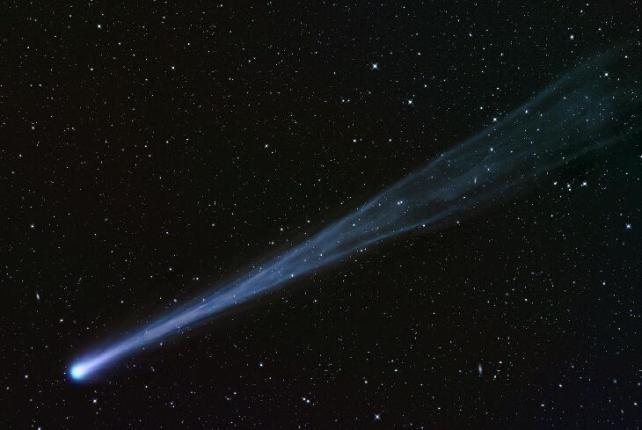
However, how impressive a comet will look as it travels around the Sun depends on where you are.
In rural areas, where the sky is quite dark, it will be easier to see it. On the contrary, in large light-polluted cities, observers may be disappointed.
Comet ISON will reach perihelion, the closest point in its orbit to the Sun. This will happen on November 28 at 18:24 UT (22:24 Moscow time). The comet's brightness will increase dramatically.
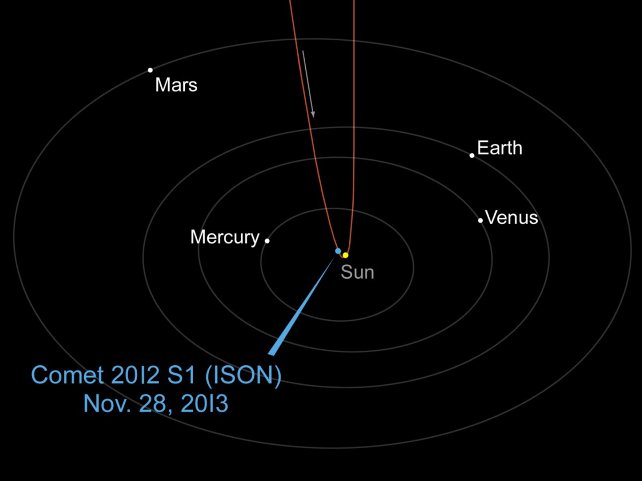
It will be exposed to incredible gravitational force and temperatures of more than 2,700 degrees Celsius, which could split it into pieces. If this happens, it will release a huge amount of dust and become many times brighter and reveal an amazing bright tail.
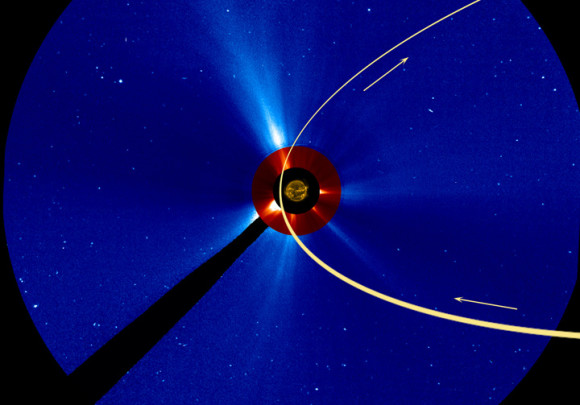
If the comet goes around the Sun, it will begin its return journey from the inner solar system and will probably be visible even in the afternoon from early December. Just after sunrise, ISON will be 2 degrees to the right of the Sun.
However, it is worth warning that only experienced observers should look at the comet when approaching the Sun. It is dangerous not to observe the comet itself, but to look directly at the Sun, whose infrared rays can damage the retina.
How to see Comet ISON 2013
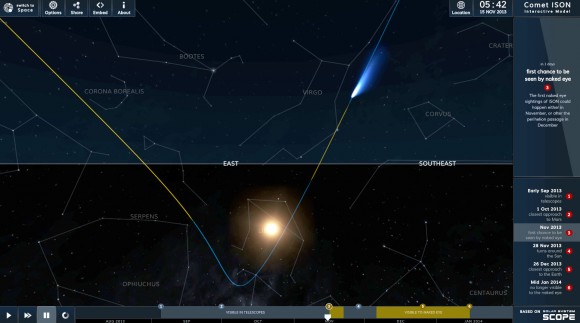
You can see where Comet ISON is in the sky from anywhere on Earth using an online simulator.
– Follow the link and select the “Switch to Earth” option in the upper left corner. The site will try to automatically determine where you are.
– But if this is not the case, click the Location button (upper right corner) and choose the width and longitude.
– Then click on the play button at the bottom of the screen and see the horizon with stars, the Sun and a comet.