
 Events
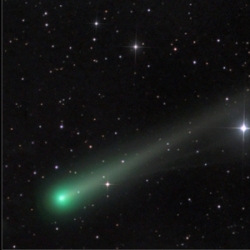
Comet ISON, which has been called the comet of the century, has entered Earth orbit and is now visible to the naked eye.
The comet has become much brighter in recent days as it gets closer to the Sun. If it “survives” its flight, it will be the brightest sky show in more than 300 years.
Over the next few weeks, the comet will grow even brighter until it overshadows the Moon.
Comet of the Century 2013
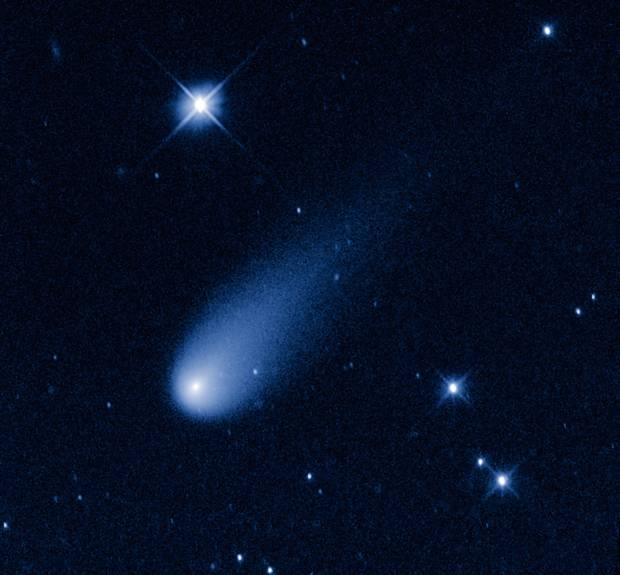
Comet ISON was first spotted by Russian astronomers Vitaly Nevsky and Artem Novichok using the International Scientific Optical Network in September 2012 years when it was 941 million kilometers from the Sun.
A ball of ice and dust came from the Oort Cloud, a huge collection of ice debris left over from the creation of the Solar System that is 150 trillion kilometers from Earth.
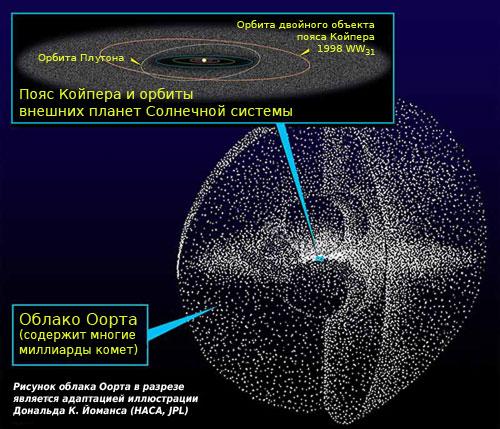
While other comets, such as Hale-Bopp, are thought to have come from the Oort Cloud, ISON will be the first to come close to the Sun in 200 years from the edge of the solar system.
Comet ISON could become the “comet of the century” and cause a meteor shower
ISON is moving at 377 kilometers per second and will come closest to the Sun on November 28, 2013, 1.2 million kilometers from the Sun's surface, and will warm up to 2,760 degrees Celsius. Celsius.
Comet ISON's path around the Sun
If the calculations are correct, this galactic show can be compared to the Great Comet of 1680, whose tail reached 150 million kilometers and was visible even during the day, as calculated at the time God's punishment.
Even if Comet ISON disintegrates before then and can't survive close to the Sun, experts say its “death throes” would be no less impressive.
Comet ISON: Latest News and Photos
How bright will Comet ISON be?
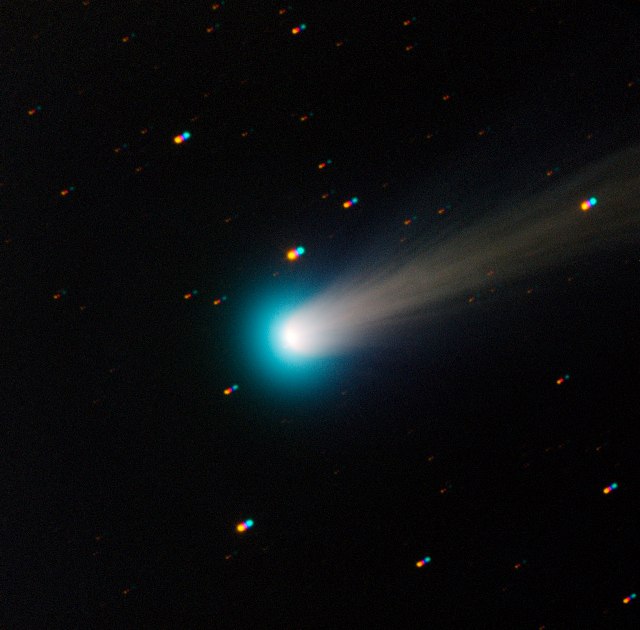
Comet ISON C/2012 S1 was photographed by the European Southern Observatory (ESO) TRAPPIST telescope in Chile on the morning of November 15, 2013
Scientists assume that the comet will be so bright that it will be visible even during the day.
Astronomers measure the brightness of an object in the night sky at a stellar magnitude. The brighter the object, the smaller the magnitude. The human eye is able to perceive faint objects at a magnitude of +6.5.
Recent observations show that Comet ISON has become significantly brighter in recent days, reaching a magnitude of 5.7 to 6.1.
Amateur astronomers have already begun observing the comet through small telescopes and binoculars.
Will the Sun destroy Comet ISON?
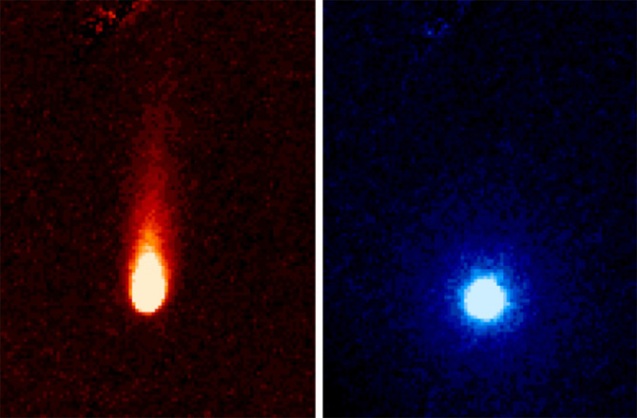
Infrared observations by the Spitzer Cosmic Telescope captured the glow and coma of Comet ISON in June 2013
The coming weeks will be crucial for the comet. When it gets close to the Sun, solar radiation can evaporate all the comet's water and other volatile components. The gravitational effect will also be very strong. Many comets don't survive. A rare exception was Comet Lovejoy on December 15, 2011.
If ISON survives flying close to the Sun, we'll be able to watch an amazing show from November 28, 2013, or it could fall to pieces.
How big is comet ISON?
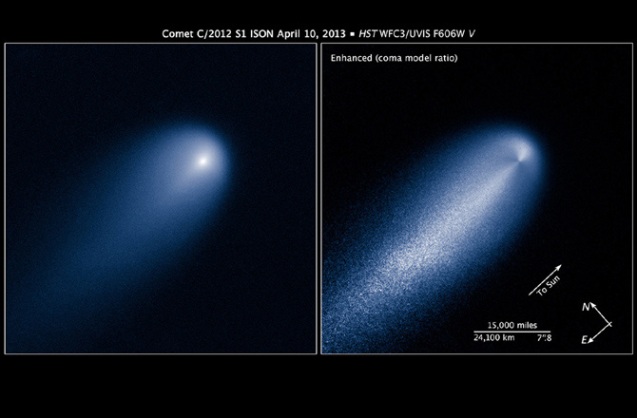
Hubble Space Telescope images of the coma and tail of Comet ISON
Scientists who observed this comet through the Hubble Space Telescope were surprised that its size was no more than 5-6.5 km in diameter. The comet's head or coma is 5,000 km long and its tail is about 90,000 km long.
New unique images of comet ISON have been obtained
Comet ISON in November 2013
When can we see Comet ISON?
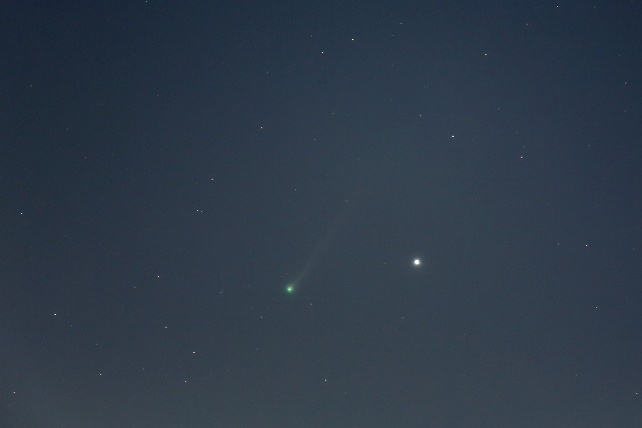
Comet ISON near the star Spica in the constellation Virgo November 18, 2013
It now passes close to the bright star Spica in the constellation Virgo.
Comet ISON will be best seen outside the city, where there is less light pollution. Clear skies and no moon can also help.
For the next few days, the comet can be observed in the pre-dawn hours with binoculars.
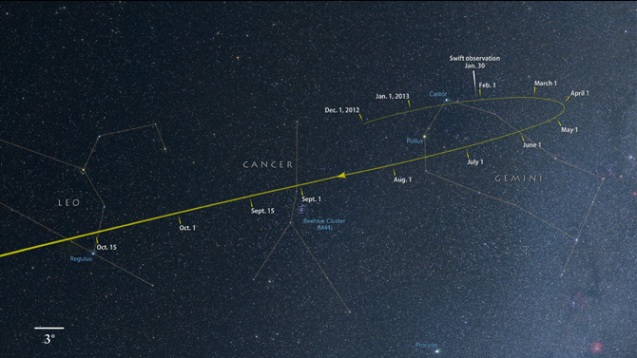
Comet ISON's location in the night sky until the end of October 2013
In November 2013, Comet ISON will be visible early in the morning in the southern sky. Starting in December, if the comet survives its flight close to the Sun, it is likely to be visible all night.
On the night of January 14-15, 2014, dust from the comet's tail can lead to meteor showers and beautiful silvery clouds.