
 Useful tips
This calendar will help you navigate various events in the world of astronomy throughout the year and indicate important dates when you can observe interesting celestial phenomena, such as star showers (seasonal meteor showers), solar and lunar eclipses, elongations of fast planets, visibility of comets and slow planets, etc.
Read also: Astrological calendar 2021: years for each month important events and focuses of attention
If you are interested in astronomy, have any astronomical techniques, or would like to attend astronomy clubs, then you should plan to observe astronomical objects in specified dates. For the sake of simplicity, dates are in ascending order for each month.
But first, I would like to list the important astronomical events of 2021:
1.
During the year, Earth's inhabitants will be able to observe four eclipses: two solar and two lunar eclipses. The following of these eclipses can be observed in Russia:
May 26, 2021 — private phases of the total lunar eclipse will be visible to residents of Kamchatka, the Far East and other southeastern regions of the country.
June 10, 2021 — the partial phases of the annular solar eclipse will be visible almost throughout Russia.
November 19, 2021 — residents of parts of Russia, from the Urals to the Far East, will be able to see a private lunar eclipse.
December 4, 2021 — a total solar eclipse will not be visible in Russia at all.
Thus, if you live in the western regions of Russia, including districts of Moscow and St. Petersburg, you will only be able to see a partial solar eclipse on June 10, 2021.
2.
The fast planets Mercury and Venus will be observable in May and October 2021. Mars
is best watched in the first half of 2021. August 2021 is a good month to observe social planets: Jupiter will be best seen during the period of confrontation with the Sun on August 20, 2021, and Saturn on
August 2, 2021.
3.
Planets, moving across the sky, can approach each other or move away. As you approach (connect) as possible, it will be possible to simultaneously observe 2 or more planets in the sky side by side. Here's a list of the closest connections with exact event dates you can use to observe:
Date
The event
February 6th
Venus connection Saturn
February 11
Venus Jupiter connection
March 5th
Mercury Jupiter compound
March 14
Venus connection Neptune
April 23rd
Venus compound Uranus
April 24th
Mercury compound Uranus
May 29th
Mercury compound Venus
July 13
Venus connection Mars
August 19th
Mercury compound Mars
November 10th
Mercury compound Mars
4.
Owners of small and medium-sized telescopes can presumably observe four comets with complex names: P/Tempel (10P), P/Pons-Winnecke (7P), P/Tuttle (8P) and P/Borrelly (19P). However, comets are unpredictable objects, so it is difficult to say with certainty whether they will be well visible or if any other comets will appear.
© NASA/JPL-Caltech
5.
The following important events related to space exploration are planned in 2021:
The European Space Agency is planning to launch a new generation MeTop meteorological satellite, which will monitor humidity and temperatures on the planet.
Around October-November 2021, Russia plans to send an automatic probe Luna-25 to the Moon, which will explore the surface of our satellite near its south pole. The probe will be used according to plans for 1 year or more.
China is going to install gravity telescopes in Tibet.
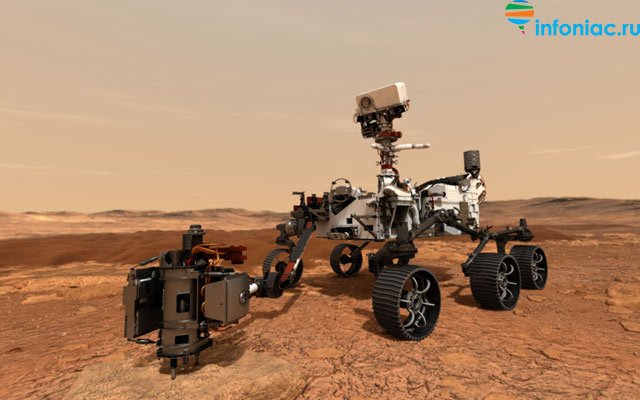
Another NASA rover called Perseverance is scheduled to land on Mars,
which will explore the Jezero crater to search for ancient life. The estimated landing time is February 18-21, 2021.
You can read more about various astronomical events and phenomena in the descriptions for each month of the year.
Astronomical calendar for the year
JANUARY 2021
© Getty Images

January 3 is the peak of the Quadrantida meteor shower.
Did you know that the New Year is celebrated brightly not only on Earth, but also among stars. Immediately after the chimes, the Quadrantida starfall joins the fireworks we launched. This fairly powerful meteor shower is the first of the annual starfalls and one of the most memorable.
On the night of January 2-3, you can make wishes — the Quadrantids are at their peak! For hours, not days like other starfalls, 40 to 200 meteors will fall to the ground every hour.
The declining but still full moon will prevent you from seeing most of the year's least bright quadrantid cars. But if you pay attention, you will notice the fall of several large sparkling “stars”. The best place and viewing time is a dark room after midnight.
Quadrantids are a meteor shower originating from stardust and small particles resulting from the functioning of asteroid 2003 EH1. Interestingly, the starfall inherited its name from the now-defunct constellation North Quadrant, whose stars were included in the constellations of Boopas, Dragon and Hercules, on the border between which the Quadrantida stream is located. This is the direction you should look in to ensure that you see one of the cars. But don't be surprised if he appears elsewhere in the sky.
January 13 — New Moon at 08:00. The moon will be located on the same side of the Earth as the Sun, so it will not be illuminated by sunlight. Therefore, it will not be visible in the night sky. The new moon is the best time to observe dim astronomical objects, such as galaxies or star clusters, since the absence of moonlight will allow you not to be distracted by interference that he could create.
January 24 – Mercury in the maximum eastern elongation (evening). Today, Mercury will reach its largest eastern elongation at 18.6 degrees from the Sun. In the evening, the planet will be at its highest point above the horizon – the best time to observe it. It will be best seen by residents of the western hemisphere right after sunset.
January 28 — Full Moon at 10:16 p.m. The moon and sun will be on opposite sides of the Earth, so that the satellite will be fully illuminated. The full moon phase will occur at 10:16pm Moscow time. The January full moon was known among North American Indian tribes as Wolf Moon. According to them, it was on that night that hordes of hungry wolves, huddled in packs and surrounded the settlements with a dense “living” ring, howled terribly until the morning.
FEBRUARY 2021
© Getty Images
February 11 — New Moon at 10:06 p.m.
February 27 — Full moon at 11:18am. The February full moon has many popular descriptive names, given due to the peculiarities of the month. It is called Clear Moon, Snow Moon, Storm Moon, and Full Winter Moon.
Astronomical phenomena: calendar
MARCH 2021
© Getty Images Pro
March 4 — The asteroid Vesta can be viewed with the naked eye (near the constellation Leo). This asteroid is one of the largest known asteroids (measuring 578 × 560 × 458 km) and will reach a brightness of 5.8m on this day.
March 6 — Mercury in the Great Western Elongation. On this day, Mercury will be as far as possible from the Sun to the west — by 27.3° (angular degrees). It is better to observe it in the morning shortly before dawn, when Mercury is at its highest position above the horizon. In the northern regions of Russia, as well as beyond the Arctic Circle, there is little chance to see the planet clearly after midnight in the night sky. This is the first of three upcoming deviations of the planet to the west.
March 13 — New Moon at 1:21 p.m. At this point, the moon is not illuminated at all, so if you like to take a closer look at the telescope's eyepieces for galaxies and constellations that are barely visible, you won't find a better time.
March 20 is the vernal equinox at 12:27pm. The sun is right above the equator: everywhere on Earth, daylight hours will be approximately equal to night. It will also be the first day of spring in the Northern Hemisphere and the first day of autumn in the Southern Hemisphere.
March 20 – The elongation of Venus. The planet will reach its maximum westward distance from the Sun — 46.6 angular degrees. For the second time in a month, early in the morning, astronomy enthusiasts will have a less frequent chance to clearly see one of the planets, Venus, as a bright spot in the sky.
March 28 — Full moon at 21:49. It's getting warmer, however, it's still snowing and frosts occur at night. These nuances are reflected in the popular names of March's full moon. Crows croak, heralding the end of winter — Crow Moon. The bark, which thawed during the day, freezes at night — Cora's Moon. In the north, this full moon is called Lenten and is considered not the first full moon in spring, but the last full moon in winter if it falls before March 20.
Astronomical phenomena 2021
APRIL 2021
© Getty Images
April 12 is Cosmonautics Day and the International Day of Human Space Flight. On a clear morning on April 12, 1961, Yuri Gagarin became the first person on Earth to conquer outer space. This year will mark an anniversary: the 60th anniversary of the first human space flight!
March 12 — New Moon at 05:31 a.m. This year, Cosmonautics Day coincides with April's new moon. Start celebrating before dawn by looking at the sky through a telescope to see other galaxies and singing “On the dusty paths of distant planets”!
April 22-23 is the peak of the Lyrida meteor shower. Lyrids are a medium-power starfall: about 20 meteors per hour at their peak. He began to “visit” our planet every year, or rather record, after 1861. The reason is the appearance and discovery by astronomers of comet C/1861 G1.
However, according to many scientists, this starfall is one of the oldest meteor showers seen by humans. It has been mentioned for more than 2000 years. Lyrids are cosmic particles and star debris left over from the aforementioned comet.
The usual time for starfall activity is from April 16 to April 25. This year, the peak falls on the night of April 22-23, 2021 and the next morning. Meteors can appear as bright tailed cars that last a few seconds to fall.
The approaching full moon will definitely be a hindrance for the viewer, as the dazzling light of the moon will prevent attempts to see all but the brightest meteors falling.
If you pay attention and follow the advice to watch a very beautiful starfall from a dark place after midnight, you can catch your luck by the tail. Lyrid's starting point is the Lyre constellation, so all eyes are on him! One significant nuance: luck is a capricious bird. Only residents of the Northern Hemisphere will be able to make a wish while the sparkling lyride cars fall.
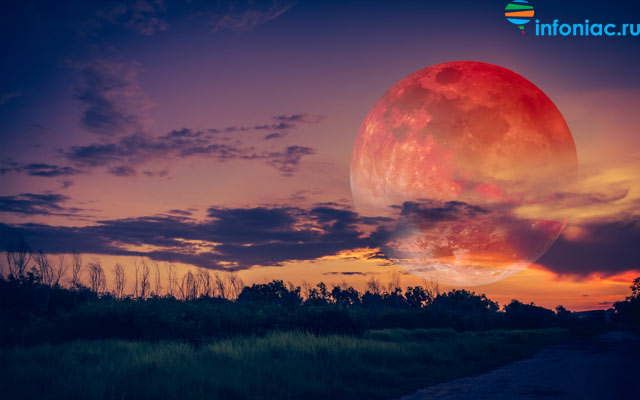
April 27 — Full moon at 06:32. The April 2021 full moon coincides with the Supermoon. A supermoon is a common occurrence in astronomy, when a full moon occurs when the Moon is perigee, that is, as close to Earth as possible.
© Getty Images Pro
However, the Supermoon is not unique, but, in the words of one astronomer, even a boring event, as it happens 3-4 times a year, and these 50 km of difference are not worth close attention. We don't even notice it—the moon is one micron larger. So this term has been adopted by astrologers.
The only thing I would like to mention, perhaps, for people who are “down to earth”, who rarely look at the sky, will be useful: if there is a Supermoon, then there must be a micromoon. This is when the moon is at its apogee at the time of the full moon.
The difference in the parameters of the Earth's satellite during a supermoon and a micromoon is already significant and visible to the naked eye — at perigee, the Moon is seen about 20% more and a third brighter than at its apogee. So if you've looked at the night sky twice in a few months and saw the moon in two opposite states, don't panic about the difference.
Going back to April's full moon, several alternative names are known. The Indians call it the Full Fish Moon, the Moon of the Hare, the Moon of Growing Grass. We are better aware of the Pink Moon (due to the rapid flowering of phlox) and the Egg Moon (a reference to April's Easter holiday).
MAY 2021
© Getty Images Pro
May 6-7 is the peak of the Eta-Aquarids meteor shower. This meteor shower promises to be a bright and memorable event due to its power and excellent visibility from Earth. However, it reaches its maximum power and optimal visibility only in the Southern Hemisphere and the tropics — up to 60 meteors per hour.
The speed of each car can reach 66 km/sec. In the Northern Hemisphere, power is halved to 30 cars/hour. Moreover, due to the low position of the radiant in northern and middle latitudes, it becomes almost impossible to notice it. But due to this position of the Aquarium spring above the horizon, Eta Aquarids are a very long starfall: from April 19 to May 28.
It arose from dust particles left behind one of the most famous and well-studied comets, Halley's Comet, which has been observed since ancient times. Unfortunately, the Moon in the second phase will be an obstacle to watching some of the dimmest cars fall.
As usual, advice for those who want to see a meteor shower is to go to a secluded, deserted place away from the city at night, where there is a lot of light interference. Fireballs, which are white meteors with trails that look like tails, usually appear in the night sky from the constellation Aquarius.
May 11 — New Moon at 22:00. The moon will not be visible in the night sky due to the lack of sunlight. If you want to dreamily observe distant galaxies and constellations, you won't find a better time!
May 17 — Mercury's elongation. For the second time in 2021, Mercury will be in the largest eastern elongation at a distance of 22 degrees from the Sun. The planet will be perfectly visible in the evening sky high above the horizon. Look for it right after sunset, looking west.
May 26 is the second month in a row. The full moon, which comes at 2:15pm, coincides with the Supermoon. The sun and moon are on opposite sides of the globe, so there are no obstacles for the lunar disk to be fully illuminated. This will be the second of three supermoons of 2021. The May Full Moon is also known as: Milk Moon, Flower Moon, Moon of Joy and Happiness, Moon of Braka.
© Getty Images
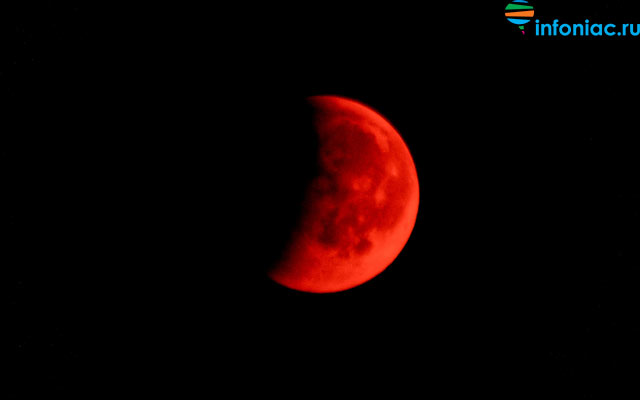
May 26 — Total lunar eclipse at 14:18. A total lunar eclipse is an astronomical event characterized by the gradual movement of the Moon into the Earth's shadow and occurs when the Moon is completely in the “umber” zone of shadow.
Under these conditions, due to the refraction of sunlight in the atmosphere, the Earth's satellite is not just darkened, but colored blood-red. Therefore, this phenomenon is also called the Blood Moon.
The term has nothing to do with astronomy, but has already become a stable expression for describing a total lunar eclipse. It fully reflects the mystery of the event and the ominous omens that gave rise to many superstitions and myths, not only among the wild tribes of Africa and the Indians of the Americas, but also in Islam culture, Christianity, as well as in Hinduism and Indian society.
In 2021, the total lunar eclipse will last 190 seconds. It can be seen in the following regions of our planet: above the entire surface of the Pacific Ocean and in parts of East Asia, Japan, Australia, and Western North America.
Due to the time difference in other parts of the Earth, the eclipse will occur during the daytime – in Moscow it
will be 2:18pm, and it is visible only at night.
Observations of astronomical phenomena
JUNE 2021

© Getty Images
June 10 — New Moon at 1:52 p.m. During the new moon in June, you are likely to find even the most implicit traces of galaxies far from us by a huge number of light years, as there is no interference from the Earth's satellite clear summer skies, beautiful weather and a wonderful holiday mood will be added.
June 10 — Ring-shaped solar eclipse at 1:52pm. On the same day, residents of most European countries, as well as Canada and the United States, will be able to witness this eclipse or its special cases firsthand. The phenomenon is characterized by the Moon's greater distance from Earth than during a total solar eclipse. Observers think that the Moon's disk is covering the Sun, while being smaller in size.
The sun is almost completely covered by the Moon; you can only see a ring of bright sunlight around the lunar disk outside the umbra. This is a fairly rare astronomical phenomenon — according to statistics, only 5% of solar eclipses recorded in 100 years are ring-shaped.
This year, residents of most of Greenland, the Far East and Northern Canada will have a rare opportunity to see a solar eclipse in its ring-shaped phase. In another 60 countries around the world, visitors will be able to watch the special cases of this eclipse.
The June solar eclipse is also notable for being one of the extremely rare regular eclipses that recur each saros – a certain period of time, which is 223 Earth months. This is the time interval for the frequency of repetition of the previous order of solar and lunar eclipses.
June 21 — Summer Solstice at 7:21 a.m. The longest daylight day of the year for people in the Northern Hemisphere, where it is the first day of summer, and the longest night of the first day of winter in the southern half of the globe. During this day, the Earth's North Pole will be inclined towards the Sun, which will be in the northernmost part of the sky right above the Tropic of Cancer, a point with coordinates 23.44° north latitude.
June 24 — Full moon at 21:40. The third and final coincidence of two regular astronomical events this year: a monthly full moon with a non-constant Supermoon that has no specific reference to a day or month, but It always takes place 3-4 times a year.
Once again, it is worth recalling that on the Supermoon, the full moon is necessarily at the perigee — as close as possible to the ground this month, which means slightly brighter and larger. The New Moon of June is often called Strawberry Moon or Strawberry Ripening Moon. Other names for the new moon of the first summer month have also taken root among the people – the Honey Moon, or rather, the Moon of cooking mead; the Pink Moon, the Moon of Lovers, the Powerful Moon.
JULY 2021
© Getty Images Pro

July 4 — Mercury's elongation. The second opportunity in a year to see Mercury in as much detail as possible in the morning. The reason is Trading Planet's next biggest elongation in 2021: the fourth out of six in total and the second of three Western ones.
Mercury will move away from the Sun to the west by the maximum distance for the entire period of the planet's summer visibility in general — 21.6°. For optimal visibility, in addition to an optical device, all you need is an open space, a cloudless sky at dusk in the morning and your desire to once again tame the elusive little planet.
If the elongation is western, then you should look to the east. By the way, did you know that Mercury's privilege in the Earth's group of planets is justified by at least two of its characteristics: first, it is the smallest planetoid in the Solar System; – Secondly, the closest to “Zeus” is the Sun.
Mercury was named after the Roman god of trade because of another unique feature — incredible speed. Have you noticed that Mercury has the largest number of elongations every year? The fact is that it retrograde three times a year, as it manages to turn around the Sun three full times.
July 10 — New Moon at 04:17. A warm summer night, a cloudless July sky, an unlit surface of the moon — no interference — are the cornerstones of successfully surfing the sky for hidden astronomical treasures — stars, black holes and entire galaxies.
July 24 — Full Moon at 05:37 a.m. — Unlike the recent new moon, the full moon assumes that the Earth's satellite will be fully illuminated. The July Full Moon has a number of alternative names that have arisen due to certain important events or natural phenomena inherent in July.
Deer Moon, Male Moon and several other similar nicknames — it is in July that young deer enter adulthood and become males. The symbol of this is the replacement of tender antler horns for powerful, sturdy adults, which will change every year. The same event is associated with the little-known nickname of the month — the Reverse Full Moon, which means the beginning of a new adult life for these animals.
The names of the full moons of July: Blessed, Harvest, Elya make it clear that it's time to harvest, which promises to be beautiful, because July is the month when the entire flora blooms and ripens violently, bears fruit.
This objective fact is emphasized at a different level of event by the full moons: Grassy, Oak, Seine. Names given by the Indians: Full Thunder Moon and Storm Full Moon are more relevant to the Indian homeland, the United States. The fact is that many Indian tribes lived in the northeast of the country. This is where the thunderstorm season took place in July.
More details about the 2021 astroevents can be found in the
article Big Astrological Forecast for
2021: Features, Probable Events, and Highlights of the Year.
July 28-29 is the peak of the South Delta Aquarids meteor shower, defining parts of a beautiful spectacle that will pamper us from mid-July to the end of August. The fact is that globally, the Delta Aquarids starfall consists of four different meteor showers that successfully complement each other and together increase the overall duration of activity of the complex Starfall Aquarids.
These components are Southern and Northern Delta Aquarids as well as Southern and Northern Yota Aquarids. The Yota Aquarids are too weak even together for the overall star stream of the Yota Aquarids to be mentioned anywhere as a star rain on its own. Therefore, they are considered to be parts of one of the most famous annual starfalls: the Aquarium. There are at least three good reasons for this decision.
The first is overlapping activity periods. If we consider these star streams as part of one complex starfall, it will start on July 12 with the annual restart of the South Delta Aquarids stream, and will end on August 31 with the cessation Northern Yota Aquarids starfall activities.
The second is a common history and the “father” who gave birth to them: they all arose after an astronomical object gave birth to comets Marsden and Kracht by its destruction. Each of them is a collection of space debris and dust with the remains of a destroyed object.
And finally, the common source is the radiant in the constellation Aquarius.
Only the South Delta Aquarids meteor shower deserves special mention. This star stream is already considered powerful — at a peak of up to 20 meteors per hour, and looks like a giant against the background of extremely weak colleagues in the general stream. It lasts a long time on its own — from July 12 to August 23, with a peak starting on the night of July 28 and an exciting morning on July 29.
Despite the decreasing but almost full moon these days, which creates the usual problems of illumination, many South Delta Aquarids starfall cars will be available for observation, especially if you you're in the Southern Hemisphere.
Would you like to make a wish by looking at a shooting star — one of the meteors of this stream? The tips are standard: this should be done far outside the city limits — it's better to stay in the open field; give your eyes at least half an hour to adapt to the dark; start watching the night sky after midnight, Look towards its source – the constellation Aquarius.
AUGUST 2021
© Getty Images
August 2 — A truly unique chance to see Saturn in all its glory. The ringed giant, the second largest planet in the Solar System, will be the closest to Earth on August 2 since retrograde motion (May-October 2021), fully illuminated by the sun with light. It will be clearly visible in the night sky all night, as it will be much brighter than usual during this period.
You will be able to see and photograph Saturn itself with the naked eye, as well as a number of the largest satellites, including Titan. A good telescope will allow the observer to see Saturn's rings and a couple of bright moons on the planet.
August 8 — New Moon at 4:50 p.m.
August 19 — Jupiter in opposition to the Sun. Less than three weeks after Saturn's confrontation, there is a rare chance to see in detail and even shoot another giant planet, Jupiter, with a good camera. During opposition to the Sun, it will approach Earth by 588 million km. This is almost half as much as usual.
The frequency of confrontations is every 398 days. Even with the naked eye, you can see the planet with good binoculars — the planet's four largest moons as bright spots on the unlit part of Jupiter, and the middle telescope will make it possible to see giant planet nebulae.
August 22 — Full Moon at 3:02 p.m. The Indians traditionally called the August full moon the Sturgeon or Salmon Moon because of the rich catch of fish. There are often names associated with harvesting: Corn Moon, Blackberry Moon, Barley Moon, or simply Grain Moon.
Significant astronomical events
SEPTEMBER 2021
© Getty Images
September 7 — New Moon at 03:52
September 14 – Neptune is in opposition to the Sun. On this day, the giant blue planet will enter into an annual confrontation with the Sun every 368 days, and will be as close as possible to Earth at a distance of “only” 4327 billion km. During the Opposition period, Neptune's surface will be fully illuminated. It's a perfect time to see Neptune and take photos, but you can't do without a telescope. The reason is the colossal distance from Earth to Neptune, even at the closest approach.
September 14 is Mercury's third highest eastern elongation in a year. At the point of greatest evening elongation, Mercury will be 26.8° angled from the Sun. For an observer from Earth, the planet will be at its highest point above the horizon west of the Sun. The best time to watch is right after sunset.
September 20-21 — Full moon at 02:54. The September full moon just before the autumn equinox is called Harvest Moon, Corn Moon, or Harvest Moon.
September 22 — Autumnal Equinox at 10:11 p.m. The September equinox is remarkable because the Sun will be right above the equator and that all over the world on September 22, daylight hours will be equal to night. In the Northern Hemisphere, this is the first day of autumn — the autumnal equinox, and in the Southern Hemisphere, it is the first
OCTOBER 2021
© Getty Images
October 6 — New Moon at 14:06. This is a good time to observe distant galaxies and constellations due to the absence of interference in the form of moonlight.
October 7 is the peak of activity of the Draconid meteor shower. This meteor shower is one of the weakest annual starfalls worth mentioning: only 10 cars per hour at its peak. Its source was identified in 1900 with the discovery of comet 21P by Jacobini-Zinner.
The peculiarity of the Draconid starfall, which is active from October 6 to October 10, is that the optimal time to watch it is not immediately after midnight, but early evening. In 2021, October 7 falls right after the new moon, which means that when it peaks, there will be no moonlight that prevents you from seeing falling cars. The best way to look is towards the Dragon constellation, where the radiant of the Draconid stream is located.
October 9 is World Astronomy Day.
October 20 — Full Moon at 5:57 p.m. The October full moon is known as Hunting Moon or Harvest Moon due to the abundance of game and edible plants, and the preparation of supplies for the winter. The Hunting Moon Festival was one of the most important not only among Indian tribes, but also in Western Europe. Other popular names are associated with the close wilting of nature: the Moon of Leaf Fall, the Moon of the Dying Grass, the Moon of the Change of Seasons.
October 21-22 is the peak of the Orionid meteor shower. Orionids are a relatively powerful starfall that is active from October 2 to November 7. From October 21 to October 22, the flow rate reaches 20 meteors per hour. The cause of its occurrence is considered to be cosmic dust in the wake of Halley's Comet, which has been widely known since ancient times.
The comet, studied for centuries, has been considered a harbinger of tragic and fatal events in human history since ancient times. This year, there will be obstacles to the survey due to yesterday's full moon. Attempts to look at at least the brightest meteorites should be made immediately after midnight on October 22, looking towards the Orion constellation, where the Orionid radiant is located.
October 25 is the maximum Western elongation of Mercury, ending another event year for the fastest planet in our system. Mercury will be at its highest point above the horizon in the morning sky, just 18.4° from the Sun. The October elongation is the best morning elongation for observing the planet in 2021. The time and place cannot be changed — in the western sky before dawn!
October 29 — Venus will reach the point of the greatest Western (evening) elongation. At this moment, the bright “female” planet will be at a minimum distance to the Sun — only 47°. The best time to observe Venus at the highest point above the horizon is shortly after sunset, in the west.
Astronomical events today
NOVEMBER 2021
© Getty Images
November 5 — New Moon at 00:15 a.m.
November 4 and 5 is the peak of the Taurida meteor shower. Taurids are not a very powerful meteor shower; on average, you can see 5-15 meteors per hour. The peculiarity is that star rain consists of two separate streams: the Northern and Southern Taurids.
As a result, the total period of activity of the Taurida meteor shower is more than three months — from September 7 to December 10.
Note that there is also the Beta-Taurida star stream, which used to be part of Taurid, but separated from the “main group” due to the fact that the ongoing influence of gravitational processes led to changing the orbit.
Now the Beta-Taurids are an independent “daytime” meteor shower, much more powerful than the Taurids — up to 30 meteors per hour. There is a version that the famous Tunguska meteorite was part of this star stream.
All the starfalls from the Taurid group are star debris, dust and the remains of the “vital activity” of comet 2P Encke. Although the activity of the asteroid 2004 TG10 is believed to be the cause of one of the stellar streams, Taurid, scientists have no doubt that this asteroid is a fragment of comet 2P Encke.
Radiants from the neighboring constellations Taurus and Pleiades can serve as sources. Taurida star stream activity in November 2021 will peak at the beginning of the month. The cars in this stream are large, bright, with white “tails”. A moonless night is an additional advantage; without the intrusive moonlight, the search will be easier. You should not only look closely at the Taurus constellation, meteors can appear from anywhere.
© Getty Images Pro
November 5 — Uranus in opposition to the Sun. Uranus's annual confrontation with the Sun, during which the third largest planet in the Solar System is closest to Earth. Over the next 24 hours, the blue-green planetoid will be much brighter than during the year and will be visible all night long. Because Uranus is so far from Earth (now 2.81 billion km), you'll need a powerful telescope to see more than a tiny dot in the blue-green spots in the night sky.
November 17-18 is the period of greatest intensity of the Leonida meteor shower. The period of activity is November 14-21 every year. In normal condition, the Leonids are a medium-power starfall, no more than 15 meteors per hour at its peak. However, every 33 years, up to several hundred and sometimes thousands of bright white cars can be seen in the November sky.
Scientists have found that outbreaks of cyclonic activity are associated with the period of revolution around the Sun of
Comet Tempel-Tuttle, the “ancestor mother” Leonid. The last of these outbreaks occurred in 1998, and the song “Stars over Alabama” is even dedicated to the peak of 1934. They say that the sight was both frightening and fantastically beautiful at the same time — more than 150,000 bright meteorites in the night sky. And in 1966 it was no less. The next outbreak is expected in 2031.
Unfortunately, this year's peak of activity coincides with the full moon, but there is a chance to see some bright meteors! The Leo constellation will be the source of Leonida's star rain, the most unusual meteor shower of the year.
November 19 — Full moon at 11:57am. The famous nickname for this full moon is Beaver Moon, as it is time to install beaver traps before the water bodies finally freeze. Before wintering, the animals are busy and the easiest way to catch them is. There are also other names: Frosty Full Moon, Dark Moon, Dead Moon, Crazy Moon.
November 19 — Private Lunar Eclipse. Such an eclipse occurs when the Moon passes through the Earth's partial shade, partially falling into the planet's full shadow. The November Lunar Eclipse will be clearly visible from most of eastern Russia, Japan, Mexico, North and South America, and the Pacific Ocean.
November 27 — you will be able to admire the asteroid Ceres, which will shine 6.8m. An asteroid should be sought near the Taurus constellation and the Hyada star cluster.
DECEMBER 2021
© Getty Images Pro
December 4 — New Moon at 10:44am.
December 4 — Total solar eclipse at 10:44am. The new moon will occur near the Lunar Node (the point where the orbits of the Sun and Moon intersect in the sky), which means that it will be possible to observe another solar eclipse (the last one in 2021).
For observers from Earth, this will be a grandiose sight: the Moon completely blocks their views from accessing the Sun, leaving only the “crown” visible – the outer atmosphere of the star of soft milky bluish tint.
In its entirety, this solar eclipse will only be visible from the eternal ice of Antarctica and the South Atlantic. The particular phases of this astronomical phenomenon, whose significance for science is framed by a gorgeous “presentation” in the sky, will be able to be seen in two Australian states, in southern Africa, as well as from ships, located in the southern regions of all oceans.
The December 2021 solar eclipse is one of the links in the Saros chain, a complete repeat of the eclipse that occurred 223 months earlier, on November 23, 2003. The next homogeneous element of this chain is expected to be seen in another 223 months. This will be a total solar eclipse on December 15, 2039.
December 19 — Full moon at 7:35am. The December full moon has several unofficial nicknames. And if the Cold Full Moon or the Moon of the Crackling Branches enshrined in the memory of the Indians the grimaces of the weather – the terrible December frosts, the nickname Long Night Moon has a specific scientific background.
The fact is that in winter, the length of day and night is also characterized by the position of the stars in the sky. The sun is always very low above the invisible horizon during short daylight hours, unlike the Moon. By contrast, the Earth's satellite illuminates the Earth for the rest of the day from very high.
It's no wonder winter nights feel so endless. Another alternative name for the full moon in December — the moon before Yol rather than Christmas — is a common mistake made by translators. Yol is an Icelandic midwinter festival that begins not on December 25, but the day before the winter solstice. Accordingly, Yola's date of onset is not fixed, but follows the Sun in the range of December 19-22. In 2021, Yol will start on December 21, so the winter solstice will fall at the very end of the same day.
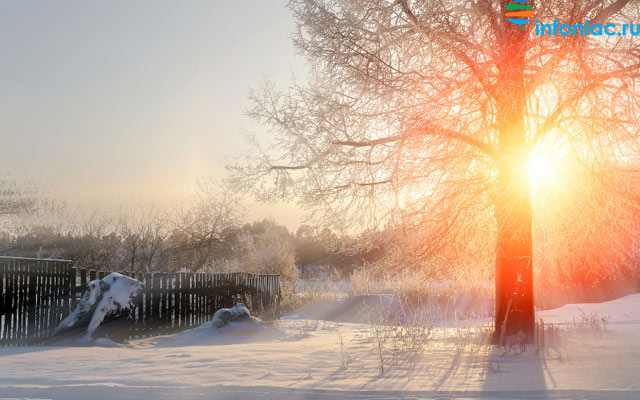
December 21 — Winter Solstice at 6:50 p.m. At this point, the Earth's South Pole is turning towards the Sun, which has already taken a position in the sky above the Tropic of Capricorn at 23°44 minutes south.
The longest night of the annual cycle takes place near the winter solstice. The winter solstice simultaneously triggers the arrival of astronomical winter in the Northern Hemisphere, when astronomical summer begins in the southern half of the planet.
© Getty Images Pro
December 21-22 is the peak of the Ursida meteor shower. The winter solstice is a real feast for those who have chosen to observe the sky as their work or hobby. As a dessert, this is the last chance in 2021 to see a shooting star and make a wish that is sure to come true.
Of course, fans of such shows may be disappointed with what they saw, especially in light of Geminid's stunning star show the week before. Nevertheless, Ursida's starfall, although not so powerful — a maximum of 10 meteors per hour — is also unique in its own way and interesting for observation.
For more than two hundred years, professionals in this field have known Comet Tuttle, which was discovered in 1790. Since then, an unknown star stream, originating from a radiant in the constellation Ursa Minor, has acquired a name, and the reason for the annual activation of the starfall is cosmic dust in the comet's tail.
One of the main characteristics is the low speed of this rain – only 33 km/h. Urcide cars move twice as slowly as, for example, the Aquarid or Persiid meteors. This makes it more likely to notice Urcide appearing in the night sky.
However, only residents of the Northern Hemisphere will be able to take advantage of the chance during the week — from December 17 to December 25; in other regions of our planet, Urcide's activity goes unnoticed. To see a falling sparkling meteor during the peak period, watch Ursa Minor, the source of the stellar stream, very closely.
Join infoniac.ru astrologer groups, follow the most interesting news, and get answers to your most pressing questions at a personal consultation:
VKontakte