
 Ecology
Scientists say that viral infections, especially the herpes virus, may play a role in the extinction of corals around the world.
As it turned out, corals attract a large number of different viruses, including adenoviruses and other types of viruses that can cause colds and gastrointestinal diseases in humans.
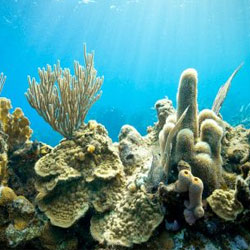
Scientists from the University of Oregon, who have published their research results in the Journal of Experimental Marine Biology and Ecology, once again confirm that corals are disappearing around the world has taken on an alarming scale. Over the past 30-40 years, the number of coral reefs in the Caribbean Sea has decreased by 80 per cent, and about a third of all corals on the planet are at risk of extinction.
Rebecca Vega-Thurber, professor of microbiology at the University of Oregon, said that scientists have identified 22 types of emerging diseases that affect coral polyps, however scientists are not yet able to say exactly which pathogens cause them.
Most researchers only look at bacteria, but there are suspicions that viruses are to blame, she said.
The University of Oregon research program studies viral “metagenomics” in corals, that is, it examines different genomes, which makes it possible to identify the underlying causes of extinction corals. Vega-Turber believes that these studies will help shed light on a wider range of viruses that can infect not only coral polyps, but also animals and humans.
One of the surprises in recent studies was that most scientists found corals to be infected with the herpes virus, a virus that is similar to the virus that infects humans, but is not identical him. Among all the viruses found in corals, the herpes virus predominates. Experiments have shown that the viral genome sequence is produced in coral tissue after severe stress.
It is not yet clear, researchers say, whether viruses found in corals can cause diseases. If you're infected with the virus. That doesn't mean you're going to get sick. Scientists plan to study this issue more seriously.
One possible cause of coral death is global warming, which causes polyps to fade — losing symbiotic algae that help corals feed. Pollution, including sewage, is also dangerous for them.