
 Health
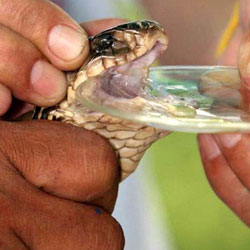
There are many toxic substances in nature that can cause a lot of harm, but if used correctly and wisely in certain quantities, these poisons can be beneficial rather than harmful. The drug industry often uses animal and plant poison to treat a variety of diseases. Learn how poison can save lives.
1) Warfarin
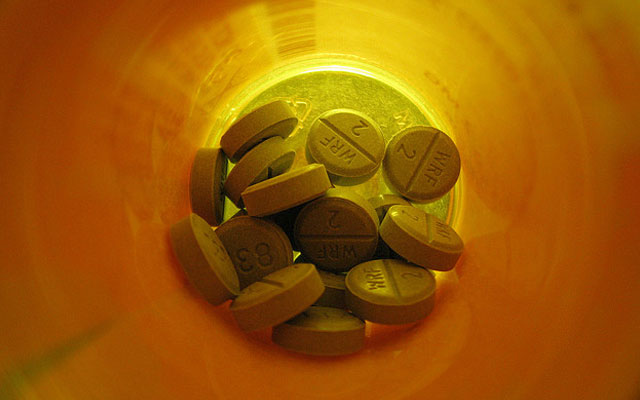
Warfarin is an anticoagulant that was originally used as a pesticide against rats and mice and is still often used for the same purpose, although many others have been invented since then, more effective rodent control products. A few years after the start of its use, warfarin was found to be an effective and relatively safe agent for preventing thrombosis and embolism. It began to be used as a drug in the early 1950s, and this poison is still popular today. Despite its effectiveness, treatment with warfarin has several drawbacks. Many commonly used drugs interact with warfarin in the same way as some foods, so its activity should be checked regularly with blood tests.
2) Cone snail venom
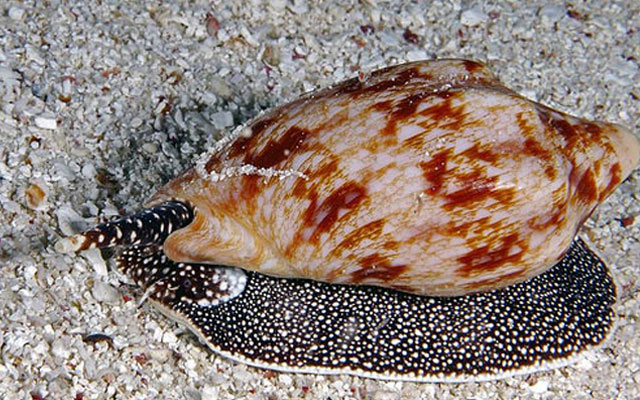
Cones are medium and large sea snails that are predators. They prey on and immobilize their prey with modified teeth and poisonous glands that contain neurotoxins. These snails should be touched very carefully, and it is better not to touch them at all, as snails can sting painfully. The bite of such a snail is not more serious than a bee sting, but some types of cones, larger, can seriously injure a person, and in some cases even kill. The venom of some cones, such as the magician cone, is an effective non-addictive analgesic that is a thousand times more powerful than morphine and can replace it. The analgesic drug ziconotide is obtained from cone toxins. Also, some components of this poison are now being tested to create drugs against Alzheimer's, Parkinson's and epilepsy.
3) Aconite poison
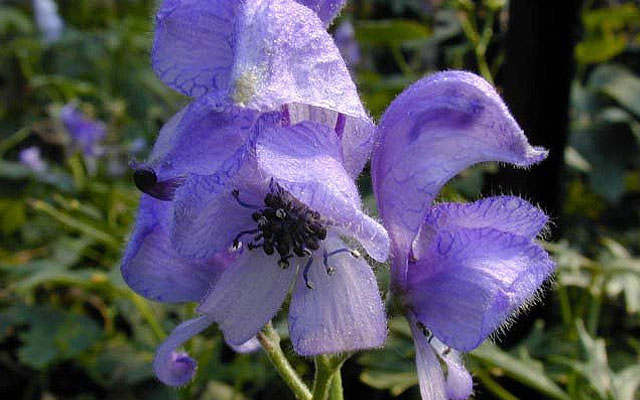
From the roots of a flower of the species Aconitum ferox (aconite), a poison called “bish” or “nabi” is made in Nepal. It contains large amounts of pseudoconitine alkaloids that can kill. In Western medicine, aconite medicines were used until the second half of the 20th century, but today they have been replaced by safer and more effective drugs. Aconite medications continue to be taken, but rarely, to treat colds, pneumonia, tonsillitis, laryngitis, croup, and asthma. When taken orally, aconite poison affects blood circulation, breathing, and the nervous system. The pulse slows down, the number of heartbeats falls, at some doses up to 40-30 beats per minute. Interestingly, aconite flowers were used to identify werewolves. If the flower leaves a yellow shadow on the suspicious person's chin, this indicates that you have a werewolf in front of you.
4) Foxglove venom
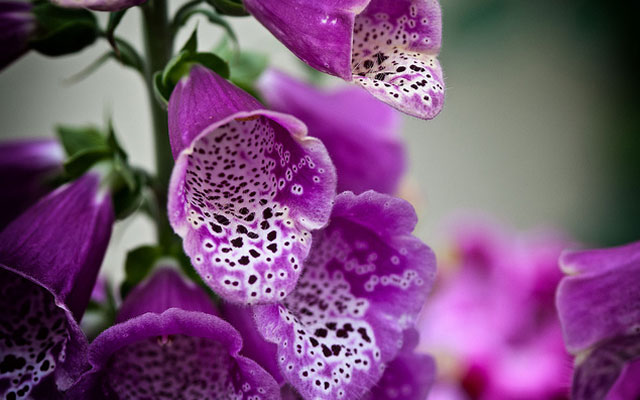
Depending on the species, foxglove may contain deadly cardiac and steroid glycosides. Because of these poisons, some species of these plants have earned the nickname Dead Man's Bells and Witch Gloves. The whole plant is poisonous, including its roots and seeds, and the uppermost leaves especially. You could die if you eat at least one of these leaves. The drug made from foxglove is called digitalin. It is used to increase cardiac contractility and to control heart rate, especially in cases of abnormal atrial fibrillation. It is often prescribed for people with heart conditions.
5) Mocassin thyroid venom
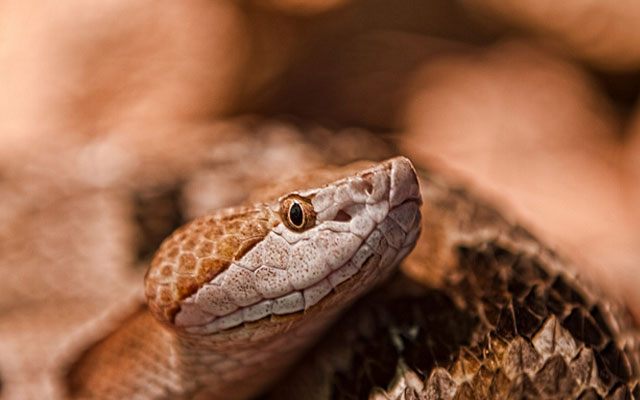
The mocassine snake is an ambushing predator waiting for suitable prey to run nearby. These snakes prefer to avoid humans and will not attack first if left untouched, but unlike many other snakes, the muzzle often stays in place instead of “fleeing”. so people can accidentally step on it and get bitten. 100 grams of thyroid venom is a lethal dose. This venom is the weakest of the poisons of other rattlesnakes and is slightly weaker than that of its closest relative, the water muzzle. These snakes often practice a so-called “warning bite” when stepped on, and release a relatively small dose of venom, or not at all. Mocassin thyroid venom contains the protein Contortrostatin, which stops the growth of cancer cells and also prevents the tumor from spreading to other parts of the body. While Contortrostatin is not recognized as an official cancer drug, it continues to be tested in the laboratory.
6) Hemlock venom
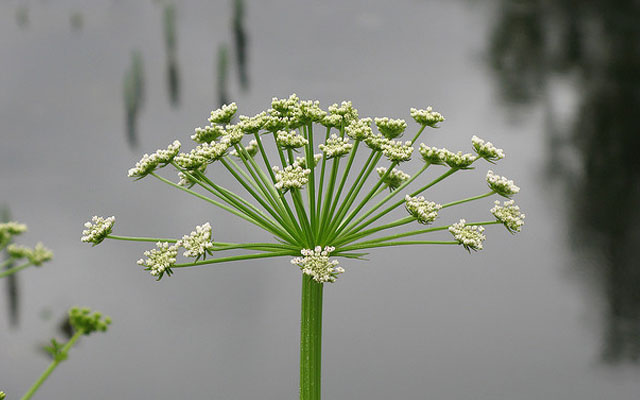
This poison is one of the most famous in the world. The most important and toxic hemlock alkaloid is coniin, which has a structure similar to nicotine. Coniin is a neurotoxin that disrupts the functioning of the central nervous system and is very dangerous for humans and animals. Coniin causes death by blocking neuromuscular junctions, as does curare poison. The result is muscle paralysis and paralysis of the respiratory muscles, which leads to death due to lack of oxygen to the heart and brain. Death can be prevented by mechanical ventilation until the effect of the poison ends in 48-72 hours. Hemlock venom injections in any quantity cause respiratory failure and death. If a person ingests 6-8 fresh hemlock leaves, or a small amount of seeds or crushed root, they may also die. Despite the notoriety of this plant, poisonous hemlock is used as a sedative and antispasmodic. It was used by Greek and Persian healers to treat a variety of ailments, including arthritis.
7) Belladonna venom
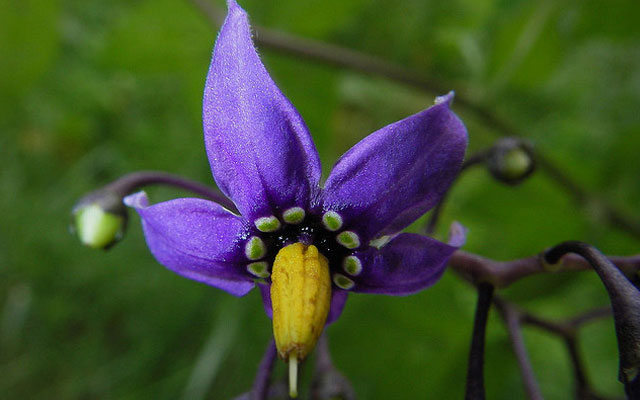
Atropine is a toxic substance that is obtained from belladonna, dope, mandrake and other plants of the Solanaceae family. Atropine injections are used to treat bradycardia (slow heart rate), asystole, and other heart problems. Atropine is also used in the treatment of a large list of diseases; it is used even against excessive sweating.
8) Yellow scorpion venom
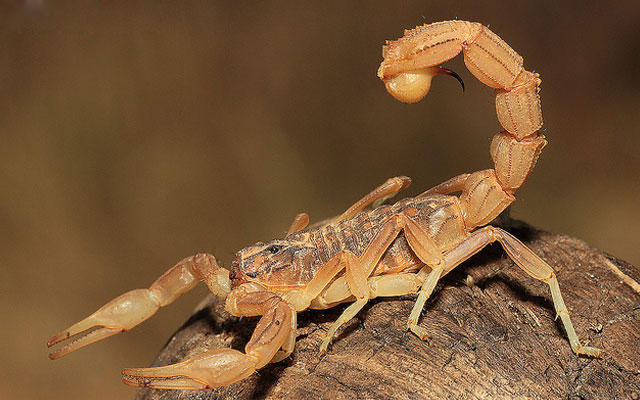
The venom of a dangerous arachnid, the yellow scorpion, may help fight cancer. Researchers at the Transmolecular Corporation in Cambridge, Massachusetts, have identified a protein that is part of Israeli yellow scorpion venom. This protein is able to search for and bind to glioma cells, a brain cancer that is particularly difficult to treat. The researchers created a synthetic poison from this protein by adding radioactive iodine to it. When injected into the bloodstream, this protein finds glioma cells, binds to them and brings with it a radioactive iodine solution. As a result, cancer cells are destroyed, and with sufficient treatment, the cancer recedes.
9) Chilean pink tarantula venom
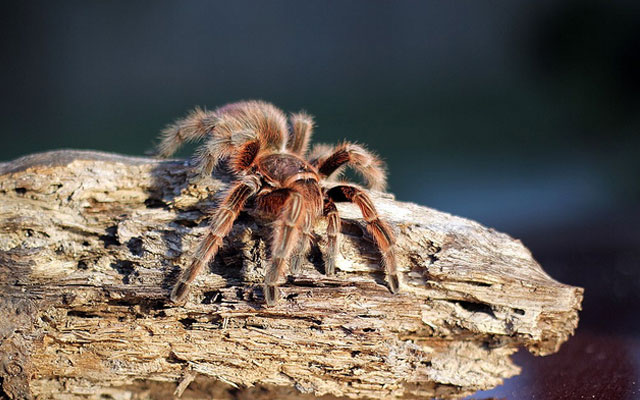
Biophysicists at the University of Buffalo are using protein from spider venom, a Chilean pink tarantula, to combat death from heart attacks. Cell walls have tiny channels that open when cells stretch. These channels are responsible for the contraction of the heart muscles. If they open too wide, they allow positive ions to enter cells. These ions interfere with electrical signals in the heart, causing fibrillation, a strong vibration that prevents heart mice from working in concert. Spider venom acts on these channels to block positive ions from entering cells. This prevents the onset of fibrillation and saves the patient from death if the poison is administered during a heart attack.
10) Ergot mushroom poison
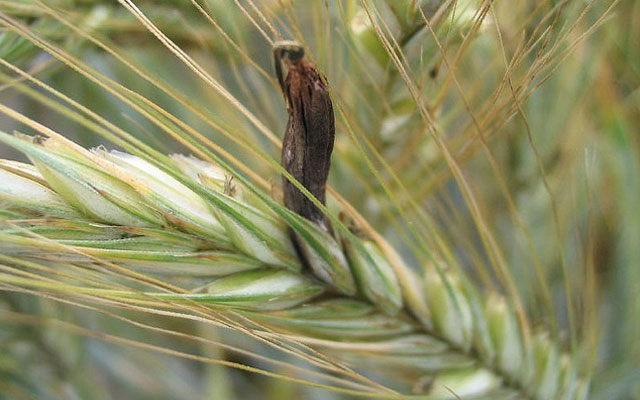
People have long known what ergot poison is, a fungus that infects rye and can be transmitted to a person who eats grains. Ergotism — fungal poisoning — causes hallucinations and unreasonable behavior, convulsions, and can even lead to death. Other symptoms may include the following: uterine contraction, vomiting, nausea, loss of consciousness. Back in the Middle Ages, certain doses of ergot were used to induce miscarriage and to stop bleeding during childbirth. Ergot alkaloids are used in drugs such as capergot, which contains caffeine, ergotamine, or ergoline. It helps treat migraine headaches. This poison is also used to treat Parkinson's disease. It was believed that ergotism was responsible for the strange disease Dancing Mania in Europe in the 16th century, but this is unlikely.