
 Unbelievable facts
One of the most interesting things about the universe is that we know too little about it.
And just as we want to know what happens when we die, science is wondering how the universe will end.
As natural as a person is able to think about such concepts.
The really exciting thing is that there are so many theories on this topic, and at the same time, they differ from each other very much.
Doomsday theories
10. Large compression
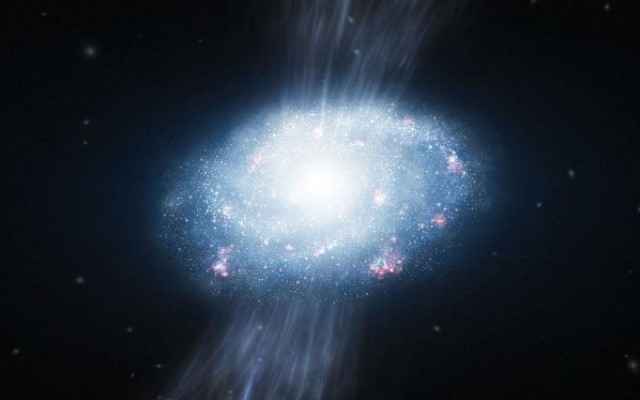
The most vivid theory about how the universe began is the Big Bang theory, when all matter was concentrated in one infinitely dense point in the abyss.
Then something caused the explosion. Matter spilled out at an incredible rate, and this eventually led to the formation of the universe we know today.
The Big Crunch, as you've probably guessed by now, is the opposite of the Big Bang theory. All the matter that spilled out at the beginning of the world's existence is under the influence of the gravity of our universe.
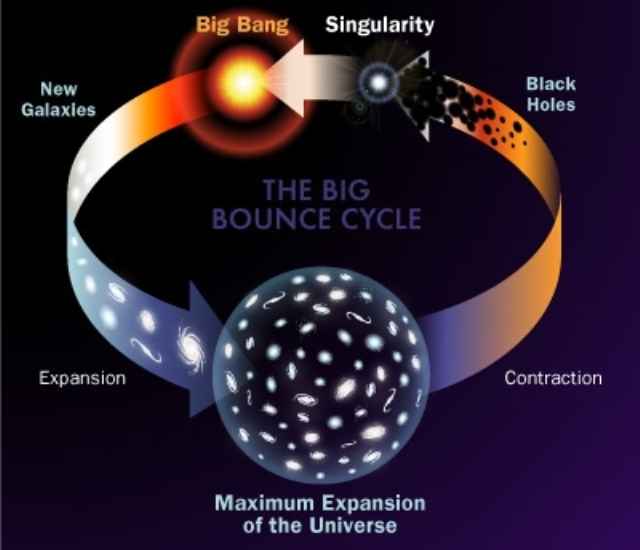
According to this theory, gravity will eventually cause the spread of matter to slow down and then stop altogether, and matter will begin to contract.
The reduction will cause all the “material” (planets, stars, galaxies, black holes, etc.) to return to one central super dense point.
Read also: 10 hidden places in case the world ends
Thus, all the matter in the universe will be concentrated at an infinitesimal point.
However, based on existing knowledge, something similar is unlikely to happen, because according to recent evidence, the universe seems to be expanding at an accelerated rate.
9. The inevitable heat death of the universe
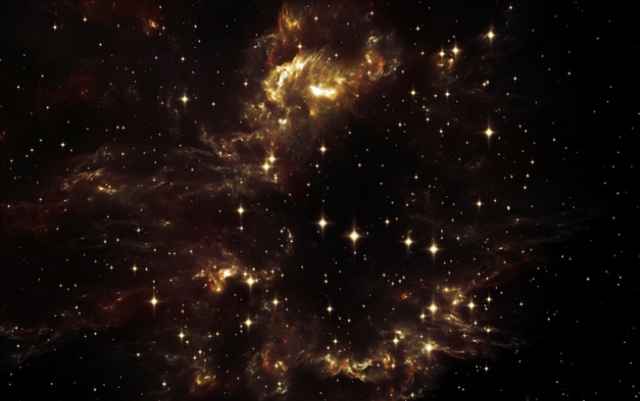
Think of heat death as the exact opposite of the Big Crunch. In this case, gravity is not strong enough to overcome the expansion of matter, so the universe continues to expand exponentially.
Galaxies are moving away from each other, and the all-encompassing night between them is getting wider and wider.
The universe follows the same rules as any thermodynamic system: heat is distributed evenly throughout space.
Thus, the wind will disperse all matter evenly, even in the coldest, darkest and grayest corners.
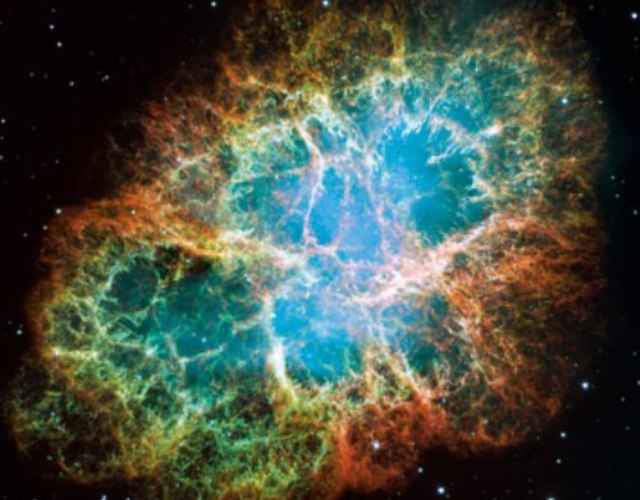
Eventually, all the stars will go out one by one, and there won't be enough energy to ignite new ones. As a result, the entire universe will go out.
Matter will remain, but will exist in the form of particles, and their movement will be random. The universe will be in equilibrium, and these particles will bounce off each other without exchanging energy.
As a result, there will be a void with particles “living” in it.
How the world will end
8. Heat death due to black holes
According to popular theory, most matter in the universe moves in circles from black holes. Just look at galaxies that have everything, with their center being home to supermassive black holes.
Most theories about black holes involve swallowing stars or even entire galaxies when they fall into holes.
At some point, these black holes will absorb most of the matter and we'll be left with a dark universe. From time to time, it will be possible to observe flashes of light that look like lightning.
This would mean that the energy-emitting object came too close to the black hole, but its “strength” was not enough and it was absorbed.
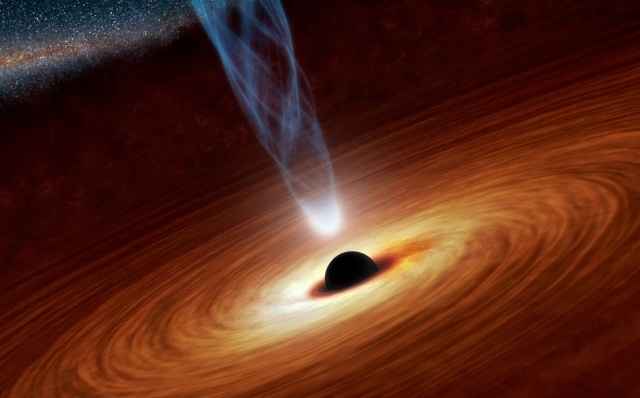
In the end, we'll be left with nothing, and the gravity wells will fall into the abyss. More massive black holes will swallow up their little “colleagues” while getting even bigger.
But still, this would not be the final state of the universe. Over time, black holes will evaporate due to mass loss and Hawking radiation.
Thus, after the last black hole dies, the universe will remain uniformly filled with subatomic particles with Hawking radiation.
End of the World Scenarios
7. The end of time
If there is anything eternal, it is certainly time. Whether the universe exists or not, time has its own opinion. Otherwise, there would be no way to differentiate the current moment from the next.
But what if time has lost a moment or just froze? What if there are no more moments? It's all frozen. Permanently.
Let's say we live in a universe that will never end. With an endless supply of time, anything that can happen is 100 percent likely to happen.
The same thing happens if you live forever. You have an infinite amount of time at your disposal, so anything that can happen is guaranteed to happen (and an infinite number of times).
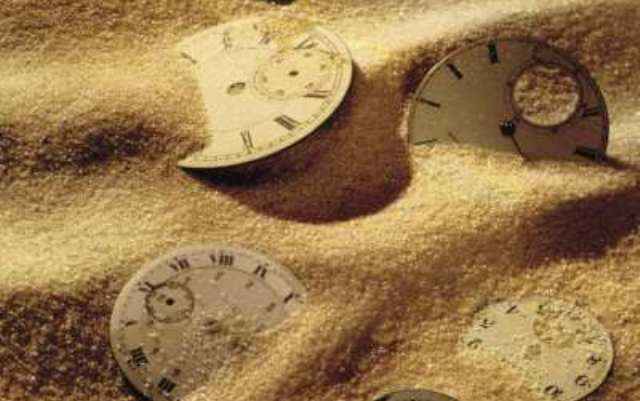
Thus, if you live forever, you are 100 percent likely to “fail” for a long time, and you can spend eternity recovering.
Due to the confusing calculations that try to predict the outcome of the universe, scientists have suggested that time may eventually stop.
Read also: Scientists have compiled a list of scenarios for the end of the world
Assuming you're going to experience it all, you'll never understand that something's wrong. Time will just stop and everything will turn into an instant, one shot.
But it's not going to go on forever, it's going to be one state of time. You would never die. You would never get old. It would be a kind of pseudo immortality. But you would never know it.
How will the world end
6. Big theft
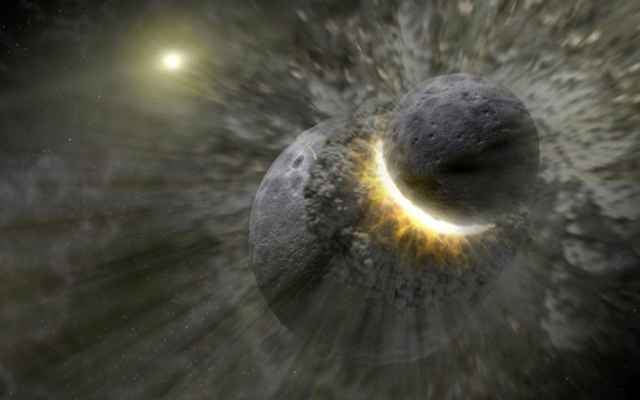
The Big Steal theory is similar to the Big Crunch but is far more optimistic. Imagine the same scenario: gravity slows down the expansion of the universe and condenses everything back to one point.
In this theory, the force of rapid contraction alone is enough for another Big Bang to occur and the universe to start from scratch.
In this model, everything is not really destroyed, but simply “redistributed”.
Physicists don't like this explanation, so some scientists argue that it's likely that the universe won't be able to go all the way back to ending at one point.
Instead, everything will happen very close to what is being described, but the matter collected in one place will be blown off by a force similar to the one that pushes the ball off the floor when thrown.
This Big Theft would be very similar to the Big Bang, and would theoretically create a new universe. In this fluctuating theory of the universe, our universe may be the first in the system, or maybe 400th.
No one will be able to say that.
5. The Big Gap
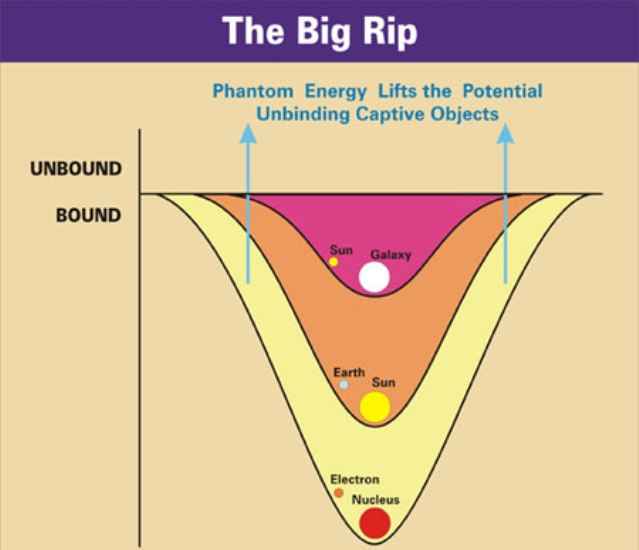
Regardless of how the world ends, scientists won't feel the need to use the word “big” to describe this phenomenon.
In this theory, the invisible force is called “dark energy” and it is causing the expansion of the universe to accelerate, which is what we see today.
Eventually, the acceleration will reach its limit and the universe will tear itself apart to fade into oblivion.
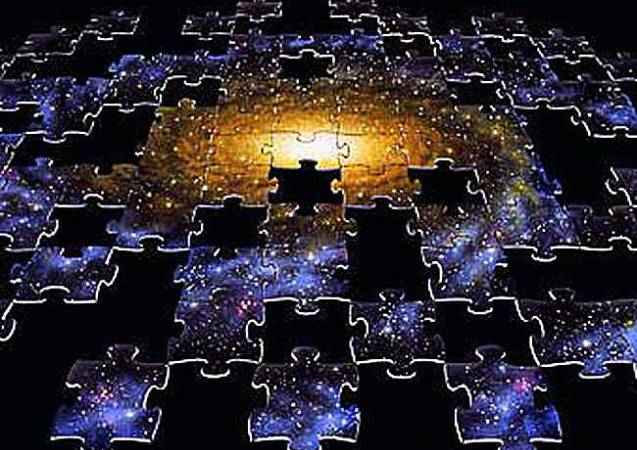
The scariest thing about this theory is that while most of the theories on this list assume the world ends after stars burn out, the Big Gap is estimated to happen in about 16 billion years.
At this point in the universe, planets (and, in theory, life) are still functioning. And this cataclysm of a universal scale will kill all living things and all planets.
But that can only be assumed. However, death will definitely be violent, not slow and thermal as most people expect.
The end of the universe: how?
4. Vacuum metastability
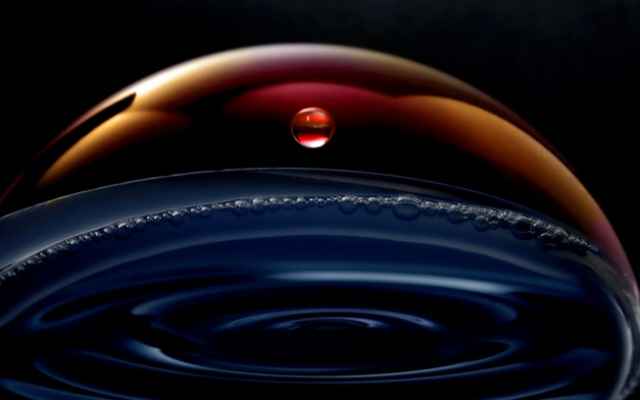
This theory depends on the idea that the universe exists in a fundamentally unstable state. If you look at the significance of quantum physics particles, you'll see that many quantum physicists believe that our universe is teetering on the brink of stability.
Proponents of this theory assume that billions of years from now, the universe will “tip over”. When this happens, at some point a bubble will appear in the universe.
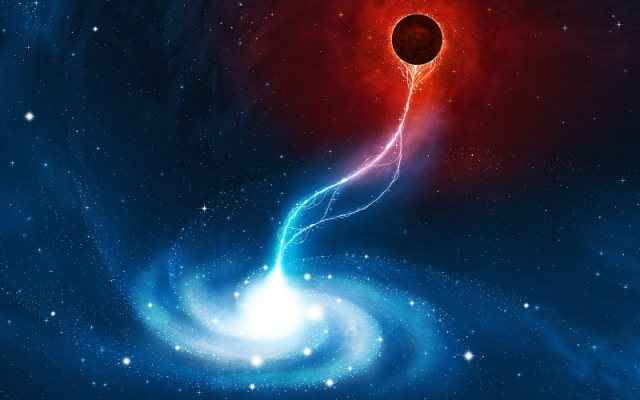
It's likely to be an alternate universe. This bubble will expand in all directions at the speed of light and destroy everything it touches, eventually destroying everything in the universe.
But don't worry: the universe will still exist. This bubble “the same but different” in the universe is just going to change things. The laws of physics will be different, and maybe there will even be life there.
3. Time barrier
If we try to calculate the probabilities of the origin of something in the multiverse (where there are infinite universes, each different from the other), we will face the same problem as in the case of an infinite universe: everything has a 100 percent chance of occurring.
To get around this problem, scientists simply took a section of the universe and calculated the probabilities for that particular region.
This makes it possible to make correct calculations, but the boundaries that have been established to carry them out “cut” the universe, which is not entirely true from the point of view of integrity.
Due to the fact that the laws of physics do not work in an infinite universe, the only option when it makes sense to consider this model is the presence of real, physical boundaries beyond which it cannot be nothing to get out.
According to physicists, within the next 3.7 billion years we will cross this time barrier and the universe will end for us.
Even though we don't have enough physics knowledge to accurately describe this phenomenon, the prospects are still dire.
2. That's not going to happen because we live in a multiverse

In a scenario with infinite multiverses, universes can just come and go. They can start their existence thanks to the Big Bang and end with the Big Gap, as a result of heat death, etc.
But none of this matters, because ours is just one of many in the multiverse. Despite the fact that “small” universes can feud and blow themselves up, as well as the one that is nearby, the largest universe will still exist.
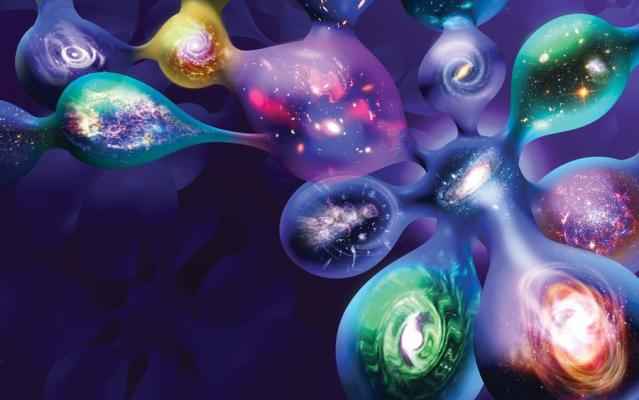
While time itself may work in other universes, new universes are born all the time in the multiverse. According to physicists, the number of new universes will always be greater than the old ones, so in theory, the number of universes is only increasing.
1. The Eternal Universe
It has long been said that the universe has always been, is and will be. This is one of the first concepts people put forward about the nature of the universe. However, this theory has a new twist with a more serious approach.
Ignoring the Big Bang theory as the reason for the formation of the universe, and therefore of time, proponents of this concept say that time existed before.
At the same time, the universe itself may be the result of the collision of two branches (leaf-like structures of space that form at a high level of existence).
In this model, the universe is cyclical and will continue to expand and contract constantly.
We will probably be able to find out in the next 20 years, because we have the Planck satellite, which studies geodetic spaces and background radiation, and which will be able to predict certain scenarios further developments.
This is a long process, but once scientists are able to draw a diagram using a satellite, it will be easier to understand how the universe really started and how it will all end.