
 Health
If you have diabetes, any long journey can be a problem — even if you're prepared carefully for it. But if you approach this issue correctly, you will feel in familiar conditions, even when you are far from home. We bring to your attention 20 useful rules that will help you foresee almost every nuance so that you can safely spend your vacation, weekend, or go to business trip.
So, let's imagine that the suitcase with the essentials is packed, and you're basically ready to hit the road. All that remains is to prepare for the trip, taking into account the fact that you have diabetes. To begin with, it doesn't matter how closely you manage to stick to the necessary rules and routines when you're at home. When you're on the road or in a hotel, things are different. You have to eat in cafes or restaurants; your physical activity is slightly higher than usual; unexpected stress and unforeseen situations can all affect sharp fluctuations in levels blood sugar. Compliance with the following 20 rules will help control this level, coping with all non-standard situations. At the same time, it does not matter at all whether you are on a long or short trip.
UNDERPINNING
1. Compiling a list.
 So, grab a pen and a piece of paper and make a list that should include every little thing that will help you stay well during the trip. Such a list will help you not forget the smallest but necessary things, and you will not have to worry about whether you have packed everything in suitcases when leaving your home.
2. Travel bag.
The American Diabetes Association recommends that diabetics always have a small separate travel bag ready to carry everything necessary in order to maintain your well-being at the proper level. You will need to pack the following items in this bag:
— Insulin ampoules and as many syringes as you may need during your journey. Every detail must be considered, to the point that you will need a small container to store used syringes and test strips.
— Glucometer (a device for measuring blood sugar levels), a blood pressure monitor (a device for measuring blood pressure), a device for testing urine, strips for analyzing blood glucose levels. You need to bring a set of spare batteries to the devices — just in case.
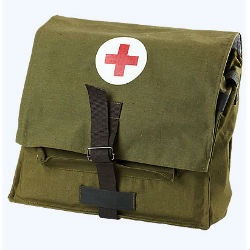 — Oral medicines with instructions for use. It would also be nice to bring your prescriptions for these drugs with you.
— A set of other medications, such as antibiotic ointment, anti-nausea pills and so on.
— A diabetic identification card that, in the event of an attack, will let others know that you are diabetic and need appropriate care. If you are not abroad, keep your doctor's phone number with you at all times.
— All kinds of snacks, such as crackers, cheese, raisins, fruit, juice bottles and a natural sugar substitute (sugar for diabetics). All these simple snacks can easily help you satisfy a little hunger, as diabetics, unlike healthy people, cannot tolerate hunger — this can cause changes in blood sugar levels.
— You can also take some more serious food that you don't have to keep in the refrigerator for a relatively long time – who knows how long you'll have to spend on your feet before you can get anywhere- Have a snack!
3. Don't forget the tracksuit!
For diabetics, exercise is as necessary as air. Bring your workout clothes so you can always get at least a little bit of exercise. Of course, if you are going to stay at an extremely expensive and popular hotel, then most likely, the service staff will be able to provide you with everything you need for sports — including training clothes. But in most cases it is hard to count on that.
4. Please wear comfortable shoes.
This will make it easier for you to endure long periods of time on your feet — all this travel from airport to airport, train station to train station, hotel to hotel — all this can lead to stress and cause sharp fluctuations in blood sugar levels. Do not aggravate your condition by wearing uncomfortable shoes.
5. Check the condition of blood sugar monitoring devices.
It doesn't matter at all how far you're going to travel or how long the journey takes. You must be absolutely sure that your blood level monitoring device is working properly in order to be able to perform this extremely necessary analysis on a regular basis and without interruption as many times as recommended by your doctor. Having this option will help you identify a potential problem early on and take medication, thus keeping your blood sugar levels at the right level.
AT THE AIRPORT
 Traveling by air is quite stressful. Fortunately, airport security services allow you to take all the medicines you need into the cabin if you don't have them in the aircraft's first aid kit. However, you should remember that you may need proof of your condition, such as an opinion from your doctor, and you will also need papers confirming the origin of your medicines.
6. Always keep everything that is vital at hand.
It is reported that more than two million pieces of luggage were lost or damaged at airports around the world over the past year. And even if something happens to your main suitcase, which stores things, it's not as bad as losing a bag full of important medicines, insulin, syringes and equipment for blood sugar testing. That's why you should always keep this bag with you.
7. Tell airport security officers in advance that you have diabetes.
As a rule, airport security departments allow people with diabetes to bring the following personal items into the cabin:
— Insulin and insulin-containing drugs (containers, needleless injectors, ampoules, pre-filled syringes).
— An unlimited number of unused syringes, if they are accompanied by insulin-based drugs and insulin.
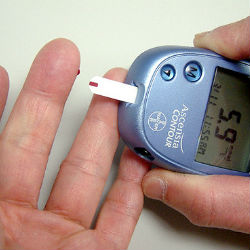 — Special scalpels for opening ampoules with drugs, devices for measuring glucose levels, strips for analyzing blood glucose levels, cleaning tampons impregnated with alcohol.
— Insulin dispensers, cleansers, batteries, plastic tubes and other things for intravenous injections, catheters and needles. All this, of course, should come with insulin.
— Test strips for determining ketone bodies in urine.
— An unlimited number of used syringes when they are transported in a special waste container.
Of course, airports in different countries have their own rules and their own deviations from the rules. In order to find out what exactly you are allowed to carry with you into the cabin at the airport of a particular country, it is better to take care of this issue in advance and make appropriate inquiries. You should also approach airport security officers in advance and warn you that you have diabetes before being searched.
8. It will be necessary to confirm the origin of the drugs.
You may have to prove that what you're trying to bring to the salon is insulin. Therefore, ampoules without identification marks should not be brought in. You must take with you a whole package marked with the product's name, production date and manufacturer.
9. Take care of some activities in advance.
Since it is possible that you will have to use the restroom to give yourself an injection, you should arrange for an aisle seat on the plane. If passengers are to be fed during the flight, you should inform the airlines 24 hours in advance that you need a special menu (if you are on a diet, of course). If passengers are not fed during the flight, take the necessary food with you to the cabin.
10. Warn the flight attendant about your illness.
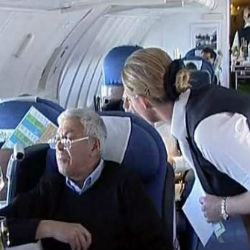 You should tell your flight attendant or flight attendant that you have diabetes, especially if you're traveling alone. You need to be on the safe side in case you suddenly feel bad during the flight.
11. Drink enough water.
Dehydration on an airplane is quite common, as the humidity in the cabin is at least lower than in normal living spaces. This can cause minor discomfort, tingling in the eyes, fatigue, and breathing problems. Basically, these symptoms affect people who have certain problems with the respiratory system, for example, asthma. An easy way to get rid of dehydration symptoms is to consume enough water. You should also avoid alcoholic and caffeinated drinks during the flight.
WHEN TRAVELING ABROAD
Since doctors' prescriptions and prescriptions may differ from one country to another, it is necessary to prepare in your own country for possible difficulties that may arise abroad due to this situation.
12. Consult your healthcare provider before you leave your home country.
Ask your doctor to give you the necessary prescriptions and an appropriate medical report, which will also indicate the reason for prescribing the medication you are taking with by yourself. This letter may also require a description of the pharmacological effect of a drug, including side effects. If you need medical care in another country, this letter will help the doctor who will provide this care and allow him to offer you all the medicines you need in accordance with the course of treatment, accepted by you. In addition, some medications may not be available in the country where you are going to take a vacation or business trip. And even if such drugs are available, they may have different names and differ in their strength.
13. Stock up on an extra supply of medicines from home.
 In addition to having a stock of medicines that you will always have at hand in a separate bag, we recommend that you carry an additional supply of these same drugs in your shared luggage. For example, if you are away from home for a week, make a two-week supply.
14. Take care of the storage conditions for medicines.
All medications that you took with you on a trip must be stored in a special airtight package, which, moreover, isolates them from the effects of temperature, humidity and light.
15. Wear an identification bracelet
Due to the fact that in the case of diabetes, it is difficult to unequivocally predict how the situation will develop in the next moment and when the patient may need medical care, experts recommend everyone patients wear special identification bracelets that identify people as diabetics and provide ambulance workers with everything they need about you and your diagnosis, if necessary information. This, in turn, will help doctors provide you with qualified medical care. You should also remember that the information on the bracelet must be in the language of the country you are traveling to.
16. Take into account possible time zone differences.
You should be sure when to take your medications regardless of where you are. To do this, it will be convenient to bring along a wristwatch with two temporary dials, one of which will be set according to your country's time.
WHILE EATING
If you are forced to follow a strict diet, unfamiliar menus at new restaurants can be difficult. Therefore, do not hesitate to ask questions locally, and it is not superfluous to prepare for this important moment of travel in advance.
17. Ask questions about the menu!
 Ask them to tell you about each ingredient in a particular dish to avoid a sharp drop or increase in blood sugar levels after eating. You should also learn about how food is prepared by asking you to serve sauces and condiments separately so that you can control the amount in your meal. Unfortunately (and it's no secret!) not all waiters or restaurant chefs will be happy with such annoying perseverance, so you should be patient and explain to them that you are not doing this out of curiosity, but for reasons preserving your health.
18. Choose the right restaurants.
It would be a good idea to inquire about a restaurant's menu in advance — many of them are available online. If you decide to drop by a restaurant while walking through the streets of an unfamiliar city, it makes sense to study the menu before you make your final choice at this place. In many countries, the restaurant menu is posted outside the restaurant in such a way that everyone who walks by has the opportunity to get acquainted with the range of dishes on offer. Evaluate it in advance to see if your fat and cholesterol levels match your health condition.
For people who suffer from diabetes, death experiments are similar. That is why it makes sense to try to choose one restaurant chain that prepares identical dishes in different catering establishments owned by this chain. It also happens that such restaurants provide information about the number of calories, fat and cholesterol levels contained in their dishes. For example, in the United States of America, there is even a special federal law that obliges large restaurant chains to provide such information to their customers by posting special display boards or shields.
19. Calculate fat and calories in advance.
To insure yourself against unexpected spikes in blood sugar levels, be prepared for the fact that in an unfamiliar restaurant you will not be able to calculate the amount of fat and calories in advance. Therefore, the food you took with you on a trip and that you snack on throughout the day should have minimal fat and calorie values.
20. Learn to identify low-fat meals.
It's pretty easy, actually. For example, fried or baked fish usually has no more than five grams of fat per 30 grams of product. Choose boiled foods that are cooked without fat or oil, steamed, and so on. Avoid simply fried foods in the usual way, heavily souted dishes, fatty desserts, and so on. You should find out in advance how many calories are contained in a certain number of grams of each such dish. Because this information is vital to your health, it should be remembered forever.