 Science
There were a number of amazing astronomical discoveries in 2012, but you probably haven't heard of all of them.
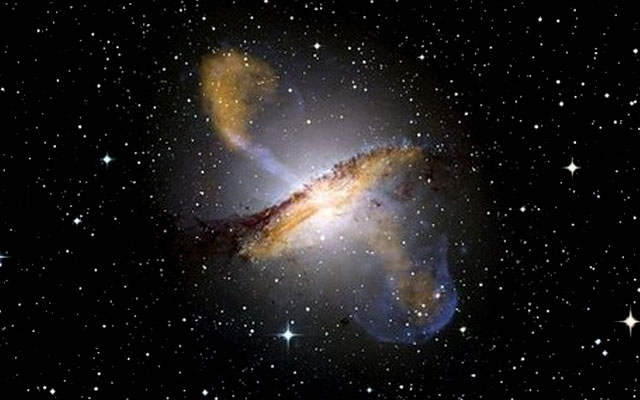
The astronomical discoveries of the past year have somewhat changed our understanding of the universe. For example, scientists have discovered a galaxy with a mysterious black hole at its center that is 17 billion times larger in mass than the Sun.
Interesting space objects have also been discovered, such as a very hot solid planet in our nearest star system, and the most massive and farthest galaxies.
Other discoveries have been made in space that have been written less about, but they are also no less interesting.
1) The smallest planets
Astronomers using NASA's Kepler space telescope have discovered three tiny planets 120 light-years away. These three small planets orbit the star KOI-961 and are comparable in size to Mars, which means they are smaller than Earth. The star itself is also quite small — only 70 percent larger than Jupiter.
These three planets have the following masses: 78, 73, and 57 percent of Earth's mass. This discovery proves once again that planetary systems in the universe are very diverse.
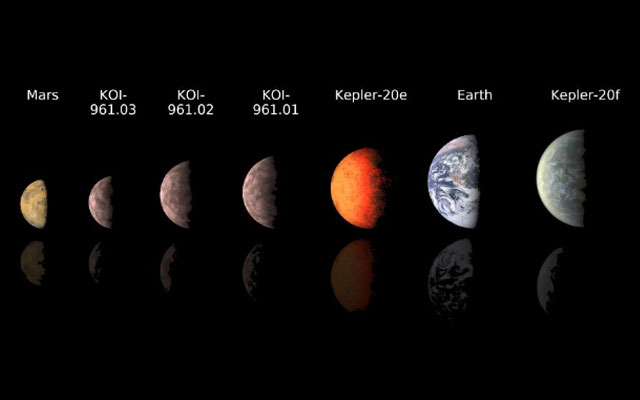
These three planets orbit very close to the star, so they can make a full revolution in less than two Earth days. Scientists believe that all these planets are as solid as Earth, but due to their proximity to the star, their surface temperatures are very high, between 450 and 170 degrees Celsius.
These planets were discovered by the Kepler telescope using the transit method.
2) The smallest star system in the galaxy
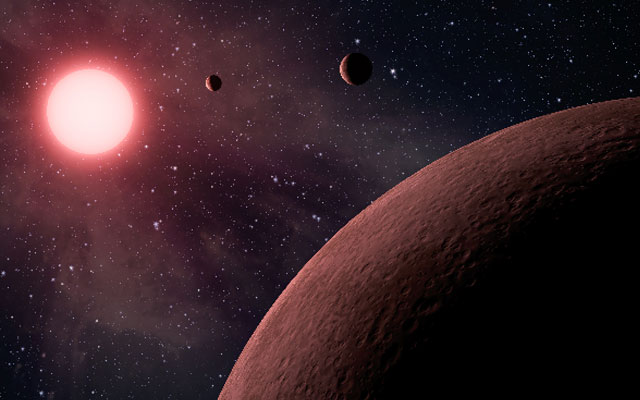
The KOI-500 star harbors 5 exoplanets that are so close to each other that their gravity strongly affects the orbits of their neighbors. By terrestrial standards, “years” on these planets last 1, 3, 4.6, 7.1 and 9.5 days. Moreover, these planets are relatively small — 1.3 and 2.6 times larger than Earth.
All of these planets are located in a very small area around their star. The outer planet's orbit is 150 times less than the distance from the Sun to Earth's orbit.
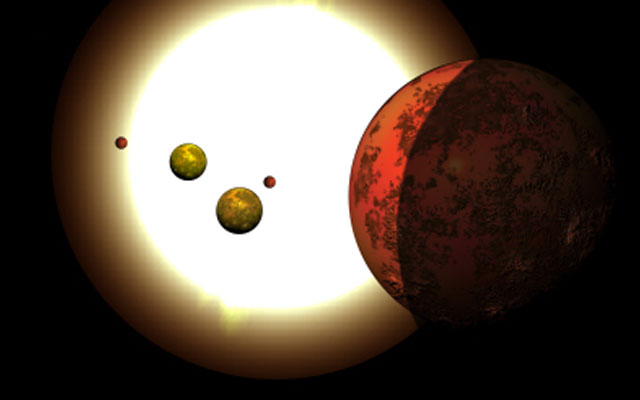
Researchers have discovered these planets using NASA's Kepler space observatory. Since March 2009, this telescope has made numerous discoveries and has discovered at least 2,300 potential exoplanets. By observing 160,000 stars simultaneously, the telescope makes it possible to find alien worlds by noticing small changes in the brightness of stars.
Scientists have suggested that the planets around the star KOI-500 were not originally so close to it. Due to the gravitational interaction between planets and the protoplanetary disk of gas and dust, the planets have gradually begun to approach the star and are now so close to it.
3) Oldest and farthest supernova
In 2012, astronomers described what they believe are the most distant supernovae in the universe. Scientists believe that these very bright supernovae were once massive stars – 100-250 times more massive than the Sun, but it is not yet clear to imagine the origin of very bright supernovae it turns out.
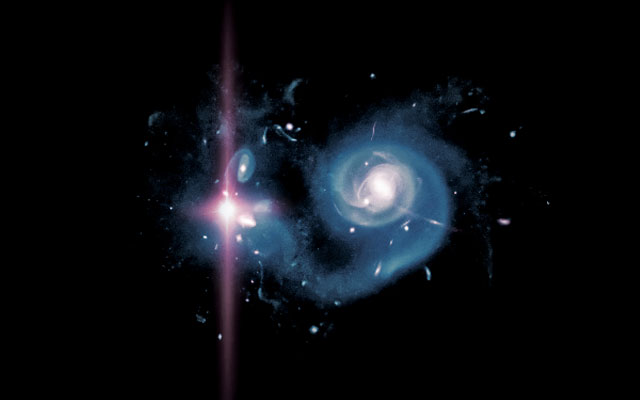
The first generation of stars appeared after the Big Bang and was formed from the original gas, researchers suggest. Later, these stars began to die, polluting the universe with heavier elements. Subsequent generations of stars were born from a different gas, saturated with the remnants of the first stars. That's why the first generation of stars was unique.
The researchers drew attention to ancient very bright supernovae that exploded more than 10 billion years ago. By comparing all the images obtained using modern technologies, they found two supernovae, one of which is 10.4 billion years old and the other is 12.1 billion years old.
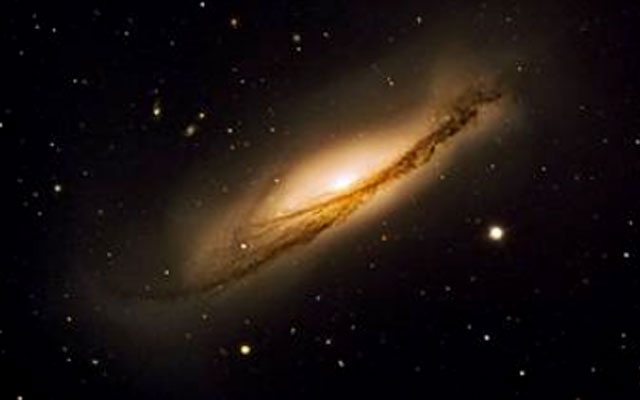
The last star is by far the oldest supernova ever discovered. Although the light from these stars suggests that they were not the first stars to appear after the Big Bang, it is hoped that in the future there will be better tools to find the first ones stars.
4) The most massive galaxy cluster
A massive cluster of galaxies, 2,000 times heavier than the Milky Way, is located 7 billion light-years away. This group of galaxies is called SPT-CLJ2344-4243 or the Phoenix Cluster. It contains thousands of galaxies of all sizes.
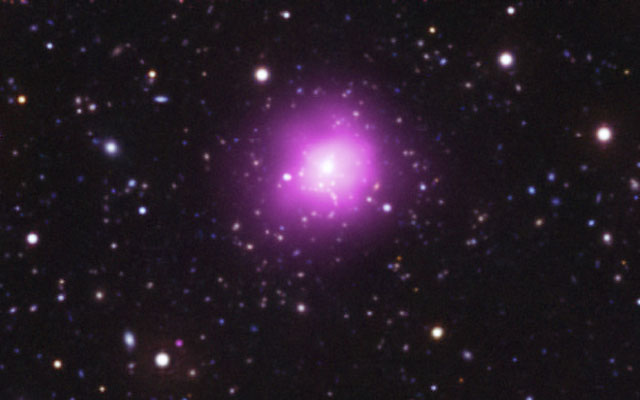
Astronomers first noticed this cluster back in 2010, but at first they didn't even realize how massive it was. With the help of observations made by the Chandra X-ray Observatory, it was possible to find that the light emitted by this cluster is brighter than the light of any other cluster.
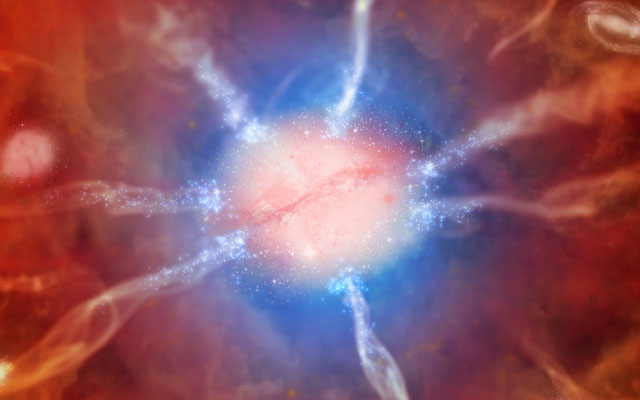
5) An unusual star with the most powerful magnetic field
There is a star located 20 thousand light from Earth, which has attracted the attention of astronomers with its unusual magnetic field. NGC 1624-2 is 35 times more massive than our Sun and is located in the constellation Perseus. Its magnetic field is 20,000 times stronger than our star's magnetic field.
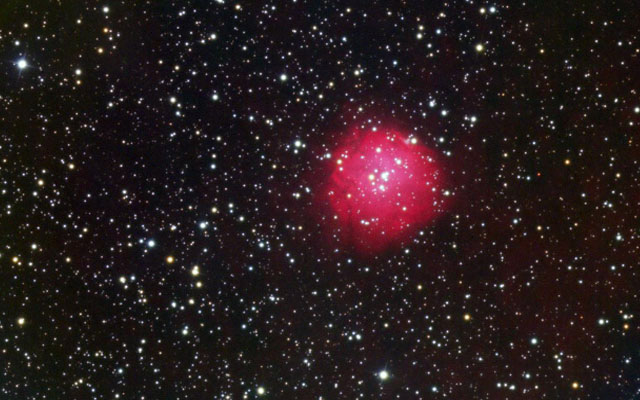
Scientists say that magnetic fields of this magnitude are extremely rare. Only a couple of stars are known to have a magnetic field close to that star, but they are much less massive.
The powerful magnetic field of NGC 1624-2 generates a stellar wind, which consists of energetic particles that fly far enough from the star. This distance is 11.4 times greater than the radius of NGC 1624-2.
6) The largest center of the galaxy
Scientists have discovered an interesting galaxy that boasts the largest center among the centers of all galaxies familiar to astronomers.
The center of the elliptical galaxy A2261-BCG is 10,000 light years long. This is surprisingly large, even for a galaxy 10 times the size of the Milky Way. This center is strangely scattered and has no concentrated light around the black hole at its heart.
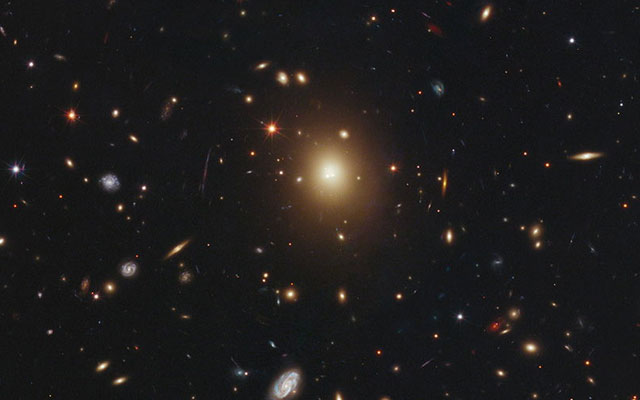
Scientists believe that there are black holes in the center of almost all galaxies, but this black hole is not found at the center of A2261-BCG, however, they are not sure that it is not there.
The A2261-BCG galaxy itself is 1 million light years wide and 3 billion light years away from Earth. The strange large core of this galaxy is 3 times larger than the cores of other very bright galaxies that have been known to scientists so far.