
 Incredible facts
Some of the statements we hear seem ridiculous and completely meaningless to us. And few people would think that these things are actually true.
Here are 5 facts that seem unbelievable and even false, but which are actually true:
Read also: TEST: guess a number and we'll guess it (100% accuracy)
Ridiculous facts
1. Mike's chicken lived without a head for 18 months
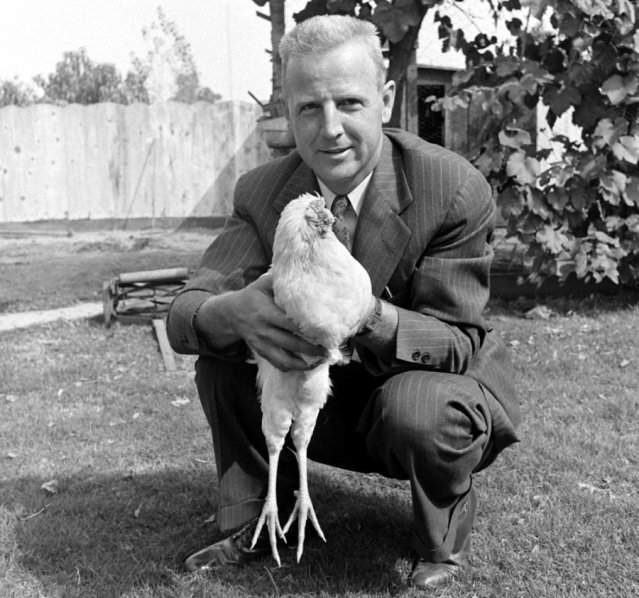
The headless chicken, also known as Mike the Rooster (Wyandot breed), became widely known after being headless for 18 months.
On September 10, 1945, American farmer Lloyd Olsen from Colorado decided to cook a rooster for dinner.
For his culinary purpose, the man chose a five-month-old chicken named Mike. When Lloyd tried to cut off Mike's head with an ax, he didn't quite succeed. He cut off most of the bird's head, but left the jugular vein intact, as well as one ear and the main part of the brain, which remained virtually intact.
Realizing Mike wasn't dead, Olsen decided to care for the bird. He started feeding him a mixture of milk and water, as well as small corn kernels.
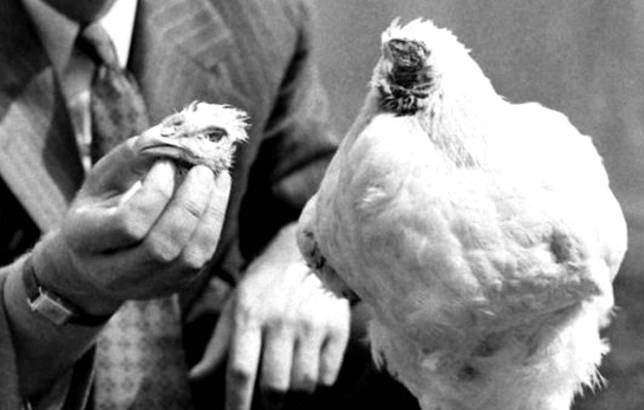
Due to his unusual appearance and lack of a head, Mike quickly became famous, and his owner began to earn good money for an unusual pet. The rooster began to tour neighboring villages.
At the peak of his popularity, Mike's owner was making $4,500 a month. An unusual headless bird even appeared on the covers of some magazines.
In March 1947, a year and a half after losing his head, Mike swallowed a corn kernel that was stuck in his throat. The bird began to suffocate and died. However, the fame of the mystical headless rooster haunted its owner for a long time.
In the city where Mike lived, an annual festival is still held in his honor.
How much does the cloud weigh
2. On average, one cloud weighs as much as 100 elephants

The cloud is an accumulation of condensation products of water vapor at an impressive height.
To calculate the weight of an average cloud, scientists measured the density of water per square centimeter and made some mathematical calculations.
It turned out that the cumulus cloud (that is, the white, fluffy cloud you see on a clear, good day) weighs about 100 elephants. Depending on the size of the cloud, this is about 800 tons.
Read also: How the souls of deceased relatives affect your life

If the cloud is so heavy, the logical question is why doesn't it fall to the ground?
The thing is that all this impressive weight is distributed among trillions of tiny drops of water scattered across a really large space.
Some of these droplets are so small that it would take a million of them to combine them into even one drop of rain.
3. Until the early 1950s, cigarettes were promoted as an absolutely healthy product
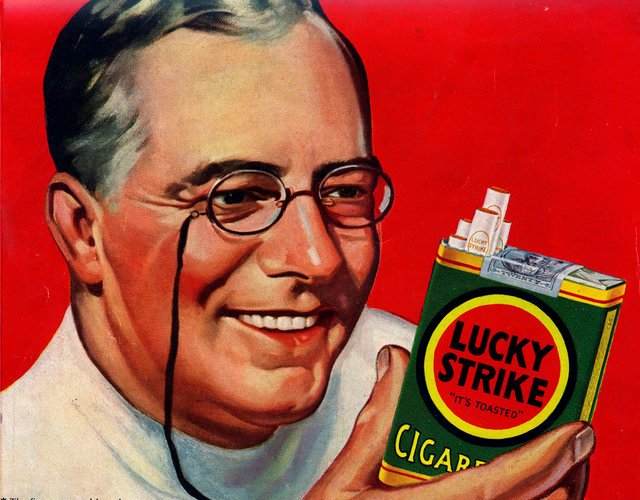
In the 1930s, people suddenly became concerned about the consequences of smoking cigarettes. They began to think about the health hazards caused by smoking.
And then tobacco company executives realized that they needed to take measures to regain the ground lost by cigarettes, so they initiated advertising campaigns involving doctors.
The ads depicted doctors smoking cigarettes imposingly or even doctors who allegedly prescribed their patients to smoke certain cigarettes as a medicine.
By the mid-1950s, medical research had shown a direct link between cigarette use and lung cancer. It has been proven that cigarettes are the first cause of lung cancer.

In 1965, a new condition was announced to representatives of the tobacco industry: cigarette packages must contain inscriptions warning of mortal danger.
Thus, the public was aware of the potential health risks associated with smoking.
However, despite research and numerous warnings about harm to the body, they did not smoke less. Experts estimate that more than 400,000 people die every year in the world from smoking-related diseases.
4. Charlie Chaplin lost the Charlie Chaplin lookalike contest

In 1975, shortly before his death, Charlie Chaplin decided to enter a self-lookalike contest.
The contest was held in France. Of course, everyone predicted victory for him. But as a result, Chaplin took only third place.
5. Openers were not invented until 48 years after tin cans were invented

In 1810, Peter Duran used iron and tin to create the world's first tin can. Thanks to this invention, it became possible to preserve food for a long time. This is certainly good news.
The bad news was that the can opener, or what we call an opener, was invented almost half a century later.
The question is: how did people open banks if there were no openers then? It's very simple: they used a hammer and a chisel! Not the best way to open a bank, however, it worked for almost 50 years.