
Ocean depths
Most of us may have felt the sand of the beach under our feet at least once in our lives, indirectly touching the ocean, but it is still the most unknown territory on Earth. According to research, 95% of ocean spaces remain unexplored so far, and if we are talking about the very bottom of the ocean, then it has been studied by only a couple of percent. In general, we know very little about the depths of the sea.
One of the factors that makes the mystery of the seabed even more exciting is the fact that we have not been able to see most of it. Satellites have difficulty navigating water depths to get a clear image. We managed to get a kind of “photo” of the bottom, but with a resolution of only 5 km, which means that we cannot see details smaller than the specified size. This is clearly demonstrated by the fact that we have more detailed maps of the surface of Mars than maps of the bottom of our oceans!
Gangkhar Puensum
Gangkhar Puensum, a mountain with a height of 7570 meters, has an attractive exotic name. However, it is an inaccessible peak among mountain ranges, and its untouchability is not due to such widespread security restrictions. While climbers still risk climbing Everest and K2, despite the high dangers, Gangkhar Puensum remains inaccessible due to respect for the spiritual beliefs of the local population. This fact may surprise, because there are hardly any places on Earth where the opinion of indigenous people is so listened to!
It is obvious that the people of Bhutan have made a wise choice, despite the chaos reigning on Everest in Nepal. Gangkhar Puensum remains untouched for those who are looking for new challenges and adrenaline. Before the government banned climbing, four unsuccessful attempts were made to conquer this peak.
Nevertheless, it is believed that if mountaineering were allowed, Gangkhar Puensum would be quite accessible for conquest.
Surtsey Island
The study of ordinary islands is usually not difficult, unlike complex cave systems. So why is Surtsey Island still not developed, does not have a cafe on the pier or tourist bungalows? The answer to this question is simple: Surtsey exists only recently. It arose as a result of volcanic activity that occurred only 60 years ago, between 1963 and 1967. In the historical perspective, this is considered an absolutely new territory, a downright geographical baby.
Despite the fact that the appearance of a new earth may be tempting for the tourism industry, scientists immediately intervened after the discovery of Surtsey. Since its appearance, access to the island has been restricted and provided only to qualified researchers under strict control: this is due to the desire to preserve the possibility of natural colonization of new lands by vegetation and wildlife without human intervention.
Sacred cenotes of Yucatan
Even with the use of advanced technologies for exploring the territory, there are places that remain virtually unexplored and full of mysteries. One of these mysterious places are the cenotes of Yucatan. Cenotes are unique natural reservoirs formed as a result of the collapse of the karst cover and the exposure of groundwater. They are located in the Yucatan region of Mexico and are considered sacred to the Maya, an ancient civilization that inhabited these lands.
The cenotes of Yucatan became the object of discovery thanks to aerial photography of the ruins of Mayapan. A great number of cenotes have been opened, and some of them have become popular places for tourists, attracting adventurers and eager to refresh themselves in the clear waters of these unique formations.
However, even with the increase in tourist activity, a huge number of cenotes remain unexplored. Moreover, the cenotes of Yucatan are only part of a huge and still poorly explored cave system extending underground. Cenotes serve as entrances to these underground caves, iridescent oases where fresh water connects with seawater, creating a unique ecosystem. Inside the caves are hidden stalactites and stalagmites formed for many millennia by the continuous action of water.
The study of these caves is of great interest to scientists. Some cave systems are interconnected by long underground tunnels, the study of which can shed light on many questions about the geological and biological history of the region.
North Sentinel Island
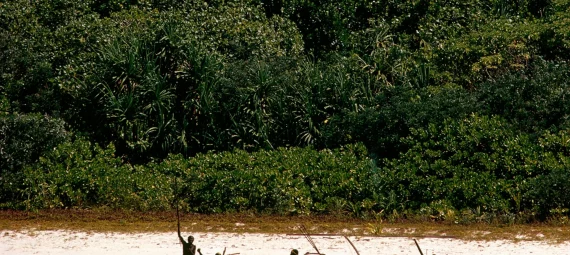
North Sentinel Island in the Bay of Bengal is a place full of mysteries and mysteries. This island is inhabited by a tribe of Sentinels who are tightly isolated from the outside world. These people show extremely aggressive behavior towards anyone who tries to approach their land: they use their arrows and spears to protect their territory from foreign invasions.
The study of Sentinel culture and lifestyle presents an attractive challenge for scientists and anthropologists. These people speak their own language, which remains unknown outside their community, their customs, rituals and traditions remain a mystery to the outside world. All attempts to establish contact with them in the past have ended in failure or even tragedy with human losses.
Sometimes people, motivated by curiosity and a desire to better understand this mysterious people, make attempts to visit the Northern Sentinel Island. However, such attempts not only contradict the ban on visiting, but also pose huge risks to people’s lives and safety.