
Nature is the best creator. It doesn’t work too fast: it takes millions of years to create each masterpiece, but what a result! Throughout the history of the planet, nature has created a huge number of amazing places that excite the imagination.
In 2007, with the support of UNESCO, a vote was held and, along with the list of “Seven new man-made Wonders of the World”, seven wonderful natural places on Earth were selected.
I will tell you which objects are included in this list, where they are located and what is remarkable about them.
The Amazon Rainforest and River (Brazil, Bolivia, Colombia)
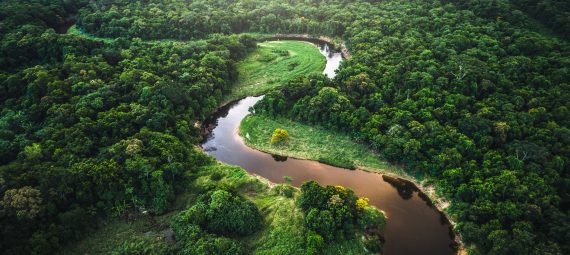
The Amazon rainforest is a huge jungle on the territory of nine South American states.
Most of these forests are found in Brazil (58.4%), Bolivia (7.7%) and Colombia (7.1%). The rest of the territory is divided between Venezuela, Ecuador, Peru, Guyana, Suriname and French Guiana.
The Amazon rainforest is huge, covering an area of almost six million square kilometers. This is half of the total volume of all tropical jungles on the planet.
The mighty Amazon River with tributaries became the circulatory system of the endless forest.
The Amazon is the deepest river in the world, it contains 20% of the world’s fresh water supply. By the way, there is still fierce debate among scientists about which river on Earth is the longest — the Amazon or the Nile.
The Amazon has an unusually rich and diverse flora and fauna. The thickets of the impenetrable Amazon forests are home to about 500 species of mammals, 200 species of lizards, 400 species of birds and a myriad of different insects. And in the waters there are the Amazonian manatee, inia river dolphin, giant otter, crocodile caiman and the famous piranha.
Deep in the rainforests live tribes that have remained relatively isolated from the outside world. Contact with a modern person is deadly for them. Their immunity is weak against any, even minor and habitual diseases.
Iguazu Falls (Argentina and Brazil)
Iguazu Falls is a complex of 275 waterfalls on the river of the same name. The name “Iguazu” is translated from the language of the Tupi Guarani Indians as “big water”.
The Iguazu River is the natural border between Brazil and Argentina. You will be able to admire the cascade from both countries. Surprisingly, most of the waterfalls are located in Argentina, and it is more convenient to admire them from Brazil. Locals joke that the performance takes place on the Argentine side, and on the Brazilian side there is an auditorium.
Their total width is 2,700 meters — they are the largest in the world. Iguazu Falls are twice as wide as Niagara Falls and 1,000 meters wider than Victoria.
The most striking of the Iguazu waterfalls, Devil’s Throat, is shaped like a horseshoe. Its height is 82 meters, length is 150 m and width is 700 m.
An extraordinarily beautiful sight are waterfalls, where water falling from a height of 80 meters shimmers and sparkles with all the colors of the rainbow in the sun and creates a cloud of water dust.
Kilometers of bridges have been built along the landmark. Walk along them, admire the cascades from afar, come closer and climb to the edge of the cliff, from where tons of water fall down. The climate is hot here, and a walk through a water cloud is a great way to refresh yourself.
If you want extreme sports, then take a boat right to the foot of the Devil’s Throat. Don’t forget to change into bathing clothes and hide your gadgets before swimming. You are guaranteed to get soaked to the skin, but you will get an unforgettable experience.
Iguazu is surrounded by two national parks, home to hundreds of rare species of flora and fauna.
Table Mountain (South Africa)
Table Mountain is one of the main attractions of the capital of the Republic of South Africa (South Africa) — Cape Town. Her silhouette is depicted on the flag of the city. It got its name because of the flat, table-like top. Its surface looks like it was cut off with a sharp knife. It’s hard to imagine, but it was the hot wind of Africa that polished the top to such a shape.
Its height is low — about 1085 meters above sea level. But thanks to the flat plateau at the top, two kilometers wide, it has become so famous. The mountain is surrounded by almost sheer cliffs, which are called Devil’s Peak (975 meters), Lion’s Head (640 meters), Signal Mountain (335 meters).
The age of the mountain is more than 260 million years. It is older than the Andes, the Alps and the Himalayas.
You can climb to the top on your own along the paved hiking trails, but this task, frankly speaking, is not easy. It will be easier to use the cable car. It was built in 1929. The booths rotate 360 degrees on the go for an absolute view of stunning panoramic views.
From the top there is an incredible view of the city of Cape Town and the Atlantic Ocean. Just imagine what stunning South African sunsets and sunrises you will be able to see!
Many who have visited here claim that this place is unique. It has a special power. This is a kind of man-made pyramid, which is located at the southern point of the African continent. Here the waters of two ocean currents meet — the cold Atlantic and the warm Indian, which generate the most powerful storms. For the same reason, fogs often hang in the local surroundings, shrouding Table Mountain and peaks with a giant milk tablecloth.
Jeju Island (Republic of Korea)
Jeju Island is located in the Korean Strait, south of the Korean Peninsula. The name of the place means “Far Island” or “Far piece of land”. And among tourists, it is also known as Korean Hawaii.
The attraction appeared about two million years ago due to a strong eruption of an underwater volcano, which then rose from the sea. The Hallasan volcano with a height of 1950 meters flaunts above the island. The area is 1,845 square kilometers.
This island in South Korea is famous for several records — it is the largest in the republic, and it is home to the country’s highest mountain.
Fortunately, Hallasan is an extinct volcano: the last eruption occurred more than 25,000 years ago. Therefore, go for a walk to the top and enjoy the landscape, which presents four seasons at once.
The trekking routes here are different — for beginners and for advanced ones, so you can choose a path according to your own strength.
There is another stone treasure in the east of the island — Seongsan Ilchulbon Peak, or Sunrise peak. A rock with a flat, as if cut off top, rises 180 meters above the sea and is connected to the shore by a small isthmus. Many millennia ago, it was an active volcano that erupted underwater, resulting in a huge crater with a diameter of 600 meters.
The grassy area is surrounded by sharp stones resembling a giant crown, and a staircase with lighting leads to the top of the peak. The Seongsan Ilchulbon observation deck offers an incredible view of the endless sea horizon and the nearby island of Udo. Horse riding is possible on the coast near an extinct volcano.
As strange as it may sound, women are another hallmark of the island. These are representatives of the endangered Korean profession of haene — divers who extract pearls, octopuses, shellfish and other seafood.
For their fishing, they dive to a depth of 20 meters, without using scuba gear. They can hold their breath for more than three minutes. Unfortunately, fewer and fewer residents of the island want to engage in this dangerous trade. The age of most swimmers is over 60 years old. This is such a “retirement” specialty. The most experienced hens are over 80 years old!
UNESCO has included this amazing profession in the list of intangible cultural heritage.
Jeju is also called tangerine Island because tangerines grow everywhere here. It is a favorite fruit of the locals: they eat it twice as much as apples. Jeju tangerines are very fragrant, sweet and with a thin skin. Be sure to try them!
There is a lot of vegetation on the island, which is especially diverse in the Hallasan National Park. In addition, 28 species of mammals, birds and butterflies live here, and divers can see marine life — from dancing shrimps to moray eels and picturesque corals.
Halong Bay (Republic of Vietnam)
Halong Bay is located in the Gulf of Tonkin in the South China Sea in Quang Ninh Province in northern Vietnam, about 170 kilometers from Hanoi. Literally translated into Russian, the word “Halong” means “Descending Dragon Bay”.
Its area is about 1.5 thousand square kilometers.
The bay includes about 2000 islets of various shapes and sizes. Some of them have fishing villages and huge caves, often with lakes inside.
For example, there is a Cave of Wonder, where a variety of lighting highlights the natural beauty. The Drum Cave is also known, so named because an acoustic effect resembling a drum roll is created in strong winds.
Halong Bay is included in the UNESCO World Heritage List. It is a popular tourist destination for recreation.
Travel agencies offer cruises around the bay for two or three days. Budget options can cost from 50 to 125 US dollars (4,400 – 10,900 rubles at the end of summer 2024), and the price of a trip on luxury ships reaches up to 400 US dollars (34,800 rubles).
The cost depends on the class of the vessel and the cabin, the travel plan, as well as the activities included in the tour. The program can be made for every taste: visiting caves, wild beaches, canoeing, squid fishing, dinner in national costumes. You won’t be bored!
Puerto Princesa Underground River National Park (Philippines)
The park, as well as the city 50 kilometers away, was named after the Spanish Princess Eulalia de Bourbon, who founded this place in 1872. There is an attraction on the Philippine island of Palawan.
The main attraction of the park is the huge underground river Puerto Princesa, which flows inside the cave of St. Paul. For hundreds of thousands of years, she has created giant cavities and grottoes in the limestone mountains. Some of them are up to 60 meters high and 120 meters wide. The length of the riverbed is 8.2 kilometers, and until 2007 it was considered the largest underground river in the world, until a longer one was discovered on the Yucatan Peninsula.
Rafting trips with a length of just over one kilometer are organized for tourists. There is very little oxygen in the depths of the cave, so it is dangerous to swim far.
Traveling through the groundwater is a fascinating sight, especially if you are going on such a “cruise” for the first time. Periodically, there are holes in the dome of the cave through which daylight and air penetrate. But in general, there is semi-darkness inside, which gives a special entourage to the journey inside the earth. Look carefully around, you can see huge stalagmites and stalactites here. Turn on your imagination: what kind of creatures do they remind you of?
The easiest way to visit the river is to book an excursion tour at any travel agency or agency in the city of Puerto Princesa. For services, they charge from 2,100 Philippine pesos per person (from 3,570 rubles).
Komodo Island (Republic of Indonesia)
Komodo Island is one of more than 17.5 thousand islands in Indonesia. It is small, its area is only 390 square kilometers.
This is the only place on the planet where nature has not changed at all since the Jurassic period.
The island is home to huge monsters — Komodo lizards, the last “dinosaurs” on Earth, which appeared on the planet five million years ago. Today, their population is about 3.5 thousand individuals. The length of an adult monitor lizard reaches 3.5 meters, and the weight is 90 kilograms. Despite such a large size, the animal is quite agile and can reach speeds of up to 20 km/h. With a blow of its tail, the monitor lizard knocks down a buffalo, and it does not hurry to eat it, because it prefers decomposed meat to fresh meat.
Scientists explain their impressive size by the so—called “island gigantism” – an evolutionary feature of animals living in isolated territories where there is no competition.
But tourists do not need to worry, since attacks on people are extremely rare and the person himself and his excessive curiosity are usually to blame in these cases. But still, I do not advise you to go on an independent walk around the island, it is better to take an excursion accompanied by a local ranger.
In 1980, the Komodo National Park was created in Indonesia. It includes the large islands of Komodo Padar and Rinka, as well as many small ones, the total area of which is about 2000 square kilometers. The main task of the park is to protect and protect the largest reptiles on earth.
In addition to the legendary animal, there is a unique pink sand beach. There are seven such places on our planet in total. The rarest shade of sand is created thanks to the simplest organisms, or rather, their microscopic pink shells.
The underwater world of this region is also incredibly rich and unique. Its waters are home to about 1,000 species of fish, 253 reef-forming coral polyps and more than 70 species of sponges. Diving around Komodo Island is one of the most exciting in the world.