
 Incredible facts
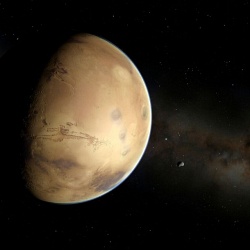
The planet Mars is one of the brightest objects in the night sky, visible to the naked eye.
In the decades since humans reached the Moon, Mars has been the next target to be explored.
Also read: 15 facts you need to know if you want to go to Mars
Here's what you need to know about the distance to Mars, and why we still haven't made it to the Red Planet.
The distance between Earth and Mars
© DAPA Images
To understand how long it takes to get to Mars, you need to know the distance between the two planets.
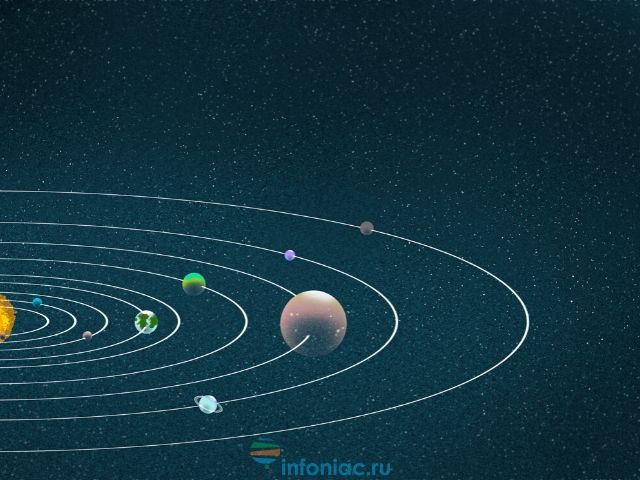
Mars is the fourth planet from the Sun and the second closest to Earth. But the distance between Earth and Mars is constantly changing as they move around the Sun.
Mars is between 55 and 400 million kilometers from Earth, depending on the planetary rotation around the Sun.
In theory, Earth and Mars are closest to each other when Mars is closest to the Sun (perihelion) and Earth is farthest from the Sun (aphelion). This would reduce the distance to 54.6 million kilometers.
However, this has never happened in known history. The planets closest to each other occurred in 2003, when they were 56 million kilometers apart.
The two planets are farthest away when they are farthest from the Sun on opposite sides of the star. At this point, the distance between them can reach just over 400 million km.
The average distance between the two planets is 225 million kilometers.
Flights to Mars
© Science Photo Library
According to NASA, humans will be able to land on Mars in the next two decades.
It took 128 to 333 days for unmanned spacecraft sent to Mars to reach the Red Planet.
In 1964, the first successful Mariner 4 spacecraft successfully reached the Red Planet in 228 days. NASA sent it on November 28, 1964, and it arrived July 14, 1965.
Here's a list of other successful missions to Mars and their flight times:
Mariner 6 (1969) – 155 days (Mars flight)
Mariner 7 (1969) – 128 days (Mars flight)
Mariner 9 (1971) – 168 days (first spacecraft to orbit Mars)
Viking 1 (1975) – 304 days (first operating automatic Martian station)
Viking 2 (1975) – 333 days (artificial satellite and automatic Martian station)
Mars Global Surveyor (1996) – 308 days
Mars Pathfinder (1996) — 212 days
Mars Odyssey (2001) — 200 days
Mars Express (2003) — 201 days
Mars reconnaissance satellite (2005) — 210 days
Phoenix (2008) — 295 days
Mars Science Lab (2011) — 254 days
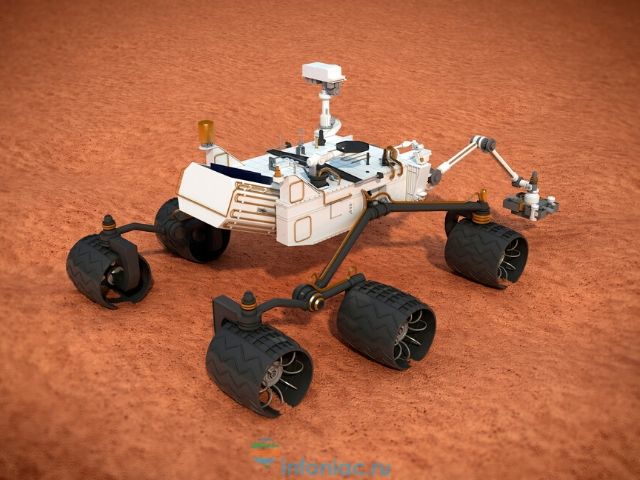
Curiosity (2012) — 253 days
Other missions to Mars have been carried out, but some of them have not been able to reach the Red Planet, while others are still there and are collecting information.
How long does it take to get to Mars
© Science Photo Library
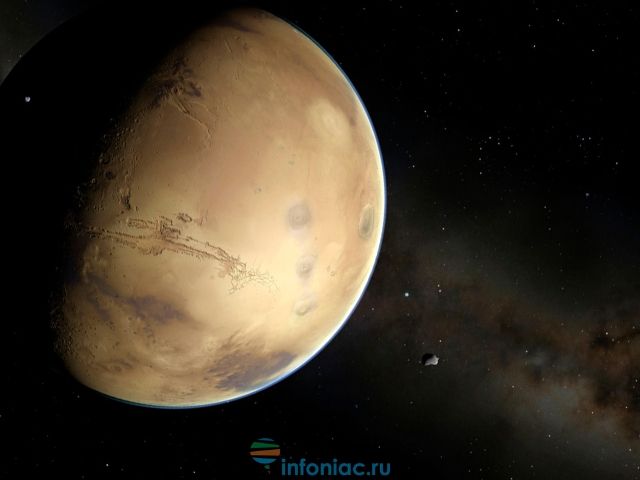
Why does it take so long to get to Mars? If we assume that Mars is 55 million km away and the spacecraft travels at a speed of more than 40,000 km per hour, it can reach the Red Planet in 115 days, but in reality it is not is happening.
This is due to the fact that both Mars and Earth revolve around the Sun. A direct flight path is not possible, as Mars is also moving. Therefore, spacecraft are usually launched in the direction of Mars's motion.
Another problem is the required amount of fuel, which will be very much needed. More fuel would allow the spacecraft to fly faster, but it would be heavier. The spacecraft needs enough fuel to get to and from Mars, but without making it heavier to fly.
Engineers must analyze the ideal orbits of planets in order to send a spacecraft from Earth to Mars, taking into account not only distance but also fuel efficiency.
Like throwing a dart at a moving target, they must calculate where the planet will be when the spacecraft arrives, not where it is when it leaves Earth.
In addition, spacecraft must slow down to enter orbit around the new planet so as not to fly over it.
The length of time it will take to get to Mars depends not only on the location of the planets in orbit at launch, but also on technological capabilities.
According to NASA experts, under current conditions, a flight to Mars will take about 300 days or more than 9 months. However, under ideal conditions and plenty of fuel, the flight can take anywhere from 150 days or 5 months.
After a trip to Mars takes about 9 months, astronauts will need to spend some time on the planet and wait again for the planets to be located before heading home. This means that it will be necessary to spend 3-4 months on Mars before starting a flight to Earth.
Thus, with current technologies, a manned flight to and from the Red Planet is likely to take 21 months.
What other problems might people face?

© Science Photo Library
First of all, scientists are concerned about the health of astronauts who will go to Mars.
One of the reasons for this is the length of the flight. Since astronauts will be away for several years, any health problems that may arise during the journey will have to be addressed outside our planet.
In addition, they will face an extremely unfavorable space environment.
Once humans get to Mars, they'll need to wear a spacesuit due to the planet's extreme temperature, which can change by 170 degrees during the day.
It is also necessary to take into account the fact that the atmosphere on the planet consists mainly of carbon dioxide.
Specialists should take into account the psychological impact of flying, when astronauts will have to stay in a small space for a long time.