
 Science
Deep in the depths of an ancient cave in New Mexico, microbiologists have discovered about a hundred species of bacteria that are not afraid of modern antibiotics at all.
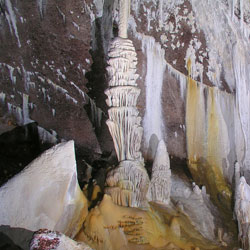
Bacteria cover the walls of the Lechugia cave system, which goes 487 meters underground. So far, these forms of life have not encountered humans, let alone antibiotics.
The cave's thick vault was isolated between 4 and 7 million years ago. It took about 10,000 years for water to seep into the cave, which means that the cave's underground life has been completely isolated for a long time.
Although the bacteria from the cave are harmless to humans, they can resist a variety of antibiotic classes, including new synthetic drugs. This discovery challenges scientists to understand how drug-resistant diseases occur.
“Clinical microbiologists have been at an impasse for a long time. If you bring a new antibiotic to the hospital, resistance to it is bound to occur within months or years, says research author Gerry Wright, a biological chemist at McMaster University in Ontario. — The question still remains: how does this happen? Almost no one thought about considering non-pathogenic bacteria.”
The problem of “overinfection”
Healing is one of the deepest cave systems in the world. It is located within the Carlsbad Caves National Park. With a length of 209 kilometers, Lechuguia is the 7th longest caves.
In 1984, suspected that there was a cave somewhere in this area, researchers began to dig up an old mine and, a few years later, discovered the entrance to the cave. In 1986, they made their way into the depths of the cave, discovering a world untouched by man.
The US National Parks Administration strictly banned visits to the cave, but in 2008 allowed geomicrobiologist Hazel Barton of Northern Kentucky University and his team of scientists enter the cave and take microbial samples in it.
Barton took samples of biofilm, a thin layer of microorganisms that were on the walls, and sent them to a laboratory where he and his colleagues exposed bacteria to various antibiotics.
Disease-causing bacteria develop amazing resistance to the various classes of antibiotics that are used to fight them. These microbes are called superinfectious. They can destroy or block natural or synthetic components of antibiotics.
Superinfections can often be found in hospitals and on livestock farms, where antibiotics are often used. In such an environment, strong evolutionary pressure causes bacteria to develop resistance to a huge number of different drugs fairly quickly.
How this happens is still unknown; the superiority of genes that can fight antibiotics should develop for thousands and millions of years, but it is emerging very quickly.
The answer to this question may be that bacteria are constantly exchanging, obtaining and stealing genes from other bacteria in their environment. Many microbiologists suspect that non-pathogenic bacteria act as “pools” of ancient resistance genes waiting to be passed on to pathogens.
Wright's new research builds on previous work in which scientists found bacteria with resistance genes in primary soils untouched by humans, normal soils, and permafrost. Wright wanted to go further and prove that resistance genes were found in ancient microbes, and did not develop over time.
Research has made it clear that these genes are very old. However, it is not clear how they appear in bacteria in hospitals. Perhaps Wright's research will help us understand the origin of resistance genes in the near future.
Why don't antibiotics help and what is bacterial resistance?