
 Health
Watch the video, If you are too lazy to read
Watch the video, If you are too lazy to read
Content:
How to use salt correctly?
Is there a difference between regular salt and sea salt?
What happens if there is too much salt?
What problems will arise if there is a lack of salt?
Is a salt-free diet useful?
How else can salt be used?
How easy is it to limit salt intake?
Among the Slavs, bread and salt have always been considered sacred products. If bread was a symbol of wealth, salt is believed to protect against evil spirits. Salt is vital for us. Once in the body, it participates in numerous processes, but when in excess, salt turns into a real poison. Therefore, in the last century, nutritionist Paul Bragg called this product “white death”. How to consume salt correctly so that it benefits our health, and what happens if we do not control its quantity? We will tell you more…
Also read: 15 interesting facts about salt
The material has an informational and reference function! Before using any products or services, you should consult a specialist!
How to use salt correctly?
We get salt primarily from foods that contain sodium chloride, which is the same salt that we have in our salt shaker. The first place in terms of salt is “food” for snacks and seafood, especially canned ones. It is better to use chips, popcorn, crackers and crackers with different spices as rarely as possible. You can afford such “food” only once a week, for example, while watching a football match. Caviar, herring, sprat paste, crayfish, sprats, pickles are best used in small quantities.
Dairy products are in second place in terms of salt. Parmesan cheese is in the lead here. But Adygea cheese has the least amount of salt. Celery was the most “salty” among vegetables.
The problem of excess salty foods has become so urgent that the World Health Organization (WHO)
has created a number of rules for eating salt:
A safe dose of salt per day is less than 5 g. About as much fits in one teaspoon. WHO says that if people around the world eat just that much salt per day, 1.7 million deaths per year could be prevented.
Salt must be iodized. Not every inhabitant of the planet is comfortably located near the sea, where the air and soil are so saturated with iodine that you can not worry about additional intake of this micronutrient. But people living in countries and regions far from the coast are constantly experiencing a shortage of it. If you live in such a place, buy only iodized salt in the store.
Salt should not be added to complementary foods for children on a mixed diet. They get their daily sodium intake with food.
Eat salt, which, in addition to sodium, also contains potassium. It is not just a lot of salt that is harmful, but a lot of sodium without potassium. Sodium and potassium are two microelements that regulate the body's water-salt balance and the speed of nerve impulse conduction. Most of the potassium is found inside the cell, while the bulk of sodium is in the extracellular fluid. Their movement is regulated by a channel called a pump. Through the pump, the cell constantly exchanges sodium for potassium and vice versa. Through this movement, a nerve impulse is transmitted from one neuron to another, and our muscles contract, and the kidneys correctly determine the amount of water to store or remove from the body. When there is an excess of sodium, the cell has to give up a lot of potassium so as not to disturb the ion balance. But potassium loss is fraught with serious problems. The first signs of potassium deficiency are nausea, loss of appetite, muscle weakness, and an attack of cardiac arrhythmias.
It's important!
If you eat a lot of salty foods, your body will remove excess salt in your urine and restore the balance between sodium and potassium in 3 to 5 days.
The American Heart Association found that we get more than 75% of sodium not from salt, but from semi-finished products and processed products. This includes everything we are used to buying in cans, canned food or smoked. Therefore, if you eat convenience foods and use a variety of sauces or seasonings, the amount of salt per day should be reduced to a minimum of 2-3 g, which corresponds to half a teaspoon.
An interesting fact
The famous expression “eat a pound of salt with someone” came about for a reason. The pound is 16 kilograms. But salt has always been considered a luxury, it was rarely consumed, and it took a very long time to eat a pound of salt with someone. In the 21st century, we eat 7 kg of salt per year, which means that you can eat a pound of salt “shared” with someone in a year.
Is there a difference between regular salt and sea salt?
We often hear that sea salt is healthier, that it is a natural product, and not the result of technological processing. But immediately opponents of such “advertising” appear and convince us of the opposite. In fact, there really is a difference.
© Getty Images Pro
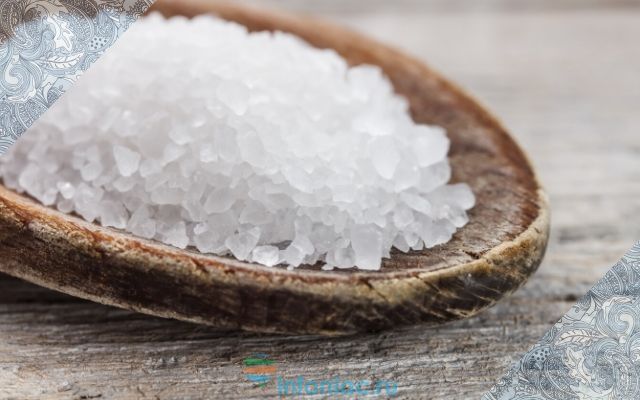
Table salt or sodium chloride is 40% sodium and 60% chlorine. Ordinary salt is obtained from salt deposits. This is “ancient sea salt” that has already been turned into lime. To extract it, it is necessary to split the rock into large pieces and then send it to the plant for processing. The salt leaves the plant “clean”, leaving only sodium and chlorine, and all other microelements from table salt are removed. But sea salt is not processed, it is evaporated from sea water. Therefore, its crystals are larger, and it retains useful components — potassium, magnesium, calcium, manganese, iron, boron and phosphorus.
Rock salt, or Himalayan, contains 84 micronutrients that are necessary for the body. Its pink color is associated with rock, which contains particles of cooled lava.
Celtic salt contains less sodium and more other beneficial salts. Sea, Himalayan and Celtic salt are free of heavy metals and radioactive substances. They are really more useful than ordinary, cooked ones, but this does not mean that they can mercilessly salt all products. Salt of any origin is equally harmful in excess.
An interesting fact
Since the 17th century, the origin of salt has been debated. Geologists split into two camps. Neptunists believe that this is a mineral that penetrates through the cracks of the continent from ocean waters and eventually turns into salt crystals. “Plutonists” believe that salt is of volcanic origin. It later turned out that both theories were correct. In order to evaporate salt from ocean waters, nature needs the energy of tectonic processes that cause volcanoes to erupt. Therefore, the age of salt deposits coincides with the age of mountain formation.
Read also: Interesting ways to use salt
What happens if there is too much salt?
Instead of the prescribed norm of 5 g, a modern person consumes 10 and sometimes 15 g of salt per day. If you regularly use this spice in such quantities, you will gradually lose the opportunity to taste your favorite dishes. They will look bland to you. Salt doesn't just add flavor to food, it causes small “tasty” food molecules (amino acids and essential oils) to combine into large formations. This process can be called flavor enhancement. As salt draws a water molecule with it, the tongue's taste buds swell and their permeability is impaired. If we regularly overload the taste buds of the tongue, they will stop responding to ordinary food, and we will quietly switch to products with flavor enhancers.
© Syda Productions
But there are also more dangerous conditions — a number of diseases in which doctors recommend a strict salt limit of up to 1.5-2 g per day. For example, it is necessary to cut salt in case of heart failure, kidney disease, loss of protein in the urine, and cataracts. In all these cases, excess salt increases the load on blood vessels, heart and kidneys, and can cause tissue swelling and significant swelling.
High blood pressure
If you use 9 to 12 grams of salt per day, you are at high risk of developing hypertension. Because of salt, the vascular wall swells and the lumen of the arteries narrows. As a result, blood pressure rises and blood is more difficult to reach the heart, brain and extremities. The situation is aggravated by potassium deficiency, which, on the contrary, relaxes the muscular wall of the arteries and prevents spasm.
An interesting fact
240 g of salt is considered a lethal dose for humans. That's about 1.5 cups. By consuming this amount at once, it is possible to cause a deep violation of the water-salt balance.
Risk of heart disease
Disputes about the effect of salt on the heart are still ongoing. Some scientists have identified a direct and indirect relationship between excess salt in food and cardiovascular diseases. Salt increases blood clotting, so people with atherosclerosis can develop blood clots that cause heart attacks and strokes. Salt also increases blood pressure, and hypertension is known to be one of the risk factors for cardiovascular disease.
Another part of scientists, on the contrary, does not find any evidence of dangerous cardiovascular diseases due to salt. On the contrary, they believe that its deficiency is more dangerous, which disrupts the excitability and conduction of the heart muscle and arrhythmias begin.
Both groups are right. One large study found that people who consume more than 7 grams or less than 3 grams of salt per day are equally susceptible to cardiovascular diseases. More detailed information about this study can be found at the link in the bibliography.
An interesting fact
The familiar word “salad” literally means “salty” in Latin. Roman chefs always salted vegetables before serving them. But this is not the only word that owes its origin to salt.
Salt during the Roman Empire was a payment for the work of soldiers. Therefore, coins were called “soldo” in Italy, and “solid” in France. It was from the Latin name for salt “sal” (sal) that such foreign words as “salary” (salary) — salary, “soldier” — soldier — appeared.
Autoimmune diseases
Two independent studies in mice have demonstrated that salt-rich foods stimulate the activity of a special group of T lymphocytes. When the sodium content in the medium is high, they release interleukin-17, a substance that stimulates the inflammatory response in tissues. You can read more about the experiment by clicking on the link in the list of sources.
Stomach cancer
Salt increases the acidity of the stomach, damages its mucous membrane and reduces the effectiveness of the protective barrier. Of course, only one factor cannot cause a malignant neoplasm. But if the harmful bacterium Helicobacter pylori (Helicobacter pylori) is present in the stomach, then a diet high in salt can often lead to gastric cancer. This conclusion was made by American scientists after conducting a study on animals. Today, this bacterium is found in 60% of the world's population.

© Getty Images Pro
Dysbacteriosis
Excess salt affects the composition of the intestinal microflora. If a lot of sodium enters the intestine, the exchange of sodium and hydrogen ions in mucosal epithelial cells is impaired. The speed of this transport depends on the efficiency of protein absorption and the activity of bacteria beneficial to humans. Chinese scientists have found that with a hypersol diet, the number of lactobacilli decreases, and there are more pathogenic bacteria.
Osteoporosis
Sodium enters bone tissue along with calcium and fluorine ions. Calcium and fluoride are necessary for bone mineralization and, consequently, for strengthening it. But if there is an excess of salt, sodium can take up the places that are provided for calcium and fluorine, and because of it, metabolism in bone tissue is impaired, and its strength is markedly reduced.
What problems will arise if there is a lack of salt?
When doctors say you should limit the amount of salt, it's just plain table salt, which contains only sodium chloride. But potassium and magnesium compounds are also called salt, and you need both of these microelements in quite large quantities, since modern people usually lack them.
© DegImages
Dehydration
Salt helps us maintain water balance in the body, and doctors do not recommend using ordinary table salt, but sea salt or Himalayan salt for nothing. The fact is that they contain a lot of potassium ions. Potassium and sodium contained in ordinary salt are competitors, so their effect on the body is the opposite. If a lot of potassium enters the body, our kidneys remove excess water, and if there is a lot of salt, the fluid is retained in the tissues.
An interesting fact
Salt in the body constantly circulates — it enters the bloodstream from the digestive tract, and then is released as part of saliva and pancreatic juice. A small amount of salt is lost through feces, urine, sweat, and skin cells that are peeled off every day. The main role in removing salt from the body belongs to the kidneys.
Headache, weakness, irritability
When there is a lack of salt in the body, the sympathetic nervous system is activated, which acts on the adrenal glands, causing them to release adrenaline. That's why when we're nervous or stressed, we want to eat something salty or smoked. Psychosomatics experts say that salt makes us more confident. From the point of view of physiology, this is true. The sodium in salt is essential for our nerve cells to function properly. Without this micronutrient, which we get from salt, mental activity is impaired, we quickly get tired and constantly experience lethargy. Lethargy is also associated with dehydration, because without sodium, cells quickly lose fluid and stop working effectively.
An interesting fact
To save forest dwellers from long journeys for salt, hunters carefully put pieces of salt into their feeders. Herbivores are constantly deficient in salt compounds and, unlike predators, they do not get salt from meat and blood. Moose and deer, for example, are constantly looking for something salty. Salt helps them grow big and beautiful horns.
Insulin resistance
In 2012, a team of scientists from Harvard Medical School conducted a study on healthy people aged 18 to 65 years. The subjects were divided into three groups. The first was given food with a normal amount of salt, the second with excess, and the third was given food low in sodium chloride. The experiment lasted one week. On the seventh day, blood and urine tests were taken from volunteers. It turned out that in the group that consumed too little salt, the levels of aldosterone and cortisol increased significantly. Both of these hormones act against insulin and prevent it from carrying glucose from the blood into cells. Read more about the study by clicking on the link in the list of sources.
Is a salt-free diet useful?
Sometimes we gain weight not because we ate something high in calories. Excess fluid in the body adds weight to us. People with hormonal diseases are particularly susceptible to fluid retention. The goal of a salt-free diet is not to retain water in the body. The less sodium in the blood, the faster water is removed from the body, which means that the faster we get rid of subcutaneous edema and at the same time from extra pounds.

© Anna Subbotina
Don't be afraid to “be without salt”. If you eat right on a salt-free diet, you will get the right amount of sodium from your diet. A salt-free diet can be kept for no more than 2 weeks and only after consulting a doctor.
It's important!
It is not advisable to follow a salt-free diet if you are an athlete or live in a country with a hot and dry climate. During exercise and at high temperatures, you sweat a lot. This is how the body gets rid of excess heat. But with sweat, you lose a lot of fluids and salts. If you don't make up for the lack of salt in time, the cells will not be able to retain the water you drink.
Read also: All about salt: when to salt food, what to do with salted food, and how to eat less salt
How else can salt be used?
Salt is used not only for food, but also for preserving food, for industrial purposes and as a treatment agent.
Salt as a preservative
At a time when refrigerators did not yet exist, salting was the only way to preserve fish, meat and vegetables. A preservative is a substance that can suppress the growth of bacteria in food. Salt acts on bacteria that spoil food in the following way. If the brine contains 10% salt, it draws water out of the bacterial cell. Because of this, the permeability of the bacterial membrane is impaired, and as a result, its metabolism completely stops. Even putrefactive bacteria die in a 15% solution. Dangerous staphylococci are destroyed in 20% salt water. You can not drink such a solution. Otherwise, the same thing will happen to our cells, and all intracellular fluid will enter the bloodstream and then be removed by the kidneys.
Salt for skin beauty
Salt is great as a cosmetic product. Sea salt granules are used as a scrub during washing.
White crystals have several effects on the skin:
bleach;
cleanse from dirt;
nourish with microelements;
tighten and tone up;
fight bacteria.
Saline solutions for treatment
Saline solutions are used for washing, restoring the body's water-salt balance and for intravenous administration.
Often, instead of vasoconstrictor drops from the common cold, sea salt solution is used. It really helps with mucosal inflammation, relieves puffiness, facilitates mucus secretion and has an antiseptic effect. Saline solutions can be used to wash your nose, mouth, throat for ARVI, allergies and for cleaning industrial dust.

© Getty Images Pro
With severe diarrhea and excessive vomiting, dehydration develops rapidly. We can drink large amounts of water, but not help these bodies, because vomit loses not only fluid, but also the salts we need — sodium, potassium, magnesium. Without them, nerve impulse conduction is impaired, intoxication begins and vital functions are inhibited. To restore the water-salt balance, the patient is given saline solutions to drink, and in severe cases they are administered intravenously.
The well-known saline solution, in which most drugs are dissolved and administered intravenously, is nothing more than salt. The composition of our blood salts and microelements is very similar to ocean water. The salt content in the blood of a healthy person is 1%, so saline or sodium salt with a concentration of 0.9% is the optimal liquid for administration into the bloodstream.
An interesting fact
Salt is an excellent antiseptic. Sodium salt with a concentration of 0.9% can even kill bacteria. Thanks to sodium chloride, our blood and tears taste salty and are able to resist bacteria.
Speleotherapy
Speleotherapy is a treatment with salt. The idea to harness the power of salt belongs to the Polish physician Boczokwski. In the middle of the last century, he discovered that salt miners were almost free from tuberculosis and other respiratory diseases. It turned out that the air of salt caves helps to clear the respiratory tract from mucus, improves blood circulation, and nourishes the body with essential microelements.
Speleotherapy is recommended for:
bronchitis and bronchial asthma;
chronic pharyngitis and sinusitis;
allergic skin diseases;
nervous disorders and insomnia.
How easy is it to limit salt intake?
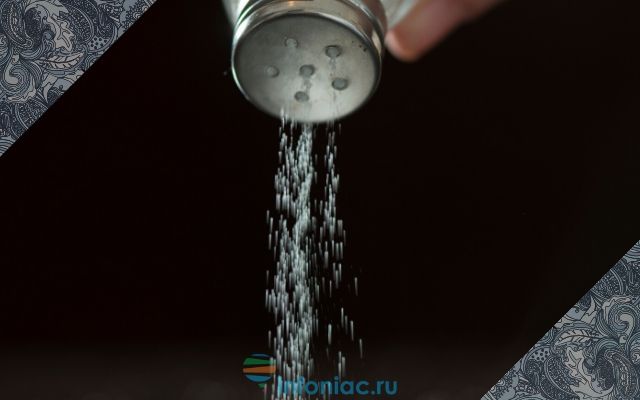
The first thing you need to know is that you will get enough salt from food, especially if you eat seafood, cheeses and vegetables.
© DegImages
If you can't give up salt right away, use the following recommendations:
Temporarily forget about popcorn, chips, grandma's pickles from the cottage and canned foods.
Use fresh meat, fish, vegetables, bake them in the oven so that they are cooked in their own juice.
To add flavor to the dish, use herbs and other condiments.
Do not use cubes and spices for meat in bags.
No fast food! A lot of salt and flavor enhancers are added to it, which, like salt, dull the taste buds of the tongue.
Drink freshly squeezed juices, so you will simultaneously make up for the shortage of water and salts.
If you start to taste the food itself again without salt, then your taste buds have recovered.