
 Health
Content:
What foods should not be substituted for sugar, and what is the glycemic index?
What happens if you replace glucose with fructose products?
You won't get enough Brain activity
Will
decrease Insulin resistance
You
will gain weight faster Fatty liver disease You will
have oxidative stress The tendency to inflammatory reactions
will increase
You will lose your taste acuity
What should I do?
Sugar is the most affordable “fuel” for human cells. It is vital for our physical and mental activity, but if it is too abundant, serious health problems can begin. Knowing that sugar is bad, many people decide to replace it with alternative sweet products. The logic of replacement is simple — if the source of sweets is a natural product, then it is harmless, unlike sugar that is industrially produced and sold in packages or in bulk. But is this true? Let's figure out what is really hidden under the name “sugar”, and what products we replace it with can be much more dangerous for our health.
For many years, scientists have been convinced that glucose can be replaced by products where sugar is in the form of fructose. The name “fructose” seems to indicate the source of the monosaccharide, that is, fruit. It is true. Fructose is a sugar found in fruits, berries, and small amounts in some vegetables. But not all plant foods contain sugar in fructose format. Both sugar and fructose are natural products. Sugar, better known to us in the form of refined sugar or sand, is also obtained from plants such as cane, corn and sugar beet. In them, glucose is at least 50%. And foods like fruits, berries, and honey contain more fructose than glucose.
The material has an informational and reference function! Before using any products or services, you should consult a specialist!
Also read: How much sugar is in pizza and other foods?

© Yuliya Furman
An interesting fact
Glucose and fructose are found in all foods, but in different proportions. Sugar or sucrose is not just glucose. A substance called “sucrose” is a compound of two carbohydrates — glucose and fructose, and in equal amounts. These carbohydrates have the same number of calories, but glucose and fructose are incorporated into the metabolism in different ways, which is the reason for the differences between them.
What products should not be substituted for sugar, and what is the glycemic index?
When diabetes mellitus became a real non-infectious pandemic, nutritionists created a special table of products that indicated their glucose content. But that didn't help either. It turned out that in diabetes, it is important not only to limit carbohydrates, but also to take them so that a lot of sugar does not enter the bloodstream at once.
An interesting fact
You should receive no more than 6 grams of glucose per kilogram of your body weight per day. But no matter how strict a diet you are on, your body should be supplied with at least 2 grams of glucose per kilogram of weight. If the amount of sugar on the menu is less, the body will begin to create glucose itself, but for this purpose it will actively destroy proteins. It is precisely because of protein deficiency that diabetes dramatically reduces muscle strength, weakens immunity and slows down tissue healing.
To make it easier for diabetics to calculate the harmfulness of a sugar product, doctors have come up with a glycemic index. It reflects the rate of conversion of complex carbohydrates into simple glucose and the rate of its absorption into the blood. Complex carbohydrates are a big “puzzle” made up of pieces of glucose. The more complex the puzzle is, the longer it takes for enzymes to break it down. Glucose and fructose are simple carbohydrates and don't need to be processed. Therefore, if they come to us in their pure form, they are immediately absorbed into the bloodstream.
Read also: How to lower blood sugar without drugs?
The glycemic index of glucose is 100. This is the starting point for all other products. If the absorption rate of fruit, vegetable or cereal is not inferior to glucose, it is pointless to replace sugar with them.
All sugar-containing products fall into one of three lists:
The red list. This includes all foods with a high glycemic index — more than 70. For example, white bread is almost “pure” glucose, its index is 100. But if you thought that this group included only sugar and muffins, you will be surprised to learn that the “red” list also includes honey with index 90, jam with index 91, cornflakes with index 85, watermelon with index 75, squash with index 75 and pumpkin with index 75. If you have diabetes or, according to tests, glucose is absorbed slowly, it is absolutely impossible to replace sugar with products from the red list!
Yellow list. Here you can find products with an average glycemic index, from 65 to 69. Pineapple, banana, orange juice, melon and beet have an index of about 65, so doctors do not recommend replacing them with regular sugar. There will be no health and metabolism benefits from such a replacement, especially if you consume these products in large quantities.
Green list. It includes all fruits, berries, vegetables and dried fruits. They have an index of less than 55, so they are allowed for diabetics, although they should not be carried away anyway.

© Yuliya Furman
An interesting fact
The higher the degree of processing the product, the more likely it is that it is from the “red list”. Processed foods are fast carbohydrates, because when they are processed, everything except the food itself is removed, and the sugar molecule becomes easily digestible, losing ballast. Ballast foods, such as whole wheat flour or oatmeal, are “slow carbs.” The body spends time processing ballast substances, and gradually throws glucose into the blood. For this reason, doctors recommend using “slow” carbohydrates instead of “fast” carbohydrates.
What happens if you replace glucose with fructose products?
If we are guided by the glycemic index, then replacing products with fructose should benefit the body. But, since the 21st century, scientists have begun to study the metabolism of glucose and fructose more thoroughly and have come to the conclusion that products containing fructose are not only as harmful as ordinary sugar, but can even be more dangerous.
Here's what happens if you start taking “pure” fructose instead of sugar.
Read also: Which fruits have the most sugar?
You won't get enough
When nerve cells in the brain get their portion of sugar, they release satiety hormones, in particular leptin. Because of leptin, we give up, for example, the second piece of cake, saying we're full. This trick doesn't work with fructose. Moreover, even after eating a kilogram of fruit, you will want to eat something “real”. Your will has nothing to do with it. Everything is within the framework of physiology. Fructose simply does not affect the saturation center, which means you can't get enough of it as you can with glucose. Studies have found that “fructose consumers” are gradually reducing the ability of the saturation center to respond to leptin, so it is increasingly difficult for them to feel full. Read more about the study by clicking on the link in the list of literature sources. From the point of view of the “satiety” hormone leptin, the right thing to do is people who eat, for example, one chocolate bar to suppress appetite and resist the temptation to absorb something more caloric.
An interesting fact
Glucose is called “grape sugar” because grapes contain it not only in large quantities, but also in free form. Grape sugar is much more rapidly absorbed into the bloodstream than glucose and fructose, which we get from refined sugar.
Brain activity will decrease
Research has shown that glucose and fructose have different effects on the brain. A sharp rise in glucose levels provides a 20-minute increase in brain activity, while fructose at the same time reduces the efficiency of some areas of the brain. All this is explained simply – the brain is “not interested” in fructose. He prefers glucose and can absorb it without insulin.

© Science Photo Library
Your brain won't be full if your diet consists entirely of fructose foods, because “fruit sugar” can't reach your tissues as fast as glucose. To “please” the brain, fructose is exposed to enzymes that convert it into glucose. The enzymes required for this reaction are found in the liver, and 20 minutes of “delay” in brain activity are associated with the time it takes for fructose to travel along the gut-blood-liver-blood route- brain.
Read also: Sugar makes us dumber
An interesting fact
As soon as sugar enters the digestive tract, its two “halves” – fructose and glucose – “separate” and are absorbed into the blood separately. “Pure” fructose is used only by the liver, kidneys and partly the intestines, but all important organs that love “fast food”, such as the brain and muscles, are ignored.
Insulin resistance will appear
Unlike glucose, the pancreas does not react to fructose. This is why science used to believe that foods with fructose are safer than sugar. Further studies have shown that fructose does not participate in the reactions that are necessary for glucose absorption, and this is where the danger lies, not the benefit. Fructose manages to enter cells, bypassing insulin receptors. As soon as it is in the cell, it immediately turns into glucose. It turns out that tissues, when receiving a decent amount of fructose converted into glucose, do not have time to “understand” that they were “fed”, because the insulin receptor did not participate in the sugar transfer reaction. In fact, fructose interferes with the signals that the brain, pancreas, and cells transmit to each other. Insulin and leptin are out of the regulatory circle. Because of this, exactly what you originally wanted to get rid of is gradually developing — diabetes mellitus or insulin resistance.
You will gain weight faster
Everyone has heard that carbohydrates can make you fat. But few people know how this process takes place. Let's consider what happens if you eat more than the daily intake of glucose and the same amount of fructose.
The caloric content of glucose and fructose is the same. Switching to fruit sugar does not help you lose those extra pounds. On the contrary, fructose puts you at risk of getting fat faster than eating the same amount of flour flour, where there is a lot of glucose.
Read also: Obesity will cost you 8 years of life
The body stores excess glucose in the form of glycogen, which is a store of glucose. But glycogen can only be deposited in small amounts in the liver and muscles. The goal of accumulating glycogen reserves is to always have glucose “at hand” in case of sudden physical or emotional stress. Glucose that did not have time to turn into glycogen becomes fat and is stored in the subcutaneous tissue, liver, or abdominal cavity.

© Creativa Images
An interesting study was published in the Journal of the American Nutrition Society in 2008. 16 macaques were divided into two groups. The first was given fructose drinks for 12 months, and the second was on a mixed diet, that is, the usual diet for a person who uses sugar. Let us recall that our sugar bowls contain equal amounts of both glucose and fructose. The results were not long in coming — within 3 months from the start of the experiment, macaques that feed exclusively on fructose became overweight, while their relatives, who, in addition to fructose, became overweight I was supposed to be glucose, they did not get fat. But by the end of 12 months, macaques in both groups had almost the same degree of obesity. The researchers came to the conclusion that fructose is not suitable as a sugar substitute for people who want to lead a healthy lifestyle, maintain their optimal weight or lose weight. Read more about the study in the list of sources at the end of the article.
An interesting fact
Nature has determined the period when high-fructose products are available to us — late summer and autumn. Both animals and humans need energy to survive the winter. Previously, it was possible to stock it only with the help of adipose tissue. So it turns out that fructose was created to feed us in winter, when food is scarce. But the primitive nutritional deficiency is unknown to modern man, and fruits are available all year round. Therefore, excessive fructose for those who want to lose weight, for example, by the New Year will not only not help, but also harm.
Fatty liver disease will occur
Liver obesity or steatosis is no less “fashionable” in developed countries than diabetes. It is diagnosed if more than 5% of liver cells – hepatocytes are filled with fat “droplets”. Currently, fructose is considered a risk factor for fatty liver disease. This is due to the fact that, unlike glucose, fructose can only be stored as fat, and in the liver. This means that fatty hepatosis is more terrible if you consume as much fructose as you are used to consuming sugar. Fructose can be converted into three substances — glucose, lactate and fatty acids. The easiest, from the point of view of metabolism, is the process of converting fructose into fats, which means that if your liver immediately receives as much fructose as glucose, it will be deposited in liver cells fat.
You'll have oxidative stress
In recent years, many health problems have been attributed to oxidative stress. The higher it is, the more damage we have and the risk of developing a wide variety of diseases. And the main reason is oxidation. It should be noted right away that oxidation is vital for us. With the help of oxygen, glucose is more easily absorbed by muscles.
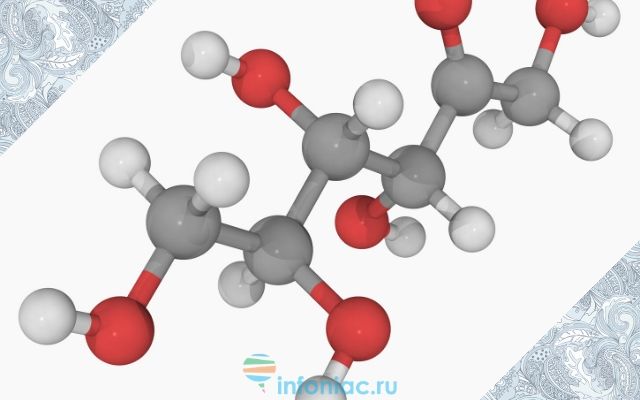
But the more glucose in the blood, the more actively it oxidizes. Excess oxygen is harmful, because its active forms – free radicals – simply “bombard” cells, destroying them. Recent studies have shown that the fructose molecule stimulates the formation of free radicals 100 times more than glucose. Fructose has another harmful property – it enhances the production of uric acid, which, in turn, increases oxidative stress.
© Science Photo Library
Read also: Fructose leads adolescents to cardiovascular diseases
An interesting fact
Shortness of breath after intense physical activity is due precisely to the “oxygen debt” that we need to “give” to tissues that continued to consume glucose without oxygen.
The tendency to inflammatory reactions will increase
An unpleasant “bonus” from excess fructose in the liver is the stimulation of the inflammatory response. You may not have pain anywhere, your tests may show that your organs have not been damaged, but your body may be in a state of sluggish inflammation if the liver releases a lot of cytokinins and factors tumor necrosis alpha. Sluggish inflammation is the ground for active inflammation. As soon as a minor injury occurs or a virus or bacterium enters the body in a certain amount, the inflammation caused by fructose will become several times more active, and most importantly, inflammation will be difficult to cure in traditional ways. For people who are prone to frequent exacerbations of chronic diseases, doctors strongly recommend correcting a diet that is not only low on glucose, but also on fructose.
You will lose your taste
Fructose is 1.7 times sweeter than glucose, so many sweeteners are made from “fruit sugar” rather than refined sugar. Since “pure” fructose is too sweet, it is exactly 50% in ordinary sugar. The remaining 50% is glucose. If you replace glucose almost completely with fructose, your tongue's taste buds will get used to being stimulated only by very sweet foods, and the taste of other products made “with glucose” will simply taste you won't feel it. The transition to fructose in childhood is especially dangerous. Wishing good for your child and replacing sugar, for example, with honey, you teach your child's body to consume more carbohydrates than his peers, who were not deprived of sugar. Because of this, the risk of developing diabetes mellitus in childhood increases.
An interesting fact
It is easy to distinguish between fructose and sugar pastries. Fructose muffins and biscuits are smaller in volume, softer and not as sweet in taste. Despite the sweetness of fructose, baking it will not satisfy your need for sweets, because a lot of fructose is involved in the Maillard reaction during the heating process. It combines proteins with carbohydrates, baking changes color, and a characteristic pleasant aroma of muffins appears.
But what do we do?
At first glance, it seems that you will have to completely give up sweets, otherwise you will not be healthy. But the main commandment of people who lose weight and keep fit is: “Spend more than you get.” Therefore, doctors recommend exercising and eating according to the Mediterranean diet to prevent the negative effects of consuming both glucose and fructose. This diet includes vegetables and various seafood containing omega-3 acids. Studies have shown that losing weight by 3 to 7% reduces the risk of getting fatty hepatosis. 200 minutes of moderate exercise per week, combined with the right diet, will reduce your risk of getting fatty liver disease due to fructose.

© shisuka
An interesting fact
The more intense the physical activity, the more cells use glucose as an energy source. Under moderate exercise, cells have enough time to break down fats, so less sugar is consumed.
Read also: The Mediterranean diet reduces the risk of developing depression
If you still need to replace sugar with foods with less glucose and calculate the glycemic index, use the following tricks:
Combine products. Always consume carbohydrates with protein. They slow down the absorption of sugar, so the total glycemic index of a protein-carbohydrate diet is lower than a separate diet.
Include fiber in a serving of food.
The body will spend time processing fiber, glucose will have to wait “its turn”. This means that you can treat yourself to sugar without harming your metabolism.
Eat vegetables and fruits raw and peeled. After heat treatment, carrots, for example, will lose a good share of ballast, so their index from 35 in raw form will increase to 85 for cooked condition. The peel is a source of fiber, which slows down the absorption of sugar in the form of glucose or fructose. That is why the fruits themselves are much safer than freshly squeezed juices.
Chew your food thoroughly. The longer you chew your food, the slower you digest sugar, the absorption of which begins in the oral cavity.
Follow the biorhythm. Sweet foods with a glycemic index of 50 to 55 are best consumed in the morning when the body's need for glucose is higher. This is especially true for people who perform mental or physical activity, because muscles and nerve cells do not need insulin to absorb glucose. For lunch and dinner, leave foods with an index of 35 or less.
The material has an informational and reference function! Before using any products or services, you should consult a specialist!