
 Incredible facts
Giant plant-eating dinosaurs were champions at chewing food, as were some modern mammals like horses, bison or elephants, the researchers said.
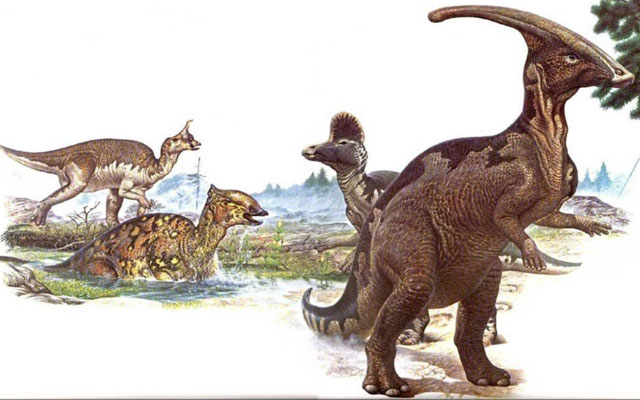
This discovery may help explain why these giants dominated the plains of Europe, Asia and North America during the last period of the dinosaur era. Duck-nosed herbivores called hadrosaurids were distributed around the world during the Late Cretaceous Period, 100-65 million years ago. They ate horsetails, ferns and primitive flowering plants, and they also pinched pine needles.
The plants these animals ate were tough, covered with solid particles that ruined their teeth. Hadrosaurids chewed their food using teeth that had a flat chewing surface, such as modern horses and bison. Some hadrosaurids had up to 1400 similar teeth, which were repeatedly renewed.
“They looked like walking pulp mills, I suspect they could eat whatever plants they came across,” said researcher Gregory Erickson. paleontologist at the University of Florida at Tallahassee.
Mammalian teeth can be relatively complex; they have 4 main types of tissues of varying hardness. These combinations help maintain irregularities and cavities on the tooth surface that prevent wear and tear. Most reptile teeth, on the contrary, are relatively simple; they have only two types of tissue — hard enamel and softer material like bone tissue.
“I don't think it makes sense for the complex tooth surface we see in hadrosaurids to consist of simple dental tissue that reptiles have,” Erickson said.
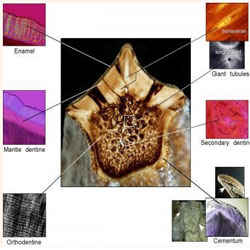
Now researchers have found that hadrosaurids had more complex teeth than reptiles — they were made up of 6 different tissue types! “They were just as complex, if not more complex, than the teeth of any known mammal,” Erickson added.
After analyzing fossilized hadrosaurid teeth using a microscope and X-rays and testing them with a diamond-tipped probe, the researchers found that tissues were located on each the tooth is completely different. This allows each tooth to take a variety of shapes and functions at different times in its development.
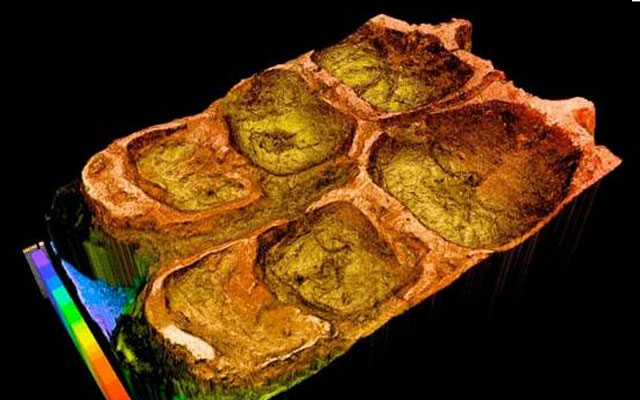
The complex structure of hadrosaurid teeth suggests that they were excellent devices for grinding tough and sharp plants. This also helps explain why these dinosaurs were so common.
Erikson and his colleagues now plan to use these methods to study the teeth of extinct and extinct reptiles and mammals to understand how these groups differ in relation to their diet nutrition. “We still don't understand very well how horse teeth work,” Erickson said.