
 Ecology
The modern science of paleontology does not stand still and scientists continue to dig into the ground, finding more and more species of creatures that once roamed our planet. Finding a new species of large dinosaur is like finding a real treasure: there is nothing more valuable to paleontologists. Researchers can boast of such a find today, however, the find as such was made more than half a century ago, but all this time it has been on the shelf. Only recently, scientists have been able to prove who owned the fossils they found.
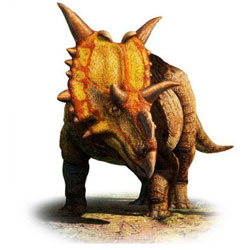
Paleontologists have discovered the fossilized remains of a previously unknown 2-ton horned dinosaur 6 meters long that roamed the Earth 80 million years ago. The dinosaur was found in Canada, it turned out to be a distant relative of the triceratops and was called Xenoceratops foremostensis. This is the oldest ceratopsid specimen ever found.
Herbivorous dinosaur pastures
The animal's name “xenoceratops” is translated as “stranger with a horned face” and is due to the strange horns on the animal's forehead, as well as the fact that these creatures are extremely rare in fossils. “It seems that this dinosaur had characteristics that were not characteristic of later ceratopsids. This suggests that complex head elements appeared earlier,” says David Evans, a paleontologist at the Royal Ontario Museum.
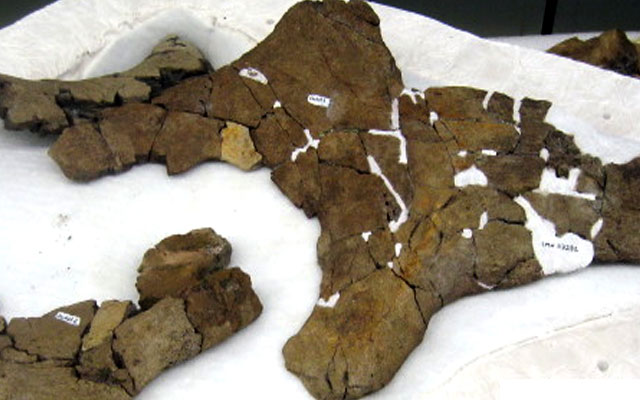
In 1958, paleontologists discovered fragments of three skulls (now known to belong to xenoceratops) in the rocks of the barren lands of Alberta, Canada. Although this area is now covered with low-growing shrubs and sandy hills, 77-90 million years ago it was a dinosaur pasture that was part of a lush river system.
An amazing find
In the late 1950s, scientists were busy making other discoveries, so they put the dinosaur bones they had found on a shelf at the Canadian Museum of Natural History in Ottawa and quickly forgot about them. In 2003, Evans and his colleagues began studying the fragments. A team of scientists tried to fill in the gaps in the paleontological record of the late Cretaceous period, when the most famous dinosaurs Tyrannosaurus and Triceratops appeared.
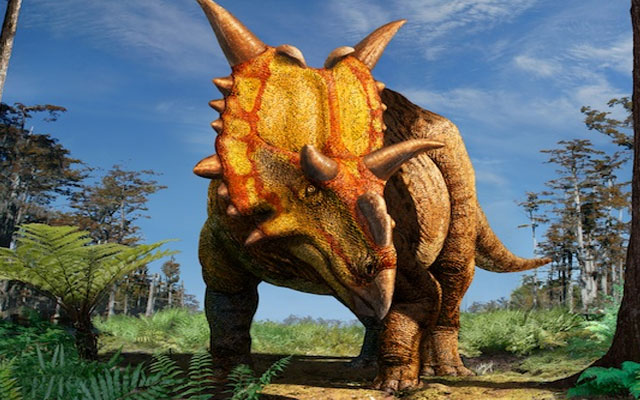
Scientists have combined the fragments at their disposal and analyzed unusual formations on the skull. As a result, it turned out that they belong to a completely new species of xenoceratops.
Xenoceratops were about the size of modern rhinos, about 6 meters in length, including their tail, and weighed about 2 tons. These dinosaurs used their birds' beaks to pinch on grass, ferns, and flowers that grew in pristine river deltas. But the most interesting part of the creatures' skull was the sharp horns protruding from the forehead just above the eyes, the massive horns at the very top of the head, and smaller horns on the sides.
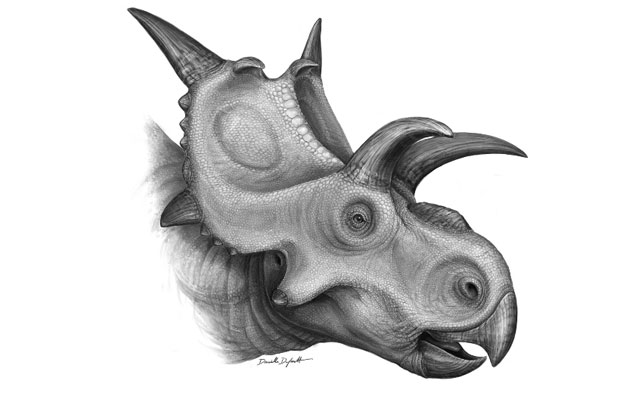
Scientists believe that males of this species used their original “hats” to demonstrate their dominant status or to impress females, which increased the chances of reproduction.