
 Ecology
The polar regions of the Earth are the harshest places on our planet.
For centuries, people have tried to get to and explore the Arctic Circle at the cost of their lives and health.
So what did we learn about the Earth's two opposite poles?
Read also: How does the Arctic differ from Antarctica and Antarctica and what do they have in common?
1. Where is the North and South Poles: 4 types of poles
In fact, there are 4 types of the North Pole from a scientific point of view:
The North Magnetic Pole is a point on the Earth's surface at which magnetic compasses are directed
The North Geographic Pole — located directly above the Earth's geographical axis
The North Geomagnetic Pole is connected to the Earth's magnetic axis
The North Pole of Inaccessibility is the northernmost point in the Arctic Ocean and the farthest from Earth on all sides
Four types of the South Pole have also been identified:
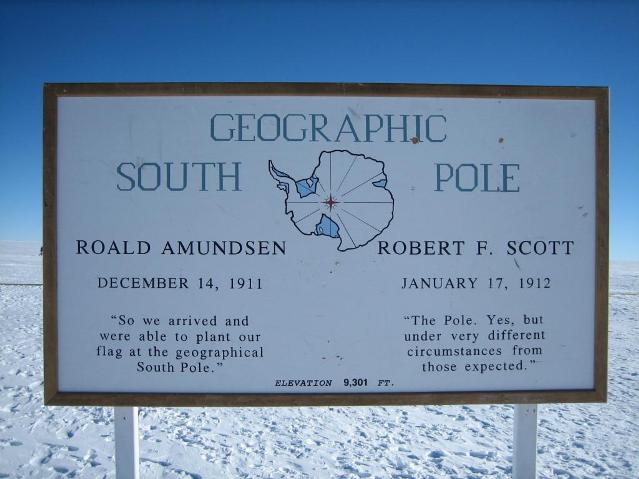
The South Magnetic Pole is a point on the Earth's surface where the Earth's magnetic field is directed upwards
The South Geographic Pole is a point located above the geographical axis of the Earth's rotation
The South Geomagnetic Pole is connected to the Earth's magnetic axis in the southern hemisphere
The South Pole of Inaccessibility is the point in Antarctica farthest from the coast of the Southern Ocean.
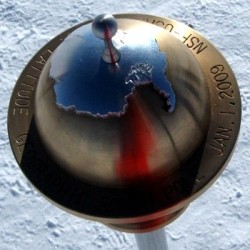
There is also the ceremonial South Pole, an area dedicated to photography at Amundsen-Scott Station. It is located a few meters from the geographical south pole, but as the ice sheet moves all the time, the mark shifts by 10 meters every year.
2. Geographic North and South Poles: Ocean vs Continent
The North Pole is essentially a frozen ocean surrounded by continents. By contrast, the South Pole is a continent surrounded by oceans.
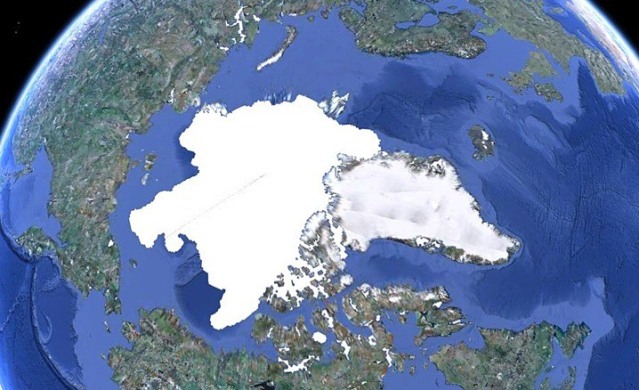
In addition to the Arctic Ocean, the Arctic region (North Pole) includes parts of Canada, Greenland, Russia, the United States, Iceland, Norway, Sweden and Finland.
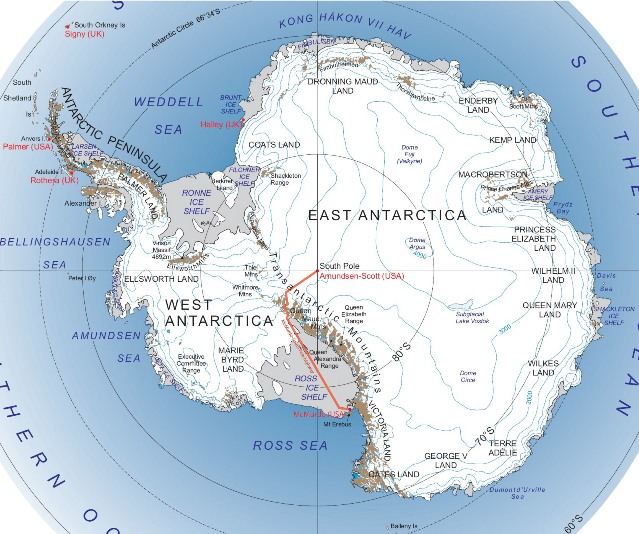
The southernmost point of the Earth, Antarctica, is the fifth and largest continent, with an area of 14 million square kilometers, 98 percent of which is covered by glaciers. It is surrounded by the South Pacific Ocean, the South Atlantic Ocean and the Indian Ocean.
The geographical coordinates of the North Pole are 90 degrees north latitude.
The geographical coordinates of the South Pole are 90 degrees south.
All longitude lines converge at both poles.
3. The South Pole is colder than the North Pole
The South Pole is much colder than the North Pole. The temperature in Antarctica (South Pole) is so low that snow never melts in some parts of this continent.
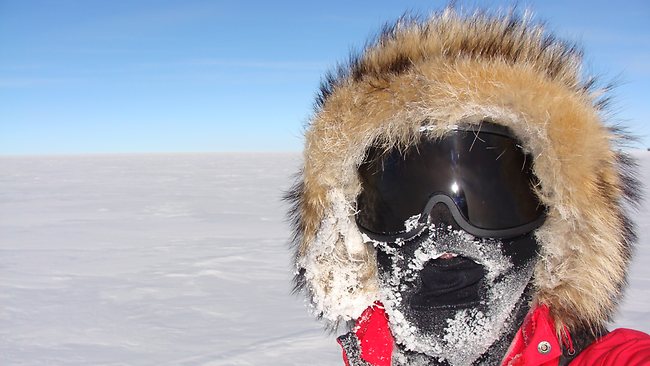
The average annual temperature in this area is -58 degrees Celsius in winter, and the highest temperature was recorded here in 2011 and was -12.3 degrees Celsius.
In contrast, the average annual temperature in the Arctic region (North Pole) is — 43 degrees Celsius in winter and about 0 degrees in summer.
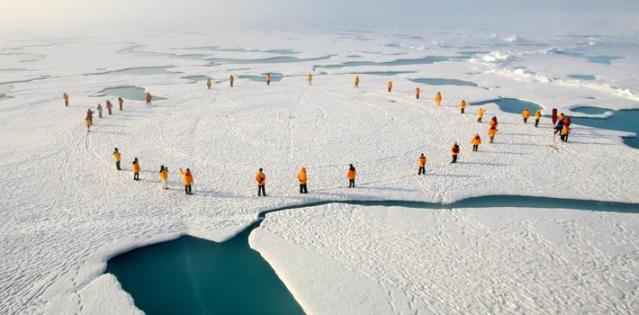
There are several reasons why the South Pole is colder than the North Pole. Since Antarctica is a huge land, it receives little heat from the ocean. By contrast, the ice in the Arctic region is relatively thin and there is an entire ocean under it, which softens the temperature. In addition, Antarctica is on a hill at an altitude of 2.3 km and the air here is colder than in the Arctic Ocean, which is at sea level.
4. There's no time at the poles
Time is determined by longitude. For example, when the Sun is right above us, local time shows noon. However, at the poles, all longitude lines intersect, and the Sun rises and sets only once a year on the equinox.
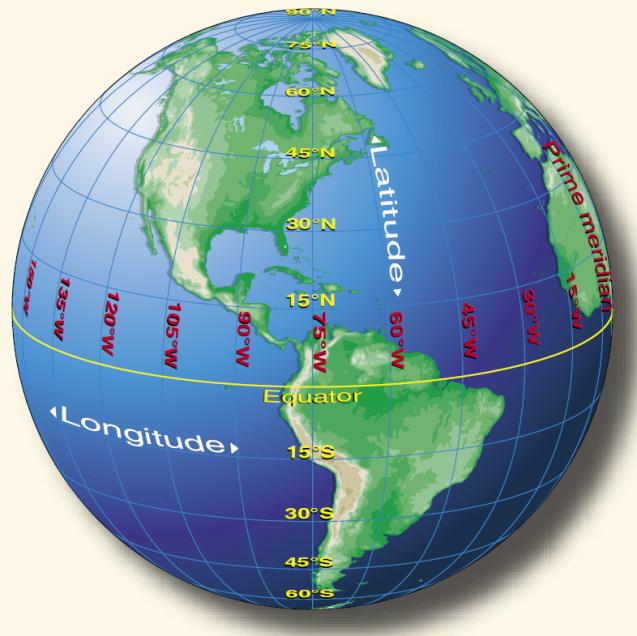
For this reason, scientists and researchers at the poles use time in whatever time zone they like best. They typically focus on Greenwich Mean Time or the time zone of the country they come from.
Scientists at Amundsen-Scott Station in Antarctica can go for a quick run around the world, covering 24 time zones in a few minutes.
5. North and South Pole animals
Many people mistakenly believe that polar bears and penguins are in the same habitat.
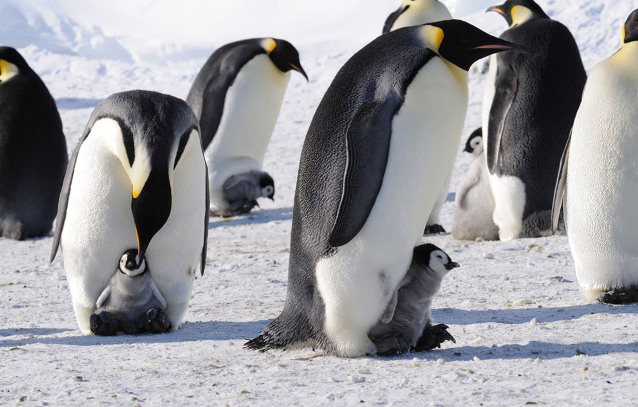
In fact, penguins live only in the southern hemisphere, in Antarctica, where they have no natural enemies. If polar bears and penguins lived in the same area, polar bears would not worry about their source of food.
Marine animals at the South Pole include whales, porpoises and seals.
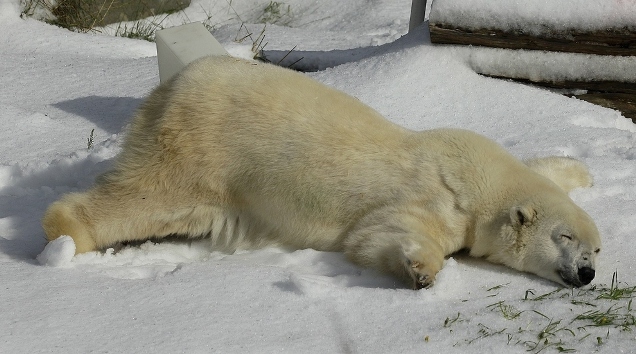
Polar bears, in turn, are the largest predators in the northern hemisphere. They live in the northern part of the Arctic Ocean and feed on seals, walruses, and sometimes even whales that have been washed ashore.
In addition, the North Pole is home to animals such as reindeer, lemmings, foxes, wolves, as well as marine animals such as beluga whales, orcas, sea otters, seals, walruses and more than 400 known species fish.
6. No man's land
Despite the fact that you can see many flags from different countries at the South Pole in Antarctica, this is the only place on earth that does not belong to anyone and where there is no indigenous population.
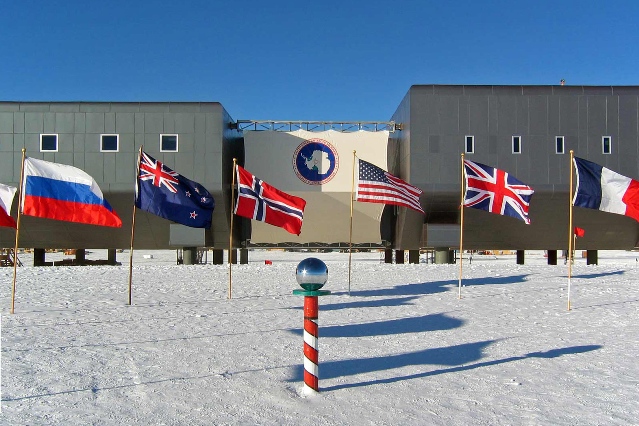
The Antarctic Treaty is in force here, according to which the territory and its resources should be used exclusively for peaceful and scientific purposes. Scientists, researchers and geologists are the only people who set foot on Antarctic land from time to time.
By contrast, the Arctic Circle is home to more than 4 million people in Alaska, Canada, Greenland, Scandinavia and Russia.
7. Polar night and polar day
The Earth's poles are unique places with the longest day, 178 days, and the longest night, 187 days.
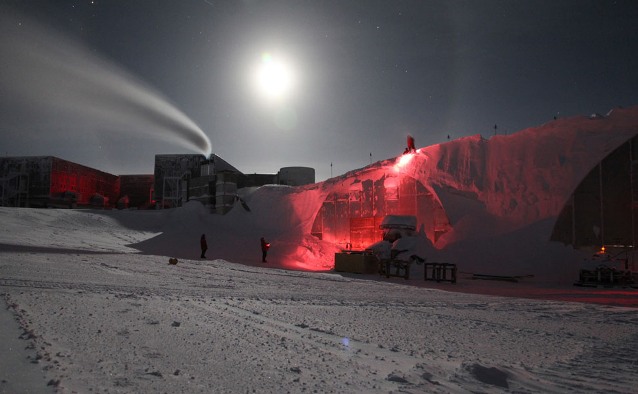
There is only one sunrise and one sunset at the poles per year. At the North Pole, the Sun begins to rise in March on the vernal equinox and falls in September on the autumnal equinox. At the South Pole, on the contrary, sunrise is during the autumnal equinox and sunset is on the vernal equinox.
In summer, the Sun is always above the horizon, and the South Pole receives sunlight around the clock. In winter, the sun is below the horizon when there is 24-hour darkness.
8. Conquerors of the North and South Poles
Many travelers have tried to get to the poles of the Earth, losing their lives on their way to these extreme points of our planet.
Who was the first to reach the North Pole?
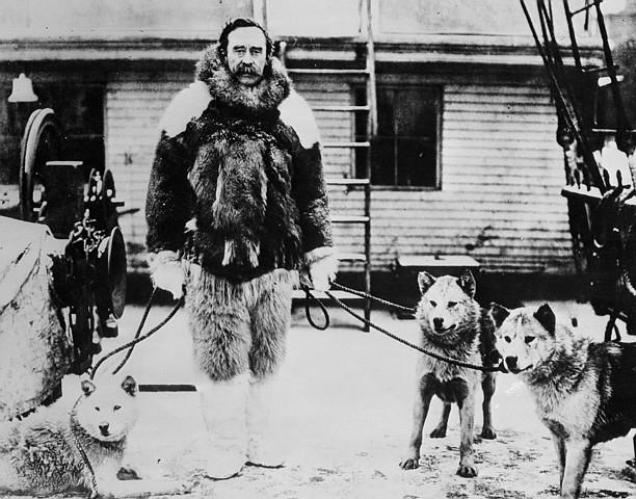
There have been several expeditions to the North Pole starting from the 18th century. There are disagreements about who was the first to reach the North Pole. In 1908, American traveler Frederick Cook was the first to claim to have made it to the North Pole. But his compatriot Robert Peary denied this statement, and on April 6, 1909, he was officially considered the first conqueror of the North Pole.
First flight across the North Pole: Norwegian traveler Roald Amundsen and Umberto Nobile on May 12, 1926 in the airship Norway
The first submarine at the North Pole: the Nautilus nuclear submarine on August 3, 1956
First solo trip to the North Pole: Japanese Naomi Uemura, April 29, 1978, after driving 725 km in a dog sled in 57 days
First ski expedition: Dmitry Shparo's expedition, May 31, 1979. Participants covered 1,500 km in 77 days.
He was the first to swim across the North Pole: Lewis Gordon Pugh covered 1 km in water at -2 degrees Celsius in July 2007.
Who was the first to reach the South Pole?
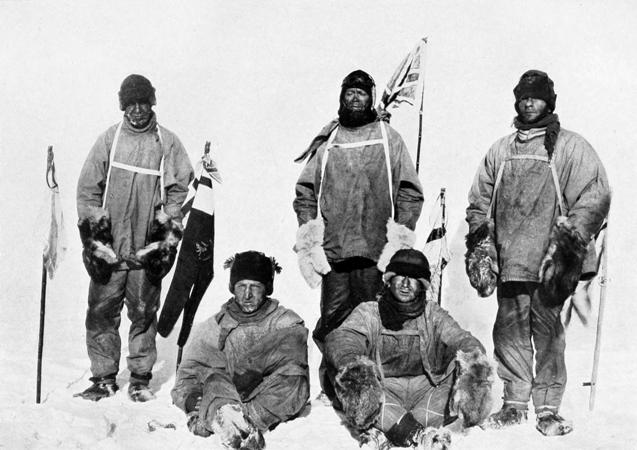
The first conquerors of the South Pole were Norwegian traveler Roald Amundsen and British explorer Robert Scott, after whom the first station at the South Pole, the station, was named Amundsen-Scott. Both teams went a different route and reached the South Pole within a few weeks, first being Amundsen on December 14, 1911, and then Robert Scott on January 17, 1912.
First flight across the South Pole: American Richard Baird, in 1928
The first to cross Antarctica without using animals or motor vehicles were Arvid Fuchs and Reynold Meissner, December 30, 1989
9. The North and South Magnetic Pole of the Earth
The Earth's magnetic poles are connected to the Earth's magnetic field. They are located in the north and south, but do not coincide with the geographical poles, as our planet's magnetic field is changing. Unlike geographical poles, magnetic poles are shifting.
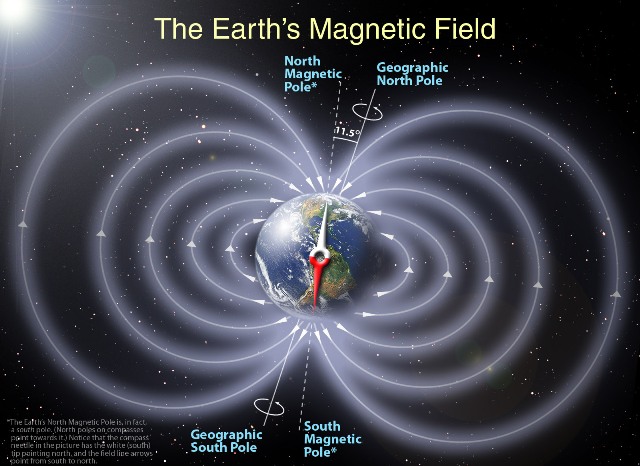
The North Magnetic Pole is not exactly located in the Arctic region, but is shifting to the east at a speed of 10-40 km per year, as the magnetic field is influenced by underground molten metals and charged metals particles from the Sun. The South Magnetic Pole is still in Antarctica, but it is also shifting westward at a rate of 10-15 km per year.
Some scientists believe that one day the magnetic poles can change, and this can lead to the destruction of the Earth. However, the magnetic poles have already changed, hundreds of times over the past 3 billion years, and this has not led to any terrible consequences.
10. Ice melting at the poles
Arctic ice in the North Pole region usually melts in summer and freezes again in winter. However, in recent years, the ice cap has begun to melt very rapidly.
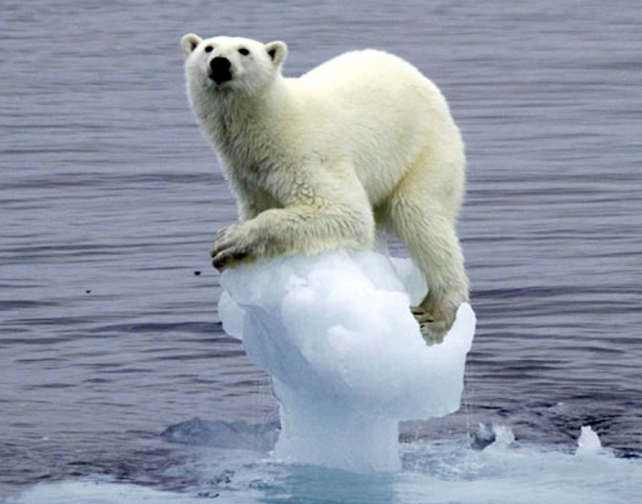
Many researchers believe that by the end of the century, or maybe several decades later, the Arctic zone will be ice-free.
On the other hand, the Antarctic region at the South Pole contains 90 per cent of the world's ice. The average ice thickness in Antarctica is 2.1 km. If all of Antarctica's ice were to melt, sea levels around the world would rise by 61 meters.
Fortunately this won't happen in the near future.
Some interesting facts about the North and South Poles:
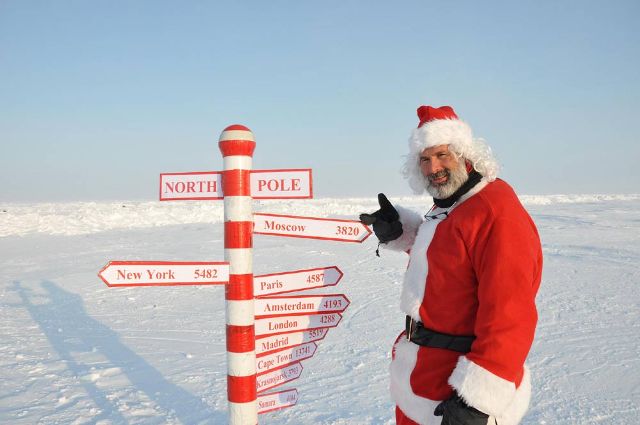
1. There is an annual tradition at Amundsen-Scott Station at the South Pole. After the last plane carrying food leaves, researchers watch two horror movies: The Thing (about an alien creature that kills residents of a polar station in Antarctica) and a movie “The Shining” (about a writer staying in an empty, remote hotel in winter)
2. The Arctic tern makes a record flight from the Arctic to Antarctica every year, flying more than 70,000 km.
3. Kaffeklubben Island, a small island in northern Greenland, is considered to be the land closest to the North Pole, 707 km away.