 Events
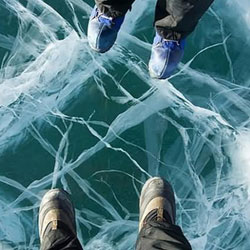
Under the icy crust of a lost Antarctic lake, in incredibly salty water, devoid of sunlight and oxygen, where it is so cold that even very salty water freezes, scientists have found diverse communities of extreme bacteria that have been living there and doing great for the past few thousand years.
This finding sheds light on the incredible conditions under which life is still a reality, so it gives hope that on other planets where conditions are far from normal Earth's conditions, living things can live, scientists said.
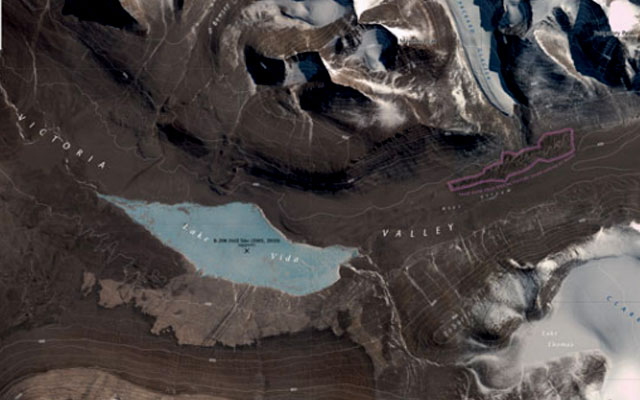
Scientists analyzed samples taken from Lake Vida, which is 18 meters below the surface of Antarctica. Past studies have shown that the lake became isolated from the continent's surface 2800 years ago.
“The ice is so thick that nothing can naturally penetrate it to the water,” says researcher Peter Doran, a researcher at the University of Illinois at Chicago.
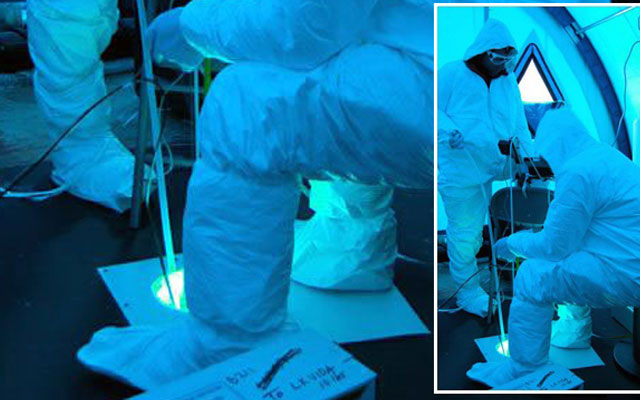
To extract a sample of water from the lake, scientists used special drilling equipment and heated pipes. To avoid contaminating this unique ecosystem, scientists have installed a “clean room” above the well and wore special protective clothing that is often used in the laboratory to preserve conditions are as sterile as possible. “It is quite difficult to work this way in Antarctica,” Doran admitted.
Life is everywhere
The salt water solution from the lake was yellowish-orange in color due to its content of dissolved metals. The researchers found that the water in the lake had a temperature of minus 13 degrees Celsius. Its salt content was 5-6 times higher than that of ordinary ocean water, so it froze at fairly low temperatures. This water was also completely devoid of oxygen and was slightly oxidized.
Despite such harsh conditions, scientists have found thriving microbial communities in this water.
“The most amazing thing is that even someone lives there — in such an incredibly harsh environment where there seems to be no place to live,” Doran said. “This once again confirms the theory that where there is water, On earth, you'll find living things. Here's another example.”
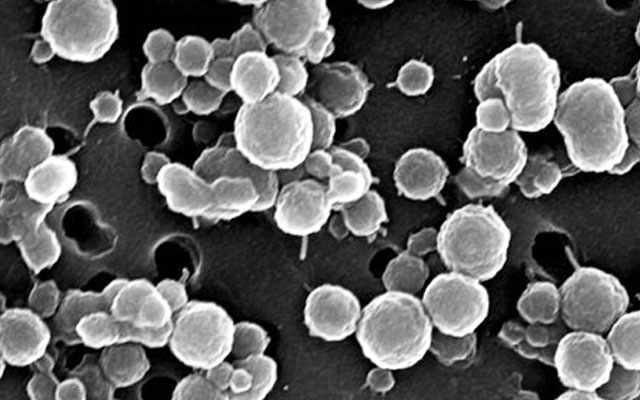
The lake's salt solution contains a very high content of carbon-based components, which are the building blocks for life. Water also contains high levels of chemicals that usually react with each other, such as nitrogen oxides and molecular hydrogen. This suggests that these substances are regularly replenished, despite the fact that the lake has been isolated for several thousand years from any obvious sources of energy that could help them substances are formed.
The general chemistry of this water suggests that chemical reactions between water and sediments on the bottom generate these chemicals. Molecular hydrogen, which can be found in water, can act as a fuel source to support microbial life, scientists said.
An alien life like Earth's?
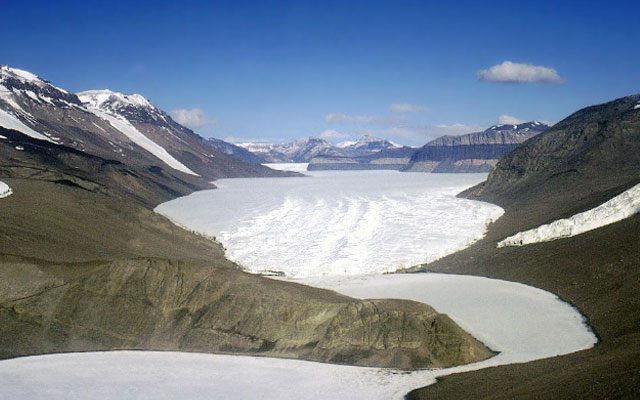
Scientists believe that similar conditions may well exist on other planets. “If you look at the limits where life can exist on Earth, we can assume that examples of such an environment can be found anywhere in space,” Doran said. “A few years ago, we We would never have thought that we could look for life in the depths of Mars, but now, seeing examples of Earth, we understand that life can hide anywhere.”
In the near future, researchers will be able to measure Lake Vida's depth. “We want to take samples of sediments at the bottom of the lake to let us know the lake's history,” Doran said. “Where did this life come from there? Was it always like it is today?”
Other groups of scientists are looking for life in other Antarctic lakes that have been isolated for thousands of years.
Who lives in Antarctica?
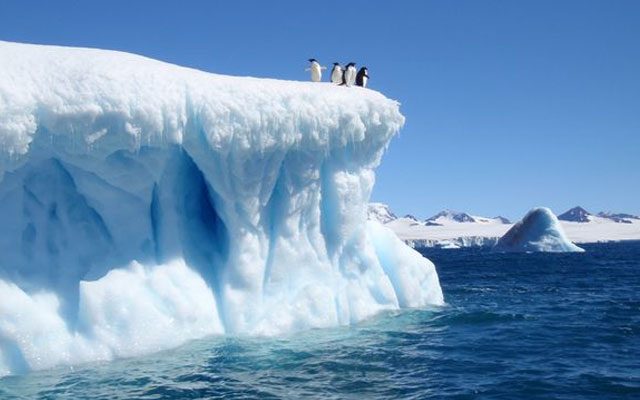
Antarctica, the southernmost continent, cannot boast of excellent living conditions today, as its closest location to the pole does not allow it to warm up properly even in summer. Antarctica does not and has never had an indigenous population, and living creatures living here are forced to adapt to incredibly cold weather conditions.
Antarctica was once part of a larger continent, Gondwana, which split into several parts, forming Antarctica, Australia, and South America long before the first man arrived. Natural bridges connecting Antarctica to other continents have not existed for 35 million years.
Antarctica was so isolated from the rest of the world, and its conditions became so extreme that no one wanted to settle there. It is known that a man first set foot on her ground in 1820. Many travelers wanted to get to the South Pole, but not everyone was able to do so.
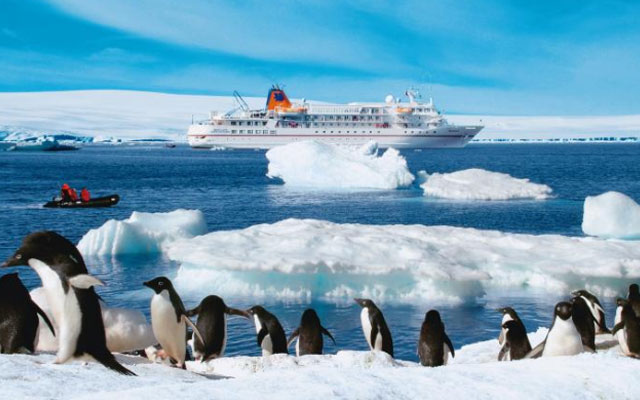
Some extreme animals still live in Antarctica, but they all live off the coast of the seas and oceans. They all depend heavily on the water they hunt in, and herbivores are unlikely to be found here, because Antarctica's scarce vegetation in summer will not allow any vegetarian to survive here. Antarctica's most famous living creatures include penguins, Weddell seals, black-browed albatrosses, leopard seals, cormorants, Antarctic fur seals, southern elephants, and many others.