
 Unbelievable facts
We've been studying human intelligence for centuries, but we still have very few answers to questions about how we think, what we think, and why we might think.
Are men smarter than women or vice versa? Do IQ tests tell the truth or are things very biased? Is big brain big intelligence?
Here are 10 theories about human intelligence that have either been refuted or are heavily criticized.
However, any of the theories that have been refuted may one day be proven.
Intelligence and heredity
10. Heredity
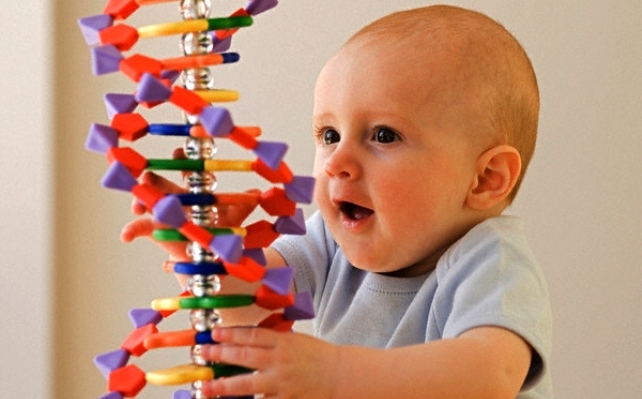
If you were born to smart parents, does that mean you're going to be smart too? Some researchers say yes, some deny it. It is true that heredity influences our intellectual factor (IQ), which measures our cognitive abilities compared to our peers.
But we should not forget about the environment, as well as the role of culture in shaping our intelligence. Do intelligence genes exist? No one knows for sure, and information from various studies varies, suggesting that 40-80 percent of the genes responsible for intelligence are present.
Genes versus parenting is a controversial area of research, and today's experiments will help us understand not only the functioning of our minds, but also human character, behavior, and even the basis for some mental illnesses.
An important point in this theory is the fact that the human mind does not depend on race, and that heredity is not the only factor determining an individual's intellectual potential.
9. Craniometry
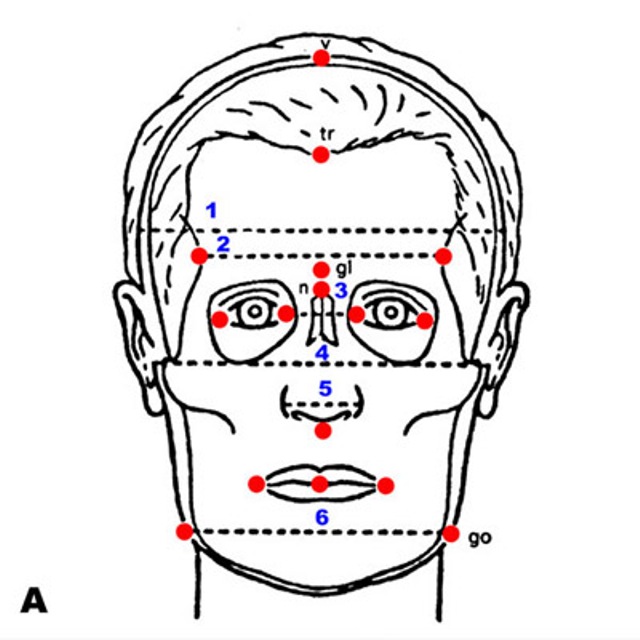
19th century scientists believed that measuring a person's skull and facial structure was a good way to measure intelligence as well. When this theory first appeared, surgeon Paul Broca suggested an inversely proportional relationship: the smaller the ratio of forearm length to shoulder length, the higher the level of intelligence.
When he failed to prove that whites were the smartest race based on arm length alone, he turned to measuring the skull and facial structures to determine how much brain could fit inside a person's skull. He considered this to be a more accurate way to determine intelligence.
Craniometry showed that the larger the skull bones, the larger the skull itself and the brain located in it, and, therefore, the higher the intelligence. Craniometry died in the early 20th century because it was constantly criticized for racial prejudice and the lack of factual basis for such claims.
However, scientists interested in this theory have helped to discover brain speech centers, and also helped to identify the concepts of the intellectual factor known to us today as IQ.
8. Primary mental abilities
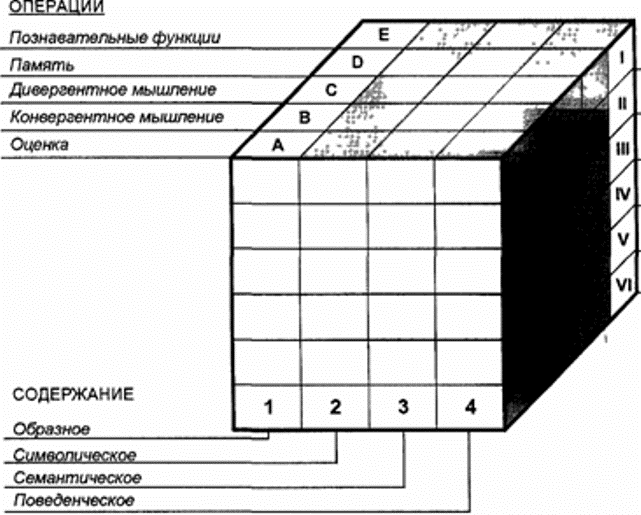
In the first half of the 20th century, psychologist L. L. Thurstone put forward the idea that the basis of human intelligence is seven components. His theory was different from others that existed at the time and claimed that human intelligence was based on one factor that was not certain.
Among the components involved, the psychologist noted the following: associative memory, numeracy, perception speed, ability to think logically, spatial visualization, verbal understanding and mastery of the word.
While his theory about these seven components has not stood the test of time, his work is extremely popular in the field of psychometry (a science that studies the quantitative study of psychological measurements).
7. Birth order
Researchers have long been studying how birth order affects everything a person's mind depends on. However, a recent study published by the American Psychological Association concluded that there is no direct relationship between intelligence and birth order in a family.
Previously, scientists believed that first-born children always score more points when taking IQ tests. It was explained by the fact that they have no competition for parental attention, so they have more time to learn new and useful information.
Children born second or last were thought to have less parental attention, and therefore scored lower scores. In the latest study, experts compared siblings, but without addressing the issue of birth order. They found that there really is no significant relationship between birth rank and intelligence level.
6. The only intelligence
Some people argue that the idea of a single intelligence (a concept on which many theories are based, including the G factor concept) should definitely be on this list. Others say she doesn't belong here. But that's why this idea is on this list.
A recent study has shown that there is such a thing as intelligence in general, but it does not depend on how a person scores on certain tests compared to the general population.
Getting information about how human intelligence works (or doesn't) has so far been through a type of testing called psychometry. But now, a new study published in the US Proceedings of the National Academy of Sciences suggests that specific brain regions and different network pathways are involved in creating a system such as intelligence, and this is a step towards proving the biological basis of intelligence.
5. Tabula Rasa

Tabula Rasa is the theory that people are initially born with “empty” minds. Philosophers and psychologists have been actively advocating for this theory for centuries. It assumes that when we are born, our mind is fresh and empty, full of potential, and waiting to be filled with personal life experiences and emotions.
Today, people are still arguing about what plays a more important role in shaping intelligence — genetics or upbringing? Are we just natural creations? What role does our environment play?
Research in recent decades has specifically studied twins separated at birth because they share the same genetic material, but the environment, the one that affects them is different.
As a result, scientists have come to the conclusion that the human mind, along with other individual traits, such as gender identity, is a combination of genes we inherit, as well as our personal experience and the environment.
Intelligence test
4. IQ tests
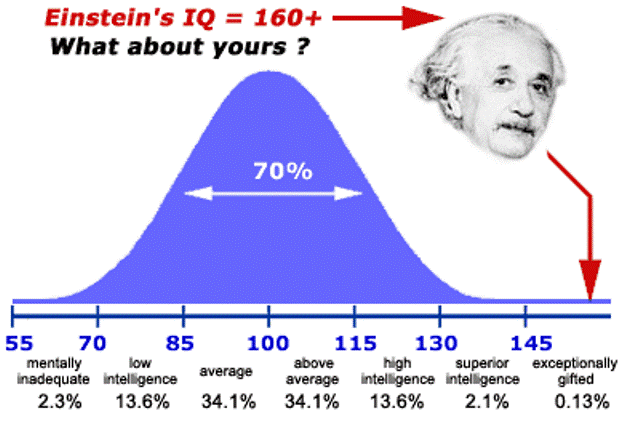
IQ tests, or IQ tests, are commonly used to assess a person's cognitive abilities, intelligence, and achievement. Standard IQ tests, such as Stanford Bean (for gifted children) or the SAT, measure a person's cognitive skills compared to the general population.
Although such tests are still extremely popular among ordinary people, it is important to note that they are widely criticized. For example, critics argue that such tests have a kind of bias based on gender, race, socio-economic status and cultural heritage.
Such tests are often based on outdated assumptions that the power of our intelligence is something established at birth and that intelligence remains constant over time.
IQ tests are still in use, but don't take their results too seriously. Many psychologists argue that all tests of this kind are too biased.
3. Triarchic theory of intelligence
When Robert Sternberg developed the triarchic theory of human intelligence, he went against all theories that suggest that humans have a common intelligence factor (the G factor) or standard mental abilities. Sternberg did not consider intelligence to be an academic factor.
Instead, he suggested that people have something called practical intelligence that is different from but equal in importance to academic intelligence.
The theory consists of three sub-theories: contextual, component, and empirical. Contextual is the interaction of intelligence with the experience of the outside world, component is the connection between intelligence and the inner world, empirical is the ability to adapt to the situation and perform specific tasks.
The empirical, in turn, is divided into how you cope with new tasks and experiences, and how you manage to cope with well-known tasks.
Critics of the triarchic theory argue that the author describes a set of practical skills rather than explains the system of functioning of the intellect. They also say that Sternberg neglects to provide information regarding direct observations.
Types of intelligence
2. Multiple intelligence theory

Unlike Tabula Rasa, which suggests that people are born with “empty” minds, the theory of multiple intelligences says that the human mind consists of several types of intelligence.
The author of the theory, Howard Gardner, says that human intelligence is our ability to create and maintain values, solve problems and expand our knowledge by solving these problems. He suggests that there are nine types of intelligence that together create each person's uniqueness:
— body/kinesthetic intelligence
— existential intelligence
— interpersonal intelligence
— intrapersonal intelligence
— linguistic intelligence
— logical/mathematical intelligence
— musical intelligence
— naturalistic intelligence
— spatial intelligence
Despite the fact that this theory has not been refuted and is still not outdated (developed in 1983), it still needs to be tested.
Who is smarter, a man or a woman?
1. Gender and intelligence
Men are from Mars, women are from Venus? While men and women think differently, there is no evidence that one gender is born smarter than the other.
Researchers have found that when it comes to intelligence, humans have two types of brains: the first type has more gray matter (the information processing center), and the brain the second type is larger than white matter (the so-called “connective tissue” of the information processing center). Research has shown that women's brains contain 10 times more white matter, while men's brains contain 6.5 times more gray matter.
What does this mean? While men and women have different types of brain tissue, overall performance is equal, but we are doing different types of tasks differently.