
 Ecology
The Great Barrier Reef, like many other coral reefs around the world, is at risk for many reasons, ranging from increasing ocean acidification to the impact of commercial fishing. Thanks to attempts to collect reef samples, scientists have been able to establish the Great Barrier Reef's first frozen coral repository, which will help restore dying coral populations in one day.
Coral reefs are dynamic ecosystems that include coral polyps with solid skeletons where corals live, as well as symbiotic algae that polyps feed on, and many fish, animals and plants that live near coral reefs, supporting each other's existence.
Corals are under great pressure due to pollution with industrial waste, sewage, chemicals, oil spills, fertilizers, sediments from the ground, climate change, water oxidation and destructive fishing. Some deep sea explorers believe that coral reefs and other marine life associated with them will completely die in the next 50-100 years, causing the world's first global extinction ecosystems since prehistoric times.
Harvesting corals
For two weeks at the end of November, a group of scientists collected sperm and embryonic cells during the spawning of 2 species of corals from the Great Barrier Reef, which were sent to special freezers.
“It turns out that we can produce a significant number of developing larvae if we thaw sperm, and these larvae will be able to thrive,” says Mary Hagedorn. marine biologist from the Smithsonian Conservation Biology Institute.
Coral settlement is a process in which free-floating coral larvae, when rebuilt, turn into a polyp of young coral.
“This is a difficult task for us, because if the larva cannot rebuild and settle, we will not be able to use frozen coral sexual products to turn them into a coral colony,” – Hagedorn said. Scientists have been able to successfully apply this technology to the reefs of the Caribbean and Hawaiian Islands.
Frozen coral bank
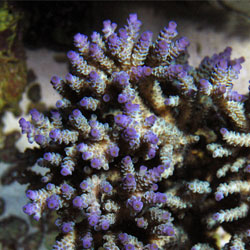
The new frozen bank includes samples of two reef-building coral species, Acropora tenuis (pictured) and A. Millepora, which are currently kept at Dubbo Zoo, Australia.
Although they are still alive, cells will be able to stay alive in a frozen state for 50 years and, in theory, even 1,000 years. If stored properly, these samples can be returned to the ecosystem, preserving the diversity of the genetic pool that will keep the population alive and healthy.
Scientists have successfully been able to use frozen coral sperm to fertilize live fresh coral eggs, but in the future they plan to develop techniques that will allow the use of frozen ones coral embryos to restore coral populations. Next January, Hagedorn and her colleagues will study frozen coral embryos to see how long they can live.
“Currently, there are no ways to help corals avoid some of the diseases that affect reefs,” said Hagedorn. “If we can grow embryonic cells that can survive, this the technology will help fight coral diseases.”