
 Health
If you find it difficult to read or you can't drive because you can't see clearly, don't worry, you probably won't go blind and have age-related vision problems.
Here are the most common symptoms that affect vision as you age, why they occur, and what to do about it.
Small print becomes blurry
Why does it occur?
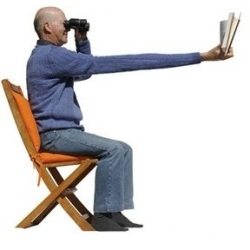
As we age, the eye's lens becomes less flexible, which means it's harder for it to change its focus from a long distance to a closer one. This makes it harder to focus on close objects.
How do I fix this?
You can buy glasses or bifocals, as well as bifocal contact lenses, multifocal contact lenses, or monovisual contact lenses, in which one contact lens is selected for one to look into the distance and another to look up close. Monovisual contact lenses are a good choice, but they are not suitable for everyone. If you're willing to sacrifice extreme distant vision for better near vision, bifocal, multifocal and monovisual lenses are just right for you.
Warning sign:
A sharp decrease in vision is associated with disorders such as macular degeneration, which affects central vision, as well as vitreous bleeding due to an aneurysm, often associated with diabetes and retinal detachment.
Dry eyes
Why does it occur?
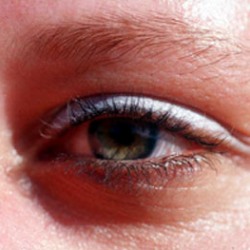 When you're young, your tears contain the right ingredients to completely cover your eyes. As you get older, tears may lose their ability to moisturize your eyes. Tears have three layers: the protein layer, the fat layer and the water layer. If one of these layers becomes faulty, dry eye occurs.
However, you may experience dryness and irritation, or you may experience increased tearing to compensate for the imbalance. High blood pressure medications, antihistamines, diuretics, hormone replacement therapy, and antidepersants can contribute to dry eyes.
Post-menopausal women often develop meibomian gland dysfunction. This gland is located on the eyelid, and it creates a fatty layer of tears.
Another disorder is lagophthalmus, which occurs when the patient does not blink enough.
How to fix this:
You can use artificial tears. If dryness is caused by medication, ask your doctor about changing the drug. Finally, as a last resort, you may need lacrimal tubular occlusion, a procedure that allows tears to dry out more slowly.
Warning sign:
Sudden dry eyes can be a sign of a damaged lacrimal gland or a blockage in the lacrimal duct, which is caused by an infection, a tumor, or a scar from a blow to the eye. In these conditions, it may be necessary to massage the area to open the duct, and in extreme cases surgery.
Difficulty seeing at night
Why does it occur?
 Short-sightedness, farsightedness, and astigmatism, which cause uneven corneal curvature, can be the main reasons why you see glare and halos at night, especially around the headlights and traffic lights.
How do I fix this?
Have your eyesight checked regularly. If your glasses are no longer working, make sure that the lenses are in line with the visual center of your eyes.
Warning sign:
Some forms of cataracts may cause loss of night vision and night glare. This is more common among those who suffer from diabetes, who use steroids, and have experienced eye trauma. Consult a doctor to find out the cause.
Flying flies in the eye
Why does it occur?
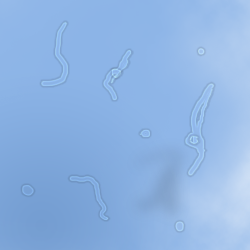 Flies in your eye are small threads or blotches that float in your field of vision. This is nothing more than shadows cast by threads and protein particles in the gelatinous substance. As we age, the gelatinous substance liquefies and separates from the retina.
How do I fix this?
Flies themselves are not dangerous and usually do not require treatment.
Warning sign:
Many new flies may indicate a ruptured or detached retina, which can lead to blindness if not addressed urgently. You may need surgery to repair the damage.
Loss of peripheral vision
Why does it occur?
 Glaucoma is a disease that causes damage to the optic nerve and which does not cause symptoms until the optic nerve is almost dead. After that, the first symptom is loss of peripheral vision.
How do I fix this?
Once the optic nerve dies, there's no turning back. The goal of glaucoma treatment is to prevent the loss of additional nerve fibers. Glaucoma is a whole family of diseases and treatment depends on its type, which may include medication or surgery.
Warning sign:
Because glaucoma may be symptom-free until it's advanced, don't ignore the glaucoma test during your vision test.
Decreased color vision
Why does it occur?
 Again, the lens of the eye, which becomes cloudy with age, is to blame for everything. Many people are not even aware of this, as this process is gradual. So, you may start to see items that are more yellow or brown.
How do I fix this?
If it's a cataract, the doctor will help remove it by replacing it with a permanent plastic lens. If you're not ready for surgery but notice changes in color vision, your doctor may recommend special tinted glasses.
Warning sign:
If cataracts are left untreated, they can lead to blindness, so seek advice from an ophthalmologist.