
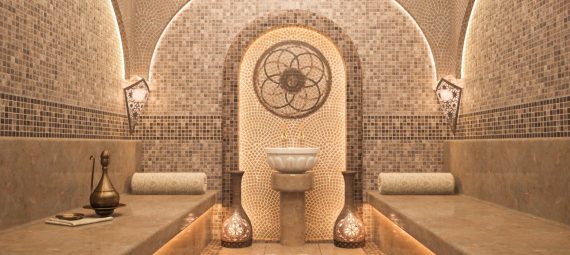
The history of the hammam, which inherited many features of the Roman and Byzantine bath culture, begins around the 14th century. There are many hammams in Istanbul, including Kilic Ali Pasa, built 440 years ago, and Cinili Hamam, which is 380 years old (it opens in autumn 2023 after a 12-year restoration) it retains its historical grandeur and atmosphere.
It is believed that the hammam appeared out of necessity: baths were often built next to mosques so that believers could wash themselves before prayer. But the hammam itself is a place where people spend time together, says Yavuz Suyolju, project director of The Marmara Group, which is engaged in the restoration of Cinili. He explains that Turkish bath culture developed due to the fact that the Ottomans considered the bathhouse to be the center of social life.
Today, a visit to the hammam allows you to relax from the stress of everyday life, says Selma Yildirim, director of the luxury Chi Spa at the Shangri-La Bosphorus Hotel. The gentle murmur of water, the fresh aroma of soap and the consciousness that in the near future you will not need to do business and you can just devote time to the cleansing ritual contribute to complete relaxation.
This is very tempting, and, fortunately, it does not scare even beginners at all: I experienced it firsthand when I first visited the Istanbul hammam. However, if you know what procedures await you, it will be easier for you to relax and fully immerse yourself in the bath ritual.
What awaits you in the Turkish hammam
Whatever the hammam you are going to (it can be a spa in your hotel, a place where separate visiting hours are set for men and women, or bath complexes like Cinili, where different halls are assigned to visitors of different sexes), each visit to the hammam follows approximately the same routine.
When I entered the luxurious Kilic Ali Pasa, I was served a glass of juice as a welcome treat, taken to the locker room, told to strip down to my swimsuit trunks and given a soft towel in which I had to wrap myself while waiting for my turn in the sauna room.
After entering the immaculately clean marble-lined space, I had to take off the towel before the bathhouse employee poured water on my head. Although it was always awkward for me to be naked in the women’s locker room of the gym, I did not feel particularly embarrassed that in the hammam I had to take off everything — or almost everything — in front of strangers.
After a thorough rinsing, I was taken by the hand to a large round slab of heated marble, where I had to stay for about 15 minutes to relax my muscles. Suyolju calls this area of the hammam the “belly stone” and explains that it is designed to prepare the skin for exfoliation. According to Yildirim, the hot stone and humid atmosphere of the hammam help soften the skin so that it is easier to clean it by removing dead cells.
By the time I moved from the stone slab to the washing area, I was already, in fact, something like plasticine in the hands of my skillful masseuse. It was hard to think of anything else but the extraordinarily pleasant sensations after exfoliating my hands and feet, gently washing my hair and after my skin was literally washed “to a squeak”. I didn’t even feel awkward when I was told to stand with my palms against the wall so that I could wash my body from my back. By this point, I was practically in a trance.
At the end of the bath procedures, I was invited to the recreation area, where I saw groups of women of different ages, belonging to different cultures, both local residents and tourists, but all of them, as one, radiated bliss, wrapped in identical towels. And although the atmosphere in this temple-like hall was not particularly encouraging to talk, there was a sense of liberating harmony in it. In the heart of bustling Istanbul, where crowds of people flow along sidewalks and bridges, the hammam acquires a special value: It is an ideal place to relax.
Other tips for beginners
- If you are not too fond of public baths, then some establishments, such as Cinili and Chi Spa at the Shangri-La Bosphorus Hotel, offer individual hammam sessions. In the second one, you can purchase the Path to
- Health package, which includes a Turkish bath, meditation and a number of individual practices in your own spa.
- To fully appreciate the hammam, take enough time to relax in the relaxation area and enjoy the feeling of absolute cleanliness. The city can wait a bit.
- The cost of procedures in a Turkish bath ranges from 40 to 100 dollars. Many hammams in Istanbul also offer additional services, including facials, massages and aromatherapy. They are usually paid separately.
- Tipping the staff is welcome, and in some hammam, such as Kilic Ali Pasa, you will even be offered gift envelopes for money when paying the bill.