
 Ecology
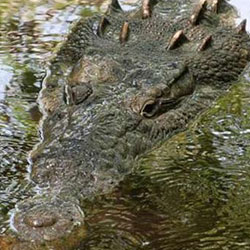
Scientists have announced the discovery of a new ancient species of crocodile, which was probably the largest species in history on Earth. Colossal reptiles lived in East African waters between 2 and 4 million years ago and may have been feeding on our distant ancestors, researchers say.
The recently discovered fossils belong to a large member of the crocodile family. This ancient giant was 7.5 meters in length, but it probably could have been even bigger, according to Christopher Brochu, an associate professor of earth sciences at the University of Iowa.
Brochu came across the remains of an ancient crocodile previously unknown to science three years ago when he was exploring fossils from the National Museum of Kenya in Nairobi. It took the arms of four people to lift the skull of one of these crocodiles, which was dug near Lake Turkana in northern Kenya.
These places are known for the fossilized remains of ancient humans. Many of the earliest hominids were found in the area of the Lake Turkana basin. According to Brochu, some of them may not have had the best of luck when they met these giant crocodiles, which were called Crocodylus thorbjarnarsoni.
“This crocodile lived in the same places and at the same time as our ancestors and probably could easily eat a person,” Brochu said, adding that the crocodile could easily swallow it whole.
The species of ancient crocodile found is not a close relative of the Nile crocodile. Scientists don't yet know exactly where the Nile crocodile came from, but it certainly appeared after these ancient giant crocodiles became extinct.